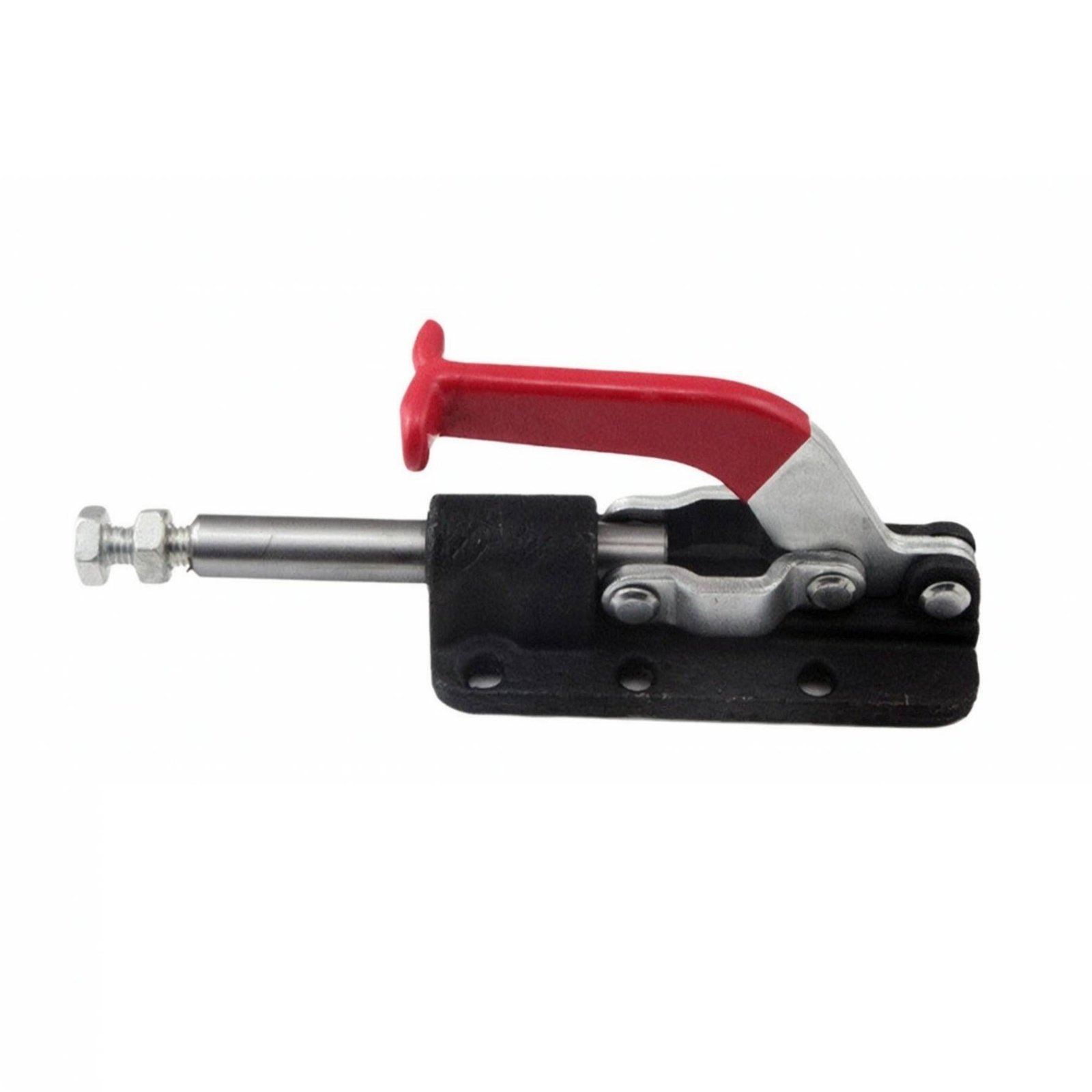
Buying guide · Workshop & Tools
How to use toggle clamps on jigs and fixtures
Short answer
Use toggle clamps by matching the clamp style to the motion your jig needs, mounting it so the handle clears the work, and adjusting the contact point so the mechanism locks firmly without twisting the part. For most jigs and fixtures, the key is repeatable positioning: stops locate the work, the clamp supplies holding force, and the linkage should lock in a stable over-center position for quick loading and release.
Choose the clamp style for the motion your jig needs
Start with the job the jig must do. A latch-style clamp is useful when two parts of a fixture need to pull together, such as a lid, cover, swing arm, or removable fence. A push-pull clamp is better when you need straight-line movement to press a part against a stop or to move a plunger in and out of position.
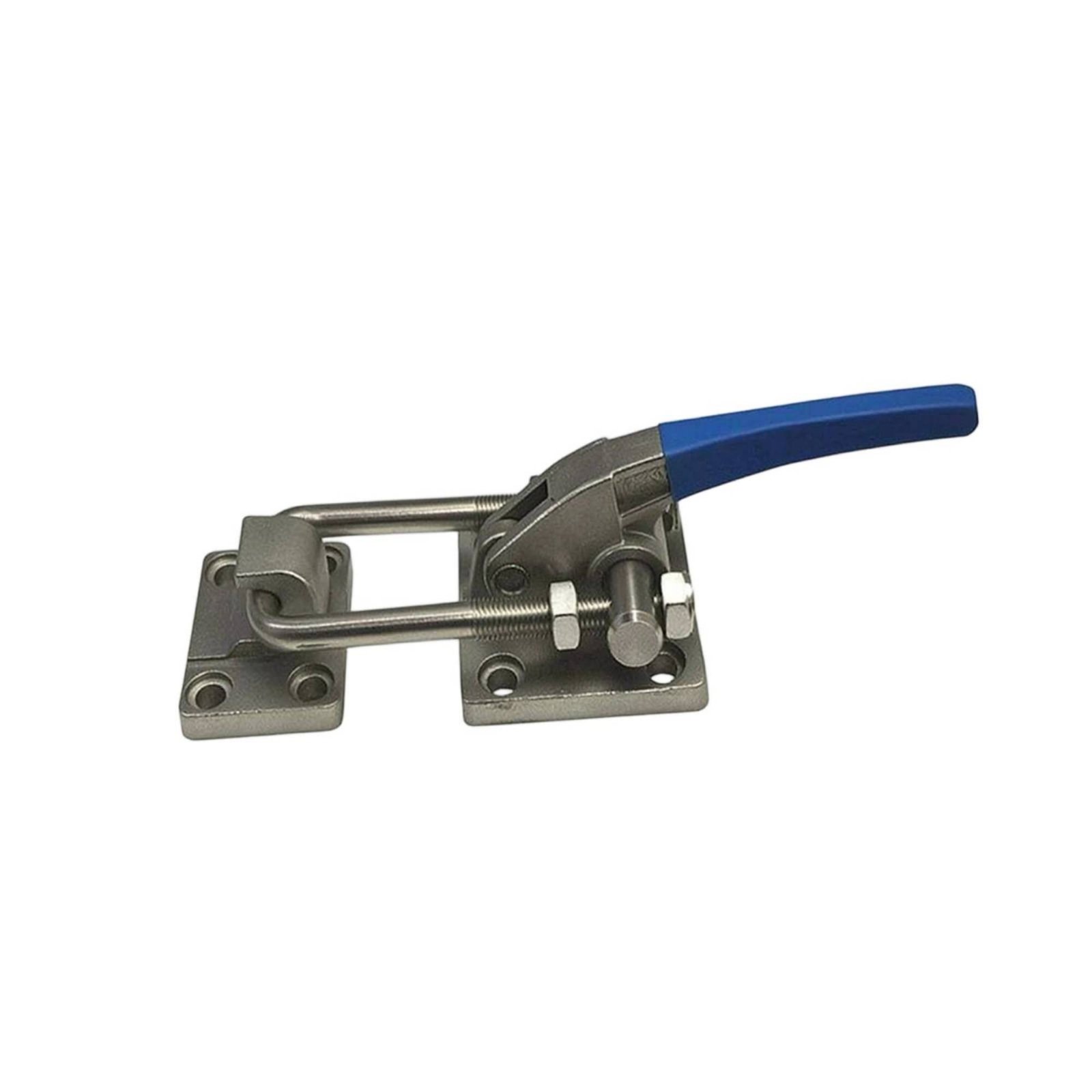
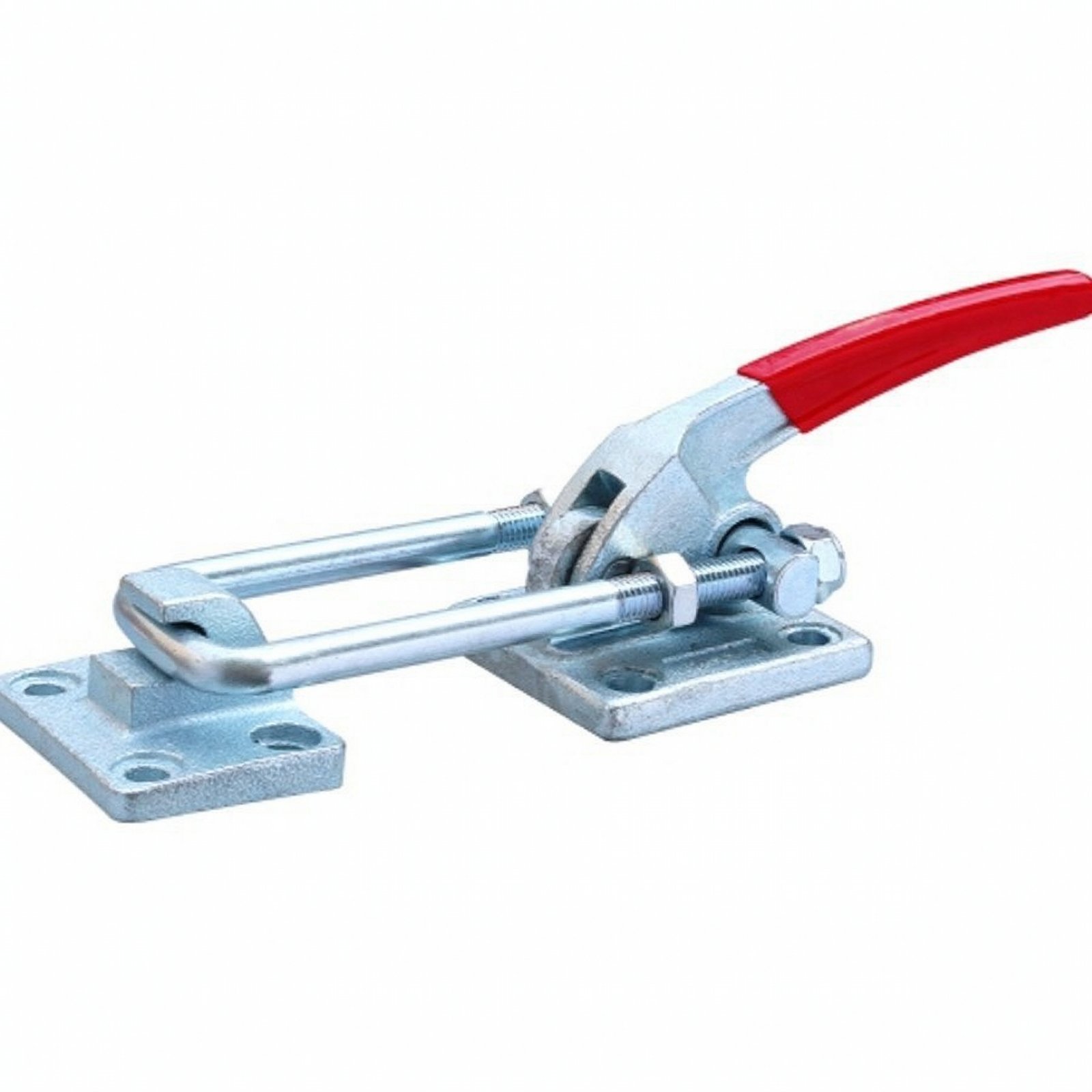
A latch clamp such as 304 Stainless Steel Toggle Latch Clamp is a practical choice when you need adjustable tension and a compact body for tight spaces. A simple over-center latch such as Adjustable Toggle Latch Clamp also makes sense when your fixture has a fixed catch point and you want quick opening and closing.
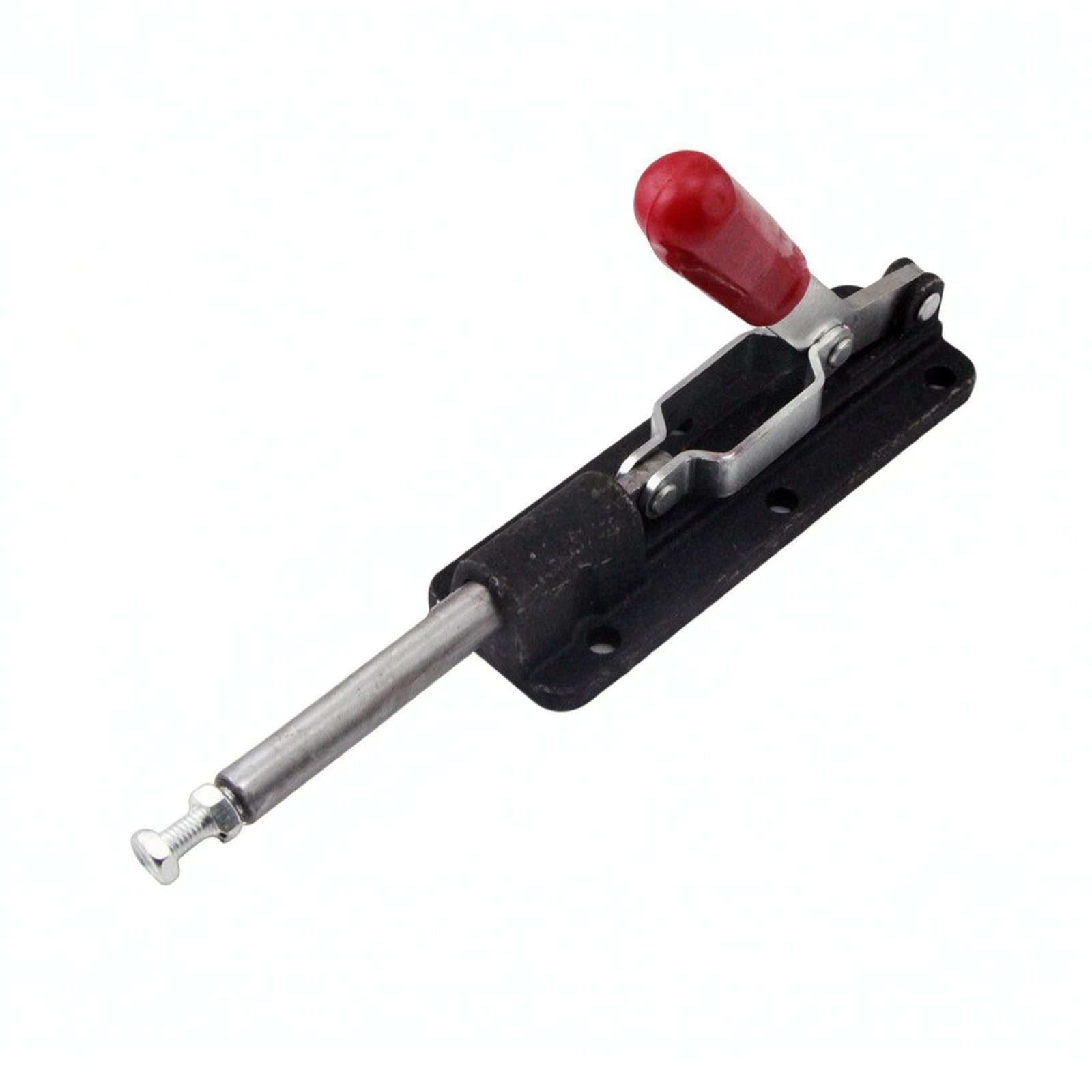
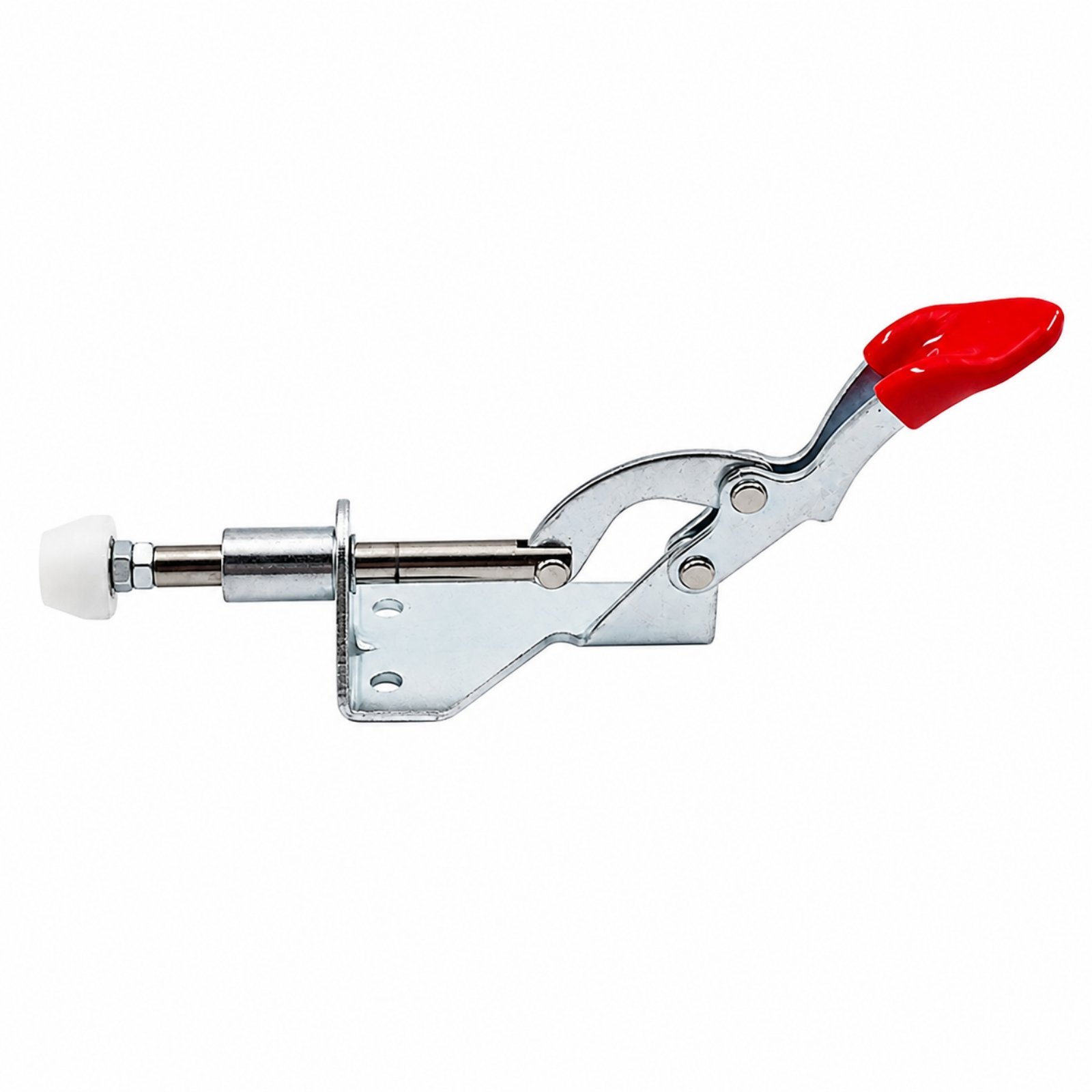
For straight-line clamping, look at how far the rod needs to travel and how rigid the mounting area is. Push-Pull Toggle Clamp is a heavy-duty push-pull style with an 80 mm stroke, an 8 mm plate, a 16 mm rod diameter, and 580 kg holding force, which suits larger jigs where the clamp must stay planted under heavier loads. If you need a compact production-style positioning clamp, Steel Toggle Clamp 68Mm Travel provides 68mm travel and uses 4.5 mm mounting holes with an 11 mm rotating touch pad, which is useful where the clamp tip must meet the work cleanly.
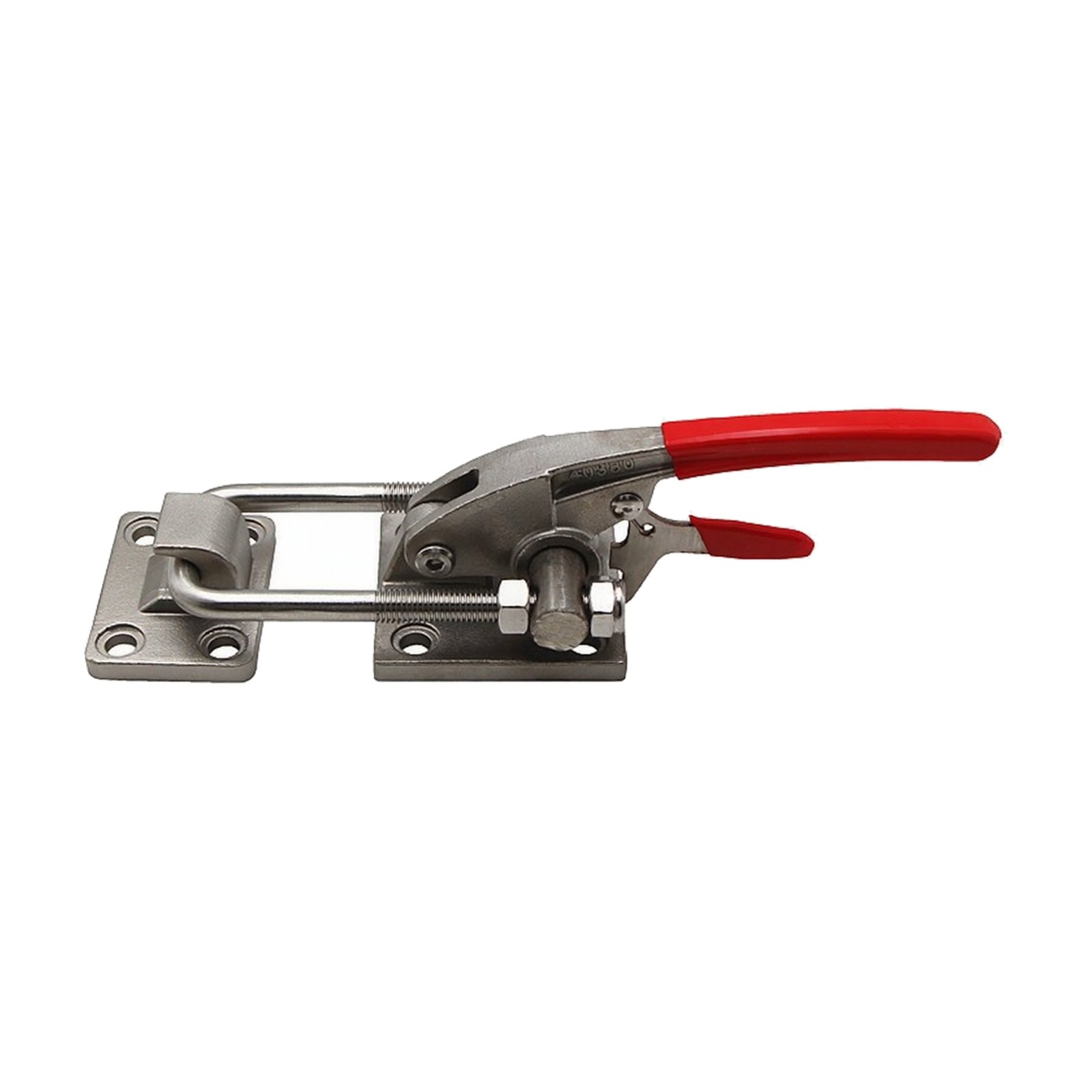
Also think about environment and wear. If the jig may see moisture, coolant, or frequent handling, stainless hardware can be easier to live with. Self-Locking Toggle Clamp uses rust-resistant 304 stainless steel and is intended for demanding holding tasks, while 304 Stainless Steel Toggle Latch Clamp also uses 304 stainless steel and adds an adjustable rod for tuning fit.
Set up the jig so the clamp works with the locator, not against it
A toggle clamp should not do the locating job by itself. First give the workpiece a repeatable home with stops, fences, pins, or a pocket in the fixture. Then place the clamp so its force pushes the part into those locators rather than sideways off them.
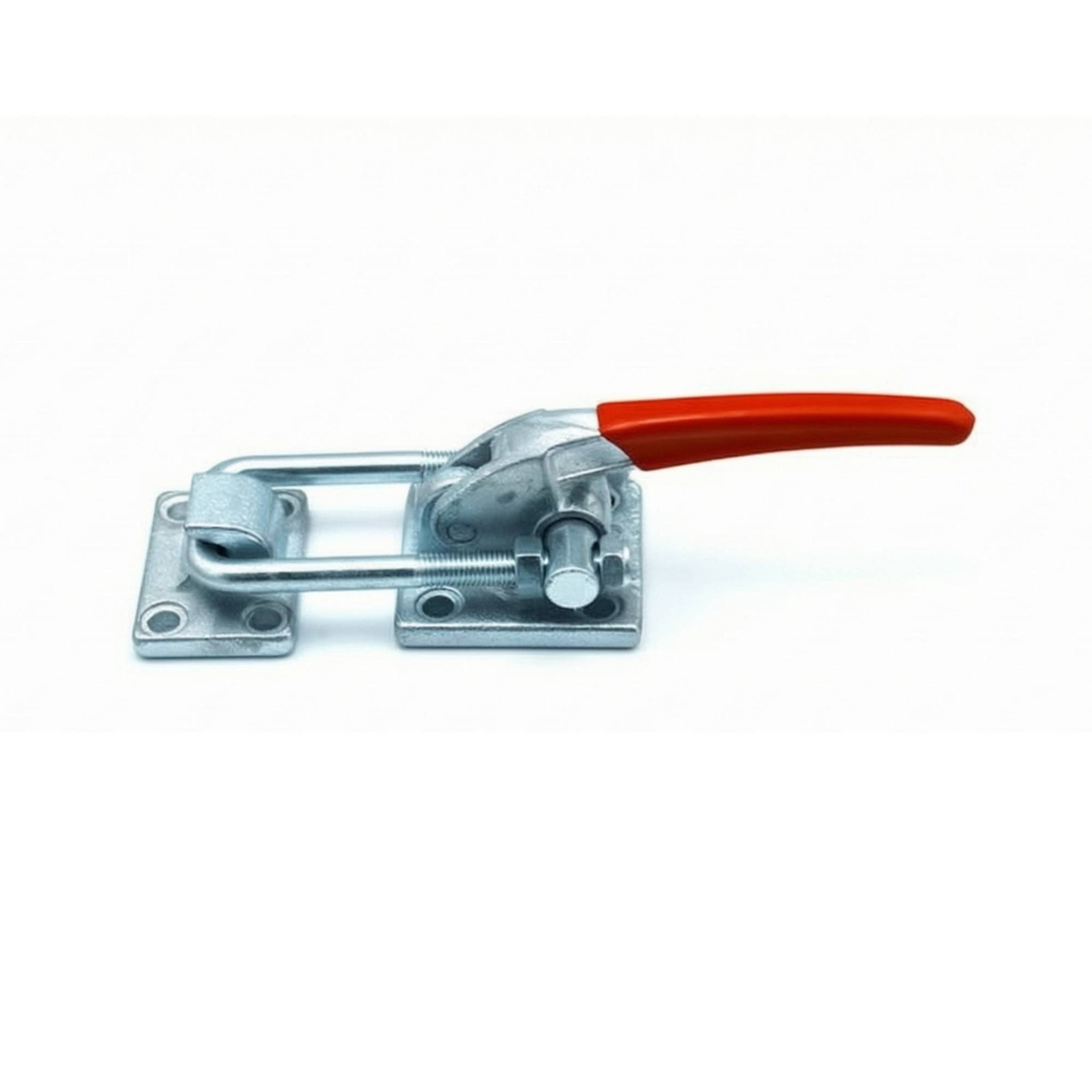
On latch fixtures, mount the base and catch so the linkage closes positively and the handle lands in a comfortable place. Toggle Clamp with U-Bracket has a mounted base plate and a curved retaining bar that help when you need to tune where the latch meets the fixture. Adjustable Toggle Latch Clamp includes two mounting plates and uses 10.3 mm drilled holes with a 79.4 mm mounting width, so it is worth laying out the bolt pattern on the jig before drilling.
On push-style fixtures, aim the plunger so it presses squarely onto the work or onto a small pressure pad that spreads the load. Steel Toggle Clamp 68Mm Travel uses a rotating touch pad, which helps the clamp face settle on the part as the handle closes. With heavier builds, Push-Pull Toggle Clamp has multiple 8.5 mm mounting holes with a 108 mm center distance, so you can anchor it solidly and keep the push-pull action aligned with the direction of restraint.
Before final fastening, cycle the handle through its full motion with a sample workpiece in place. Check for knuckle clearance, hand clearance, and whether chips or dust will collect where the linkage closes. If the handle is awkward, move the clamp now; a jig that is tiring to use tends to be used less accurately.
Adjust tension and contact for repeatable holding
The goal is firm holding with minimal distortion. Bring the clamp into contact only after the work is already seated against the jig’s locating surfaces. Then adjust the threaded rod, catch, or pad so the mechanism snaps into its locked position with steady resistance, not excessive force.
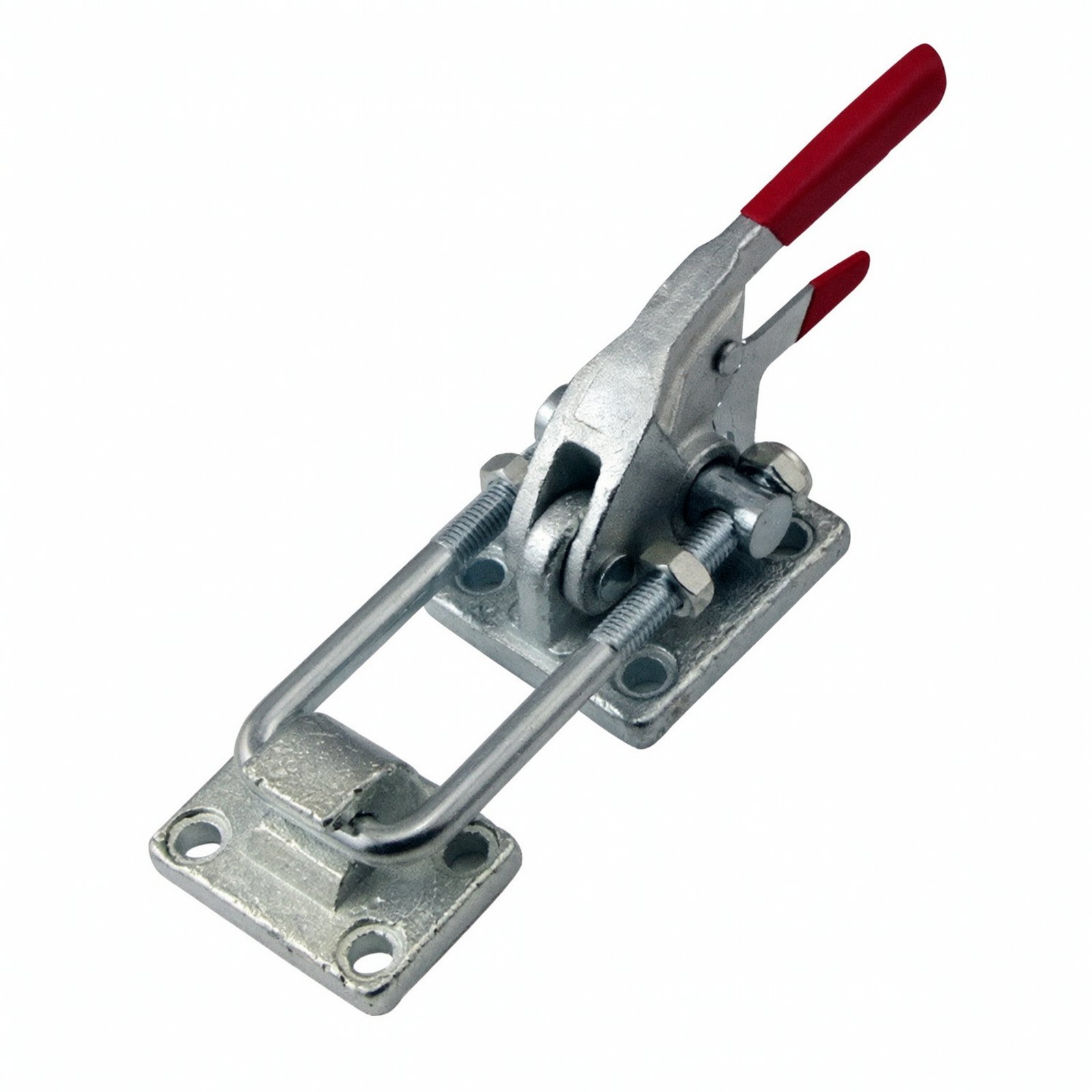
An adjustable latch like 304 Stainless Steel Toggle Latch Clamp is helpful when you need to fine-tune clamping distance and tension for different fixture setups. Self-Locking Latch Clamp is another latch option with self-locking action and adjustable tension, which is useful when vibration or repeated opening could otherwise let a latch creep open.
If your jig sees heavy loads, use a clamp with capacity that matches the task, but do not assume more force is always better. Self-Locking Toggle Clamp is rated at 1300 kg holding capacity, which can suit robust fixtures, but on delicate parts you still need a pad, backup support, or a lighter setting to avoid marking the work. If the part bends, lifts, or shifts while clamping, reduce the pressure and improve the locator layout rather than simply pulling harder.
After adjustment, mark the correct rod or catch position on the jig if several people will use it. That saves setup time and helps keep the clamping feel consistent from one workpiece to the next.
Common mistakes to avoid
A common mistake is placing the clamp where it blocks tool access. On a drilling, routing, or assembly jig, keep the handle and linkage out of the work zone and away from fasteners that need to be reached. Another mistake is relying on one clamp to resist every direction of movement; most fixtures work better when one feature locates and another feature clamps.
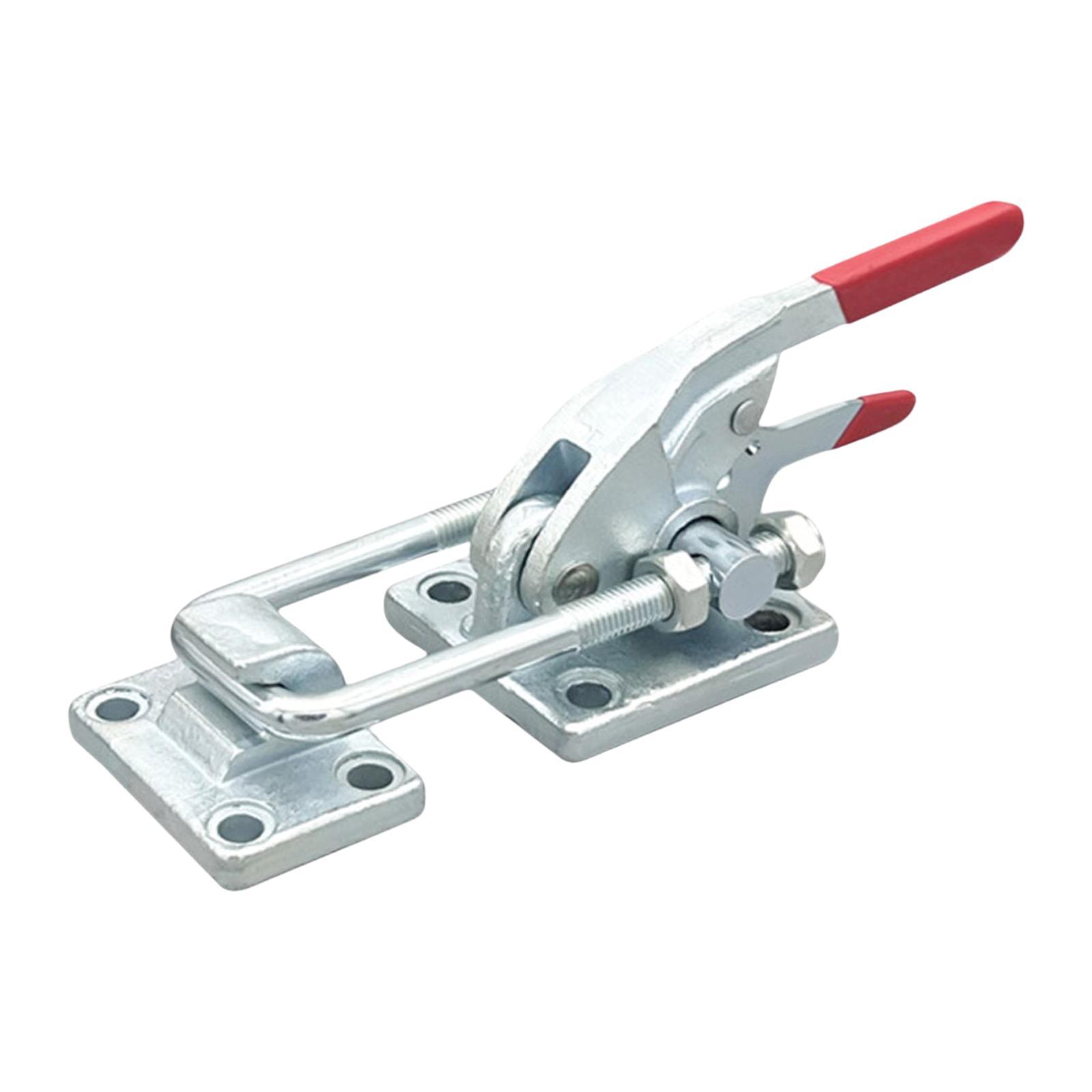
Do not mount a heavy clamp on a weak base. Toggle Clamp Latch has a package weight of 1880 g and Push Pull Toggle Clamp has a package weight of 2100 g, so both are worth pairing with a rigid fixture body and secure fasteners rather than thin scrap material. Package weight is not holding force, but it is a reminder that some clamp bodies are substantial and need solid support.
Avoid guessing from photos alone. With Toggle Clamp Latch, compare the listed size with your intended use before ordering, especially if you are replacing an existing latch on a fixture. And with any push-pull model such as Push Pull Toggle Clamp, confirm that the rod travel, mounting footprint, and handle path actually suit your jig layout.
Finally, do not overtighten to make up for poor fit. If the clamp leaves marks, the work still moves, or the handle takes too much effort, the real fix is usually better locating, better alignment, or a different clamp style.
A typical kit
- 304 Stainless Steel Toggle Latch ClampUse this latch clamp when a jig needs adjustable tension and a compact self-locking pull-down action.
- Push-Pull Toggle ClampUse this push-pull clamp when a fixture needs strong straight-line clamping on a rigid base.
- Steel Toggle Clamp 68Mm TravelUse this push-style clamp when you want repeatable positioning with a rotating contact pad on a compact jig.
- Adjustable Toggle Latch ClampUse this over-center latch when a fixture needs a separate catch point and easy adjustment during setup.
- Toggle Clamp with U-BracketUse this latch clamp when you want a base-mounted clamp with an adjustable retaining bar for general jig work.
- Self-Locking Toggle ClampUse this self-locking latch on heavier fixtures that need high holding force and corrosion-resistant material.
Questions people ask
Where should I place a toggle clamp on a jig?
Place the clamp so it pushes or pulls the part into fixed locators such as stops, pins, or fences. Keep the handle clear of the cutting path and make sure your hand can open and close it without hitting the work or the machine.
Should I use a latch clamp or a push-pull clamp?
Use a latch clamp when two parts of the fixture need to draw together, such as a cover, swing arm, or hooked catch. Use a push-pull clamp when you need straight-line pressure to hold a part against a stop or to move a plunger in and out quickly.
How tight should I adjust the clamp?
Adjust it so the mechanism locks firmly after the work is fully seated in the jig. If the part shifts, bows, or gets marked, the clamp is too aggressive or the fixture needs better support and locating surfaces.
Do I need more than one clamp on a fixture?
Sometimes, but not always. One clamp can be enough for a small part if the jig controls movement well, while longer or awkward parts often need extra support or a second clamp to prevent lifting or rotation.
Can I use these clamps on delicate parts?
Yes, but use care. Add a pad, soft contact surface, or backup support, and reduce the clamp setting so the fixture holds the part without crushing edges or leaving dents.
Shop the list
Everything mentioned above
Prices and delivery windows are live from our catalog.
304 Stainless Steel Toggle Latch Clamp
Adjustable Toggle Latch Clamp
Push-Pull Toggle Clamp
Steel Toggle Clamp 68Mm Travel
Self-Locking Toggle Clamp
Toggle Clamp with U-Bracket
Self-Locking Latch Clamp
Toggle Clamp Latch