Buying guide · Workshop & Tools
How to flare or bend brake and fuel lines
Short answer
Use a dedicated bender for smooth curves and a proper flaring tool set for clean, centered line ends; trying to force bends by hand or flare on a rough cut is what usually causes kinks and leaks. For hobby brake and fuel line work, match the tool to the line material and size, cut square, deburr, clamp firmly, then make the bend or flare in small, controlled steps.
Choose the right tools for the job
Brake and fuel line work usually needs three steps: cut the tube cleanly, shape the route with bends, and form the end so it seals at the fitting. A bender handles the curve, while a flaring or expanding tool handles the end preparation.
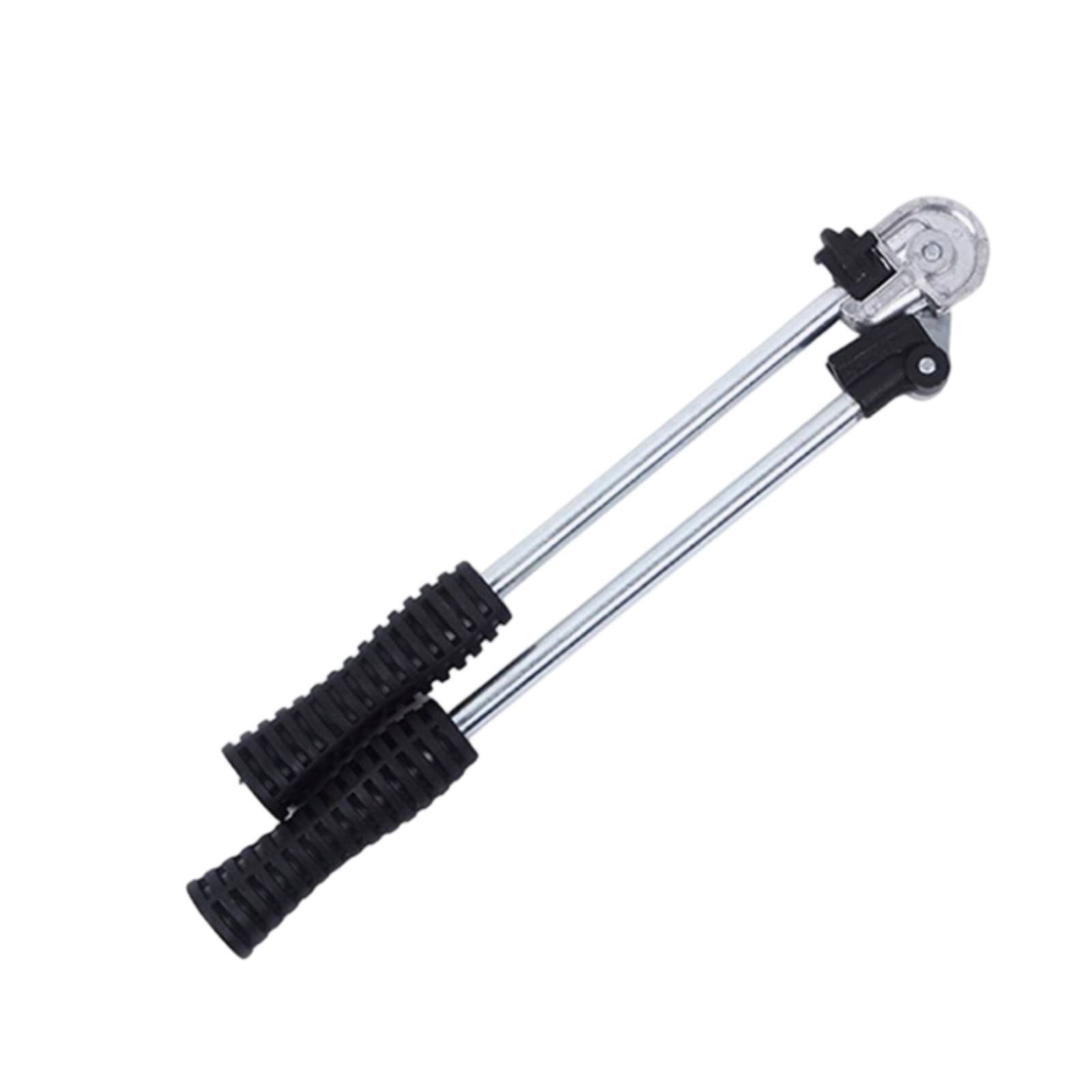
For bending, look for a hand bender that is meant to control the tube through the curve instead of simply pulling it around an edge. Manual Tube Bender is a manual tube bender made for smooth curves in copper, aluminum, and other malleable metal lines, which is the kind of action you want when trying to avoid flattening a line.
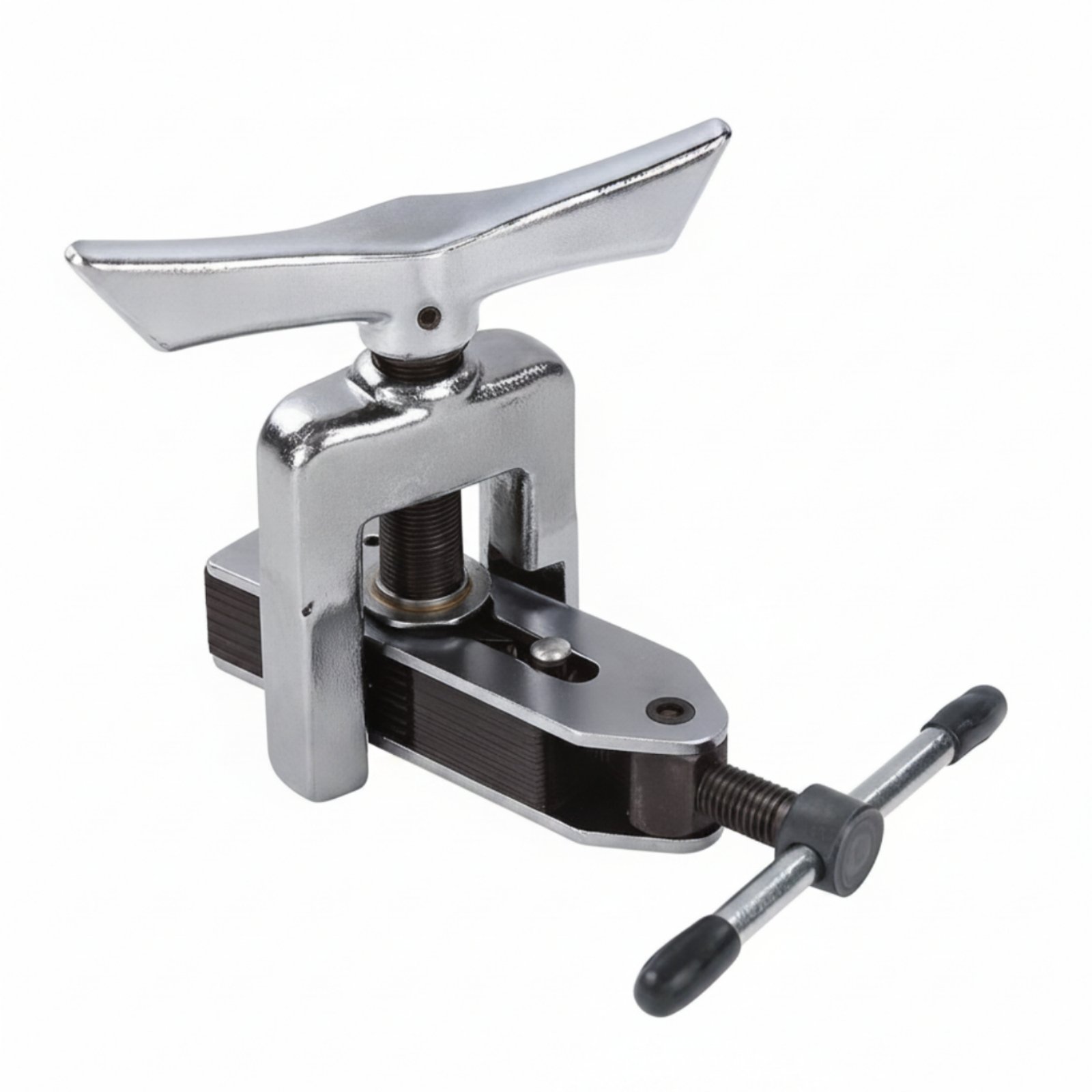
For flaring, pay attention to the clamping method and size coverage. Clamp-Style Tube Flaring Tool is a clamp-style screw-driven flaring tool for copper and aluminum tubing, labeled for 5-16 mm use, so it is suited to smaller tubing where steady pressure matters. If you want a broader kit with more forming parts for different tubing jobs, Copper Tube Flaring Tool works on copper tubes from 1/8 inch to 3/4 inch with interchangeable components and a threaded flaring mechanism.
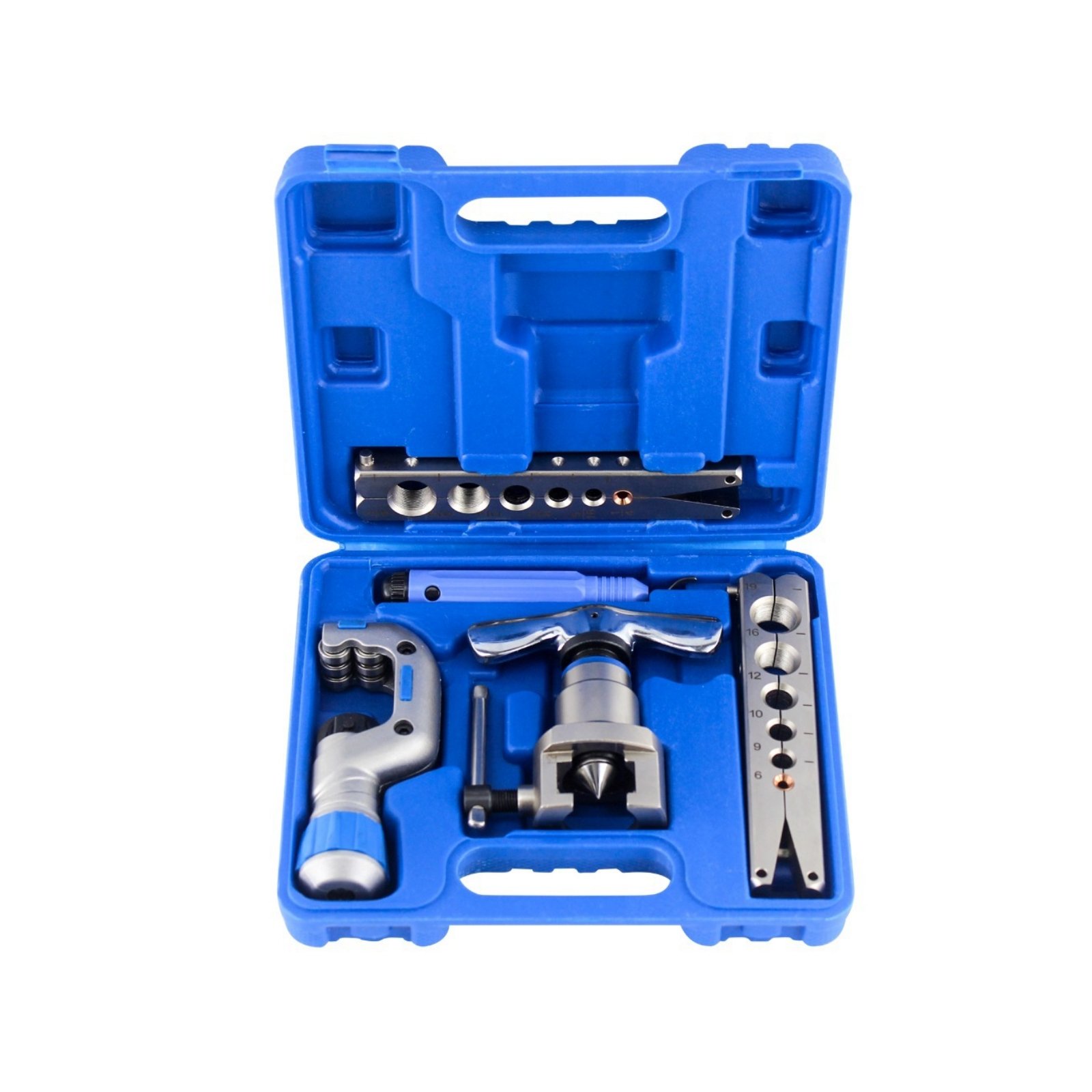
If you are starting from scratch, a kit that includes prep tools can simplify the process. Copper Tube Flaring Tool includes a flaring frame, tube cutter, deburring tool, cone body, handle, straight rod, and clamping plates, so the cut-and-flare steps are covered in one case.
How the pieces work together in a typical line job
The process starts with a straight, square cut. A rough or angled cut makes the tube sit unevenly in the clamp, and that often leads to a crooked flare. Copper Tube Flaring Tool is useful here because the kit already includes a tube cutter and deburring tool, letting you prep the end before you clamp it.
After cutting, remove the burr from the inside edge. Deburring helps the forming cone enter smoothly and reduces the chance of tearing the tube edge. Then slide the fitting onto the line before you flare; forgetting that step is one of the most common do-overs in tubing work.
Next, clamp the line in the flaring bar so it cannot slip while pressure is applied. Clamp-Style Tube Flaring Tool uses a clamp-style body with a threaded screw mechanism and T-handle, which is the kind of setup that helps you apply pressure gradually and keep the flare centered. Copper Tube Flaring Tool uses a graduated clamping bar and threaded flaring mechanism, which also supports controlled, repeatable forming.
Bending usually comes after you know the route, but many hobbyists make a rough bend plan before flaring the final end so they can confirm length and fitting orientation. Manual Tube Bender is the tool for that step because it is designed to create smooth curves without crimping or collapsing the metal. Work a little at a time and check the path often, especially where the line passes near brackets, moving parts, or hot areas.
Common mistakes to avoid
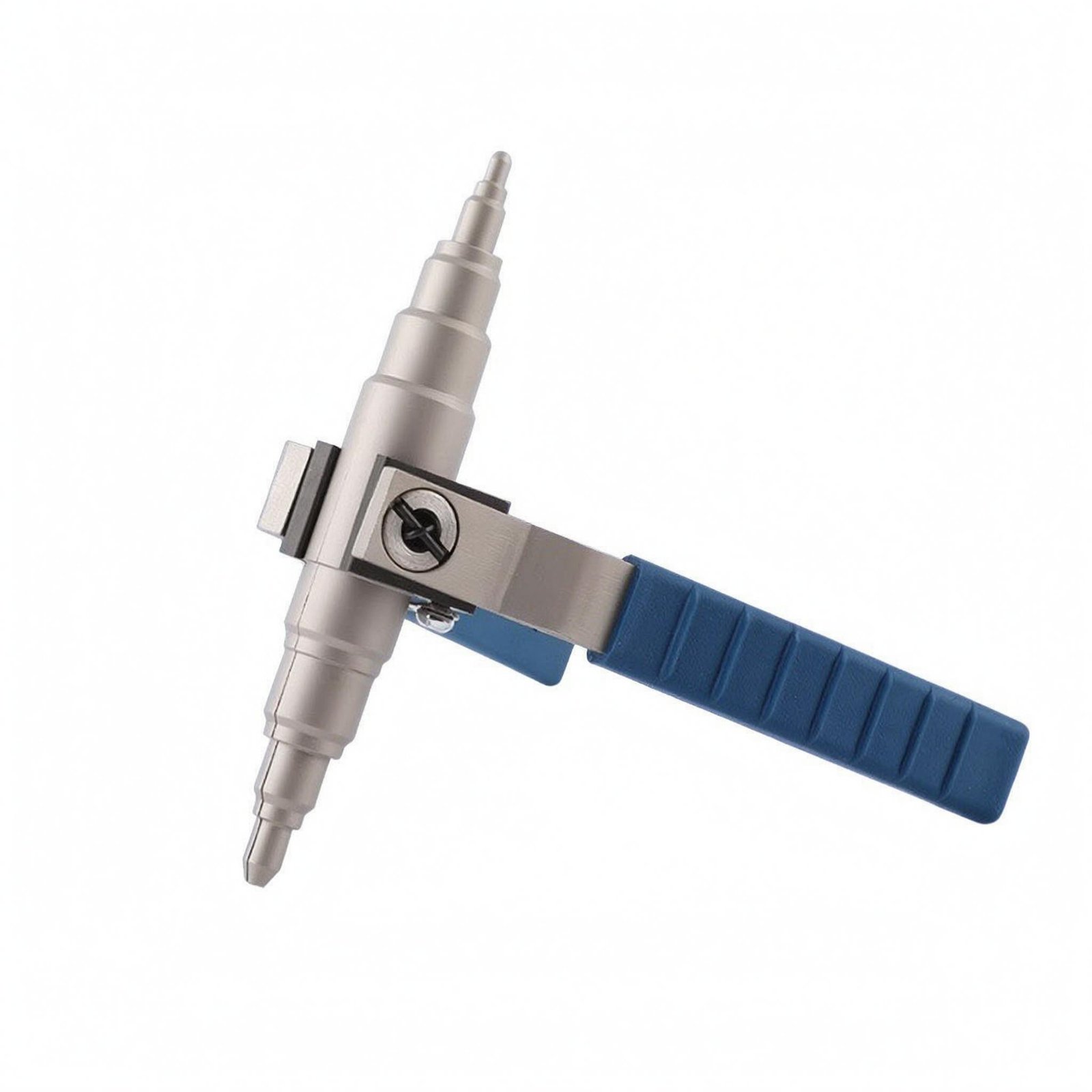
The first mistake is using the wrong type of flaring tool for the material. Copper Pipe Flaring Tool is a copper pipe flaring and expanding tool for copper tubes with an outer diameter of 6-22 mm, so it makes sense for copper tube tasks, but you should not assume a copper-only tool is right for every brake or fuel line material. If your line is not copper, check the tool description and your tubing material before you start.
Another mistake is skipping line prep. Do not flare a crushed, out-of-round, or burred tube end. Even a good tool cannot make a clean sealing surface from a poor starting edge, so cut square, deburr, and inspect the tube before clamping it.
A very common bending mistake is trying to make a tight curve by hand. That often creates a flat spot or a wrinkle that restricts flow and weakens the tube. A tool such as Manual Tube Bender supports the tube during the bend, which is why it is safer than freehand bending for neat routing.
Do not over-force the tool. If the tube starts to slip in the clamp, back up and re-seat it rather than tightening harder and hoping for the best. Also, avoid doing the final bend before you confirm where the fitting needs to point, because a correct flare on a misaligned line can still be unusable.
Picking between a compact flaring tool and a full kit
A compact flaring tool is a good choice when you already have cutters and prep tools and mainly need something portable for line ends. Clamp-Style Tube Flaring Tool is a smaller clamp-style option with a screw-driven design that fits bench work and field processing, so it suits focused flaring tasks without a large case.
A full kit makes more sense when you want one organized setup for repeat jobs. Tubing Flaring Tool Set includes a metal flaring tool body, flaring cone, and multiple interchangeable sizing inserts or adapters in a carrying case, which is helpful if you work on different tube sizes and want the parts kept together. Copper Tube Flaring Tool also fits this role because it combines interchangeable forming parts with a case and a wider stated copper tube range.
If you need cut, deburr, and flare capability in one package, Copper Tube Flaring Tool is the most complete example here because those prep tools are included. The right choice depends less on owning the most pieces and more on whether the kit matches your tubing material, the size range you actually use, and whether you already own the basic prep tools.
A typical kit
- Manual Tube BenderThis is the bending tool that helps form smooth curves in malleable metal line without kinking it.
- Clamp-Style Tube Flaring ToolThis compact clamp-style flaring tool is for controlled end forming on smaller tubing.
- Copper Tube Flaring ToolThis all-in-one kit covers cutting, deburring, clamping, and flaring in one case.
- Copper Tube Flaring ToolThis broader flaring set is for copper tubing jobs that need interchangeable forming parts and a wider stated size range.
- Tubing Flaring Tool SetThis organized flaring set is a practical choice when you want adapters and storage for repeated tubing work.
Questions people ask
Can I bend brake or fuel line by hand without a bender?
You can try, but hand bending is where kinks and flat spots usually start. A tubing bender like Manual Tube Bender supports the line through the curve so the shape stays smoother and the passage is less likely to collapse.
Do I need to deburr the tube before flaring?
Yes, deburring is an important prep step because the forming cone works better on a clean edge. Copper Tube Flaring Tool is helpful for this because the kit includes a deburring tool along with the flaring parts.
Which flaring tool is better for a small workspace?
A compact clamp-style tool is usually easier to position when space is tight. Clamp-Style Tube Flaring Tool has a narrow clamp-style body with a threaded screw mechanism and T-handle, which is suited to controlled use in tighter work areas.
Can these tools work on any brake or fuel line material?
Do not assume that. Copper Pipe Flaring Tool is described for copper tube work, and Clamp-Style Tube Flaring Tool is described for copper and aluminum tubing, so you should always confirm your line material and the tool's stated use before buying.
What if I want one case with most of the basics together?
A kit is the easiest way to start because it keeps the clamping and forming parts organized. Copper Tube Flaring Tool adds a tube cutter and deburring tool, while Tubing Flaring Tool Set focuses on the flaring body, cone, and interchangeable inserts or adapters in a case.
Shop the list
Everything mentioned above
Prices and delivery windows are live from our catalog.
Manual Tube Bender
Clamp-Style Tube Flaring Tool
Copper Tube Flaring Tool – Ct-n806am-l
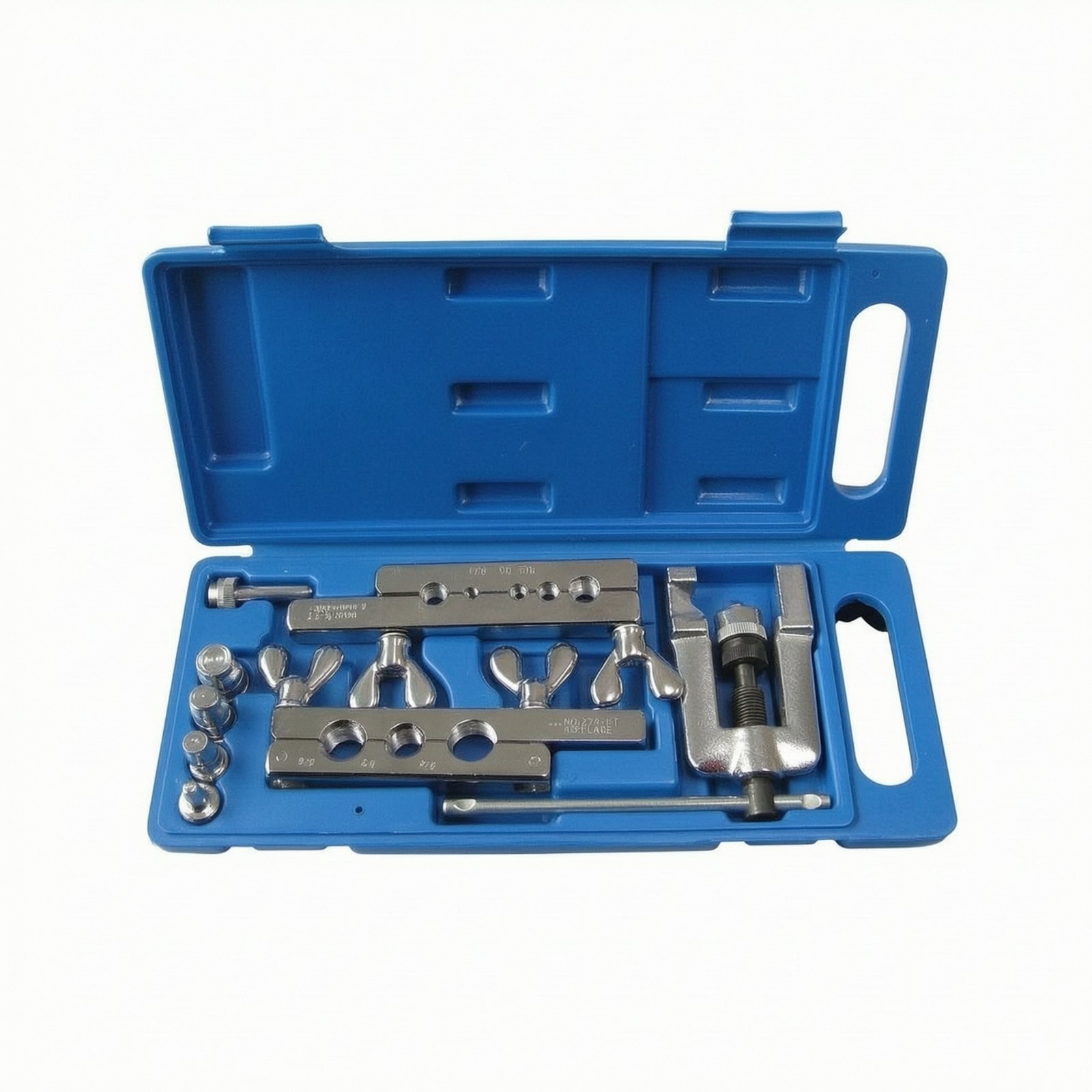
Copper Tube Flaring Tool – 275
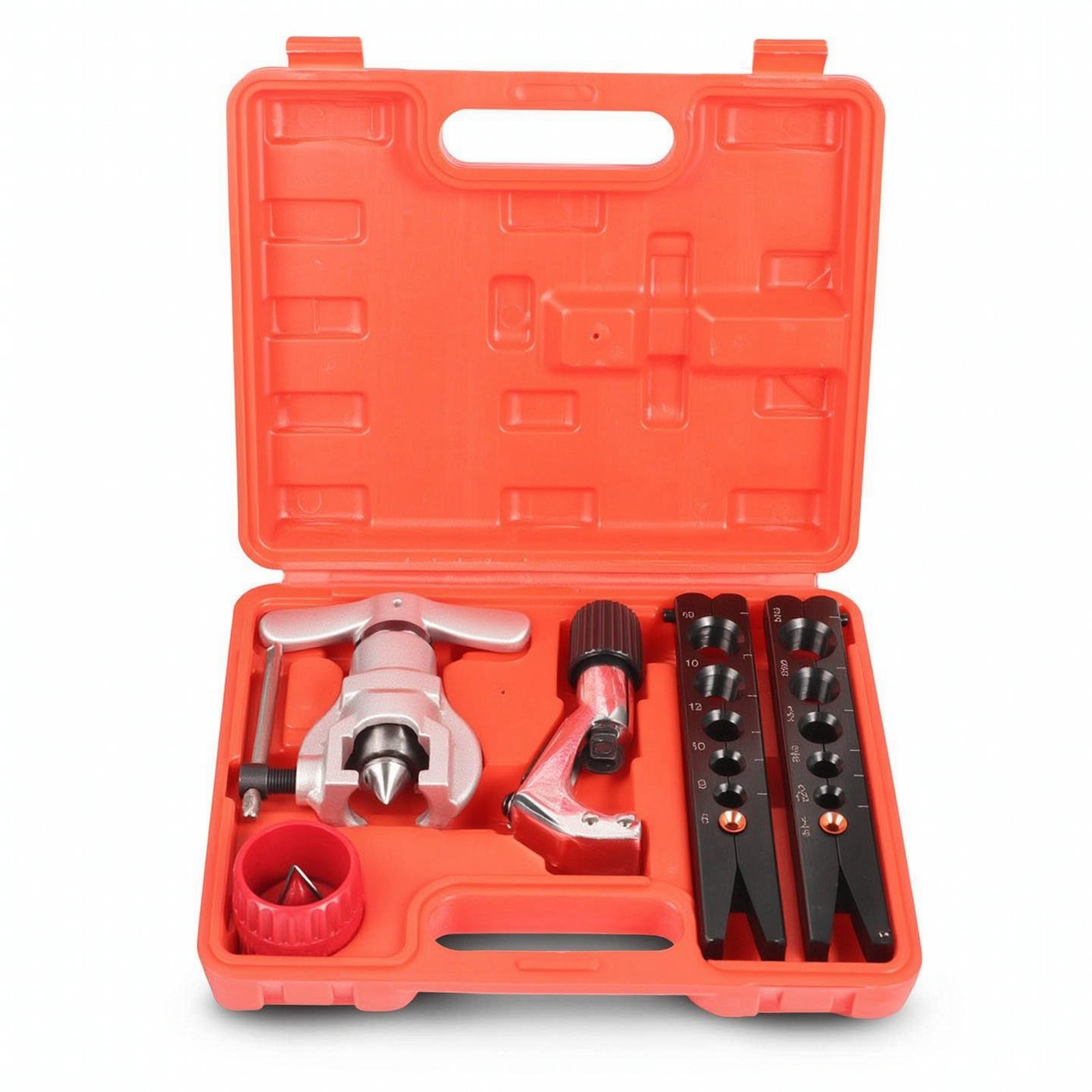
Tubing Flaring Tool Set