Buying guide · Fitness & Sports
How to choose the right golf hitting mat for home practice
Short answer
Choose a golf hitting mat by matching the mat size, surface style, and base stability to the shots you actually practice and the space you have at home. For most home setups, a general hitting mat with a stable base works first, then you can add a specialty mat for bunker or varied-lie practice if that matches your goals.
Start with your practice goal and space
The right mat depends on what you want to rehearse most often. If your home practice is mainly swings, contact, and basic iron work, a standard flat hitting mat is usually the simplest choice. If you want to rotate between tee shots, chips, and different lies, look for a mat with more than one hitting texture or a tee-friendly area.
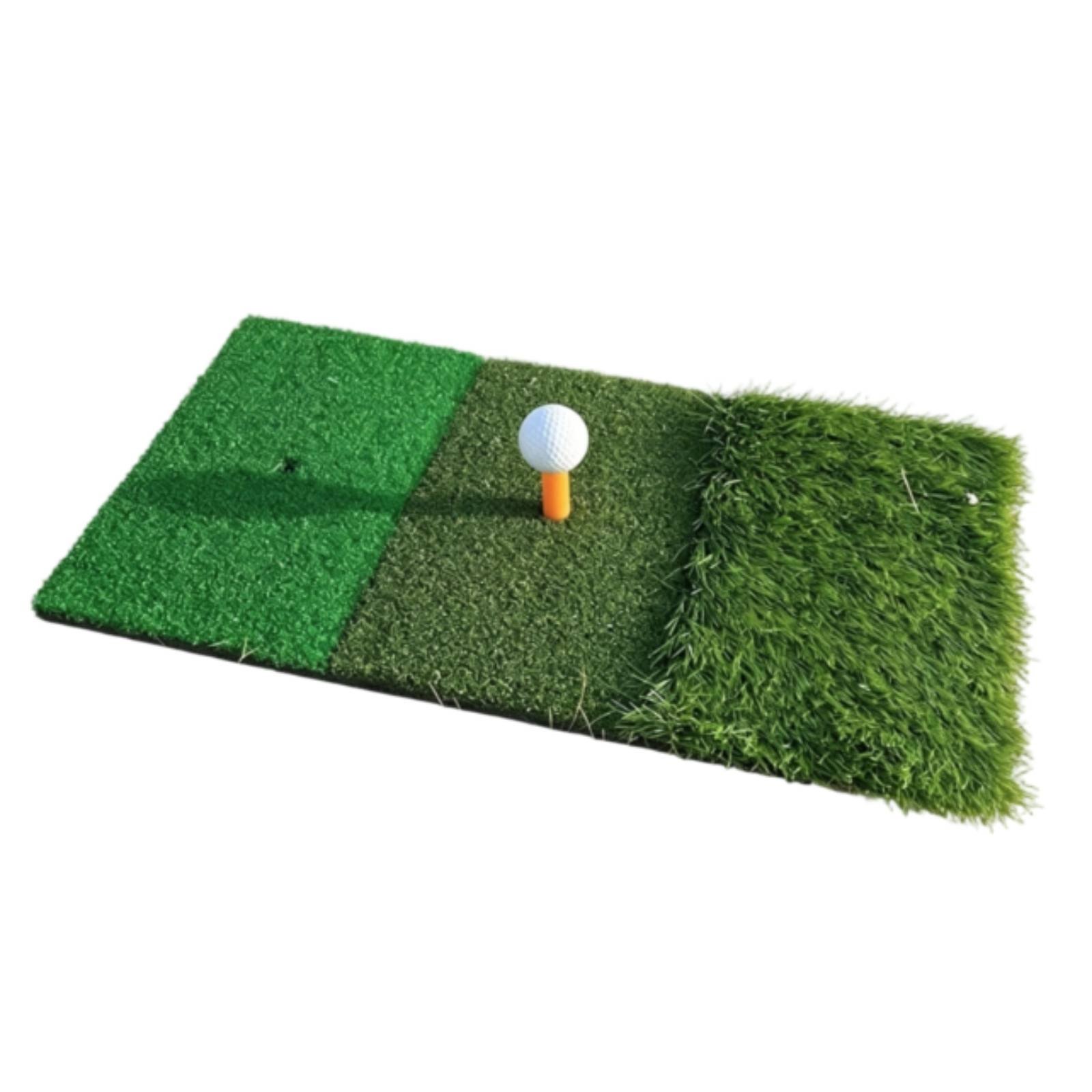
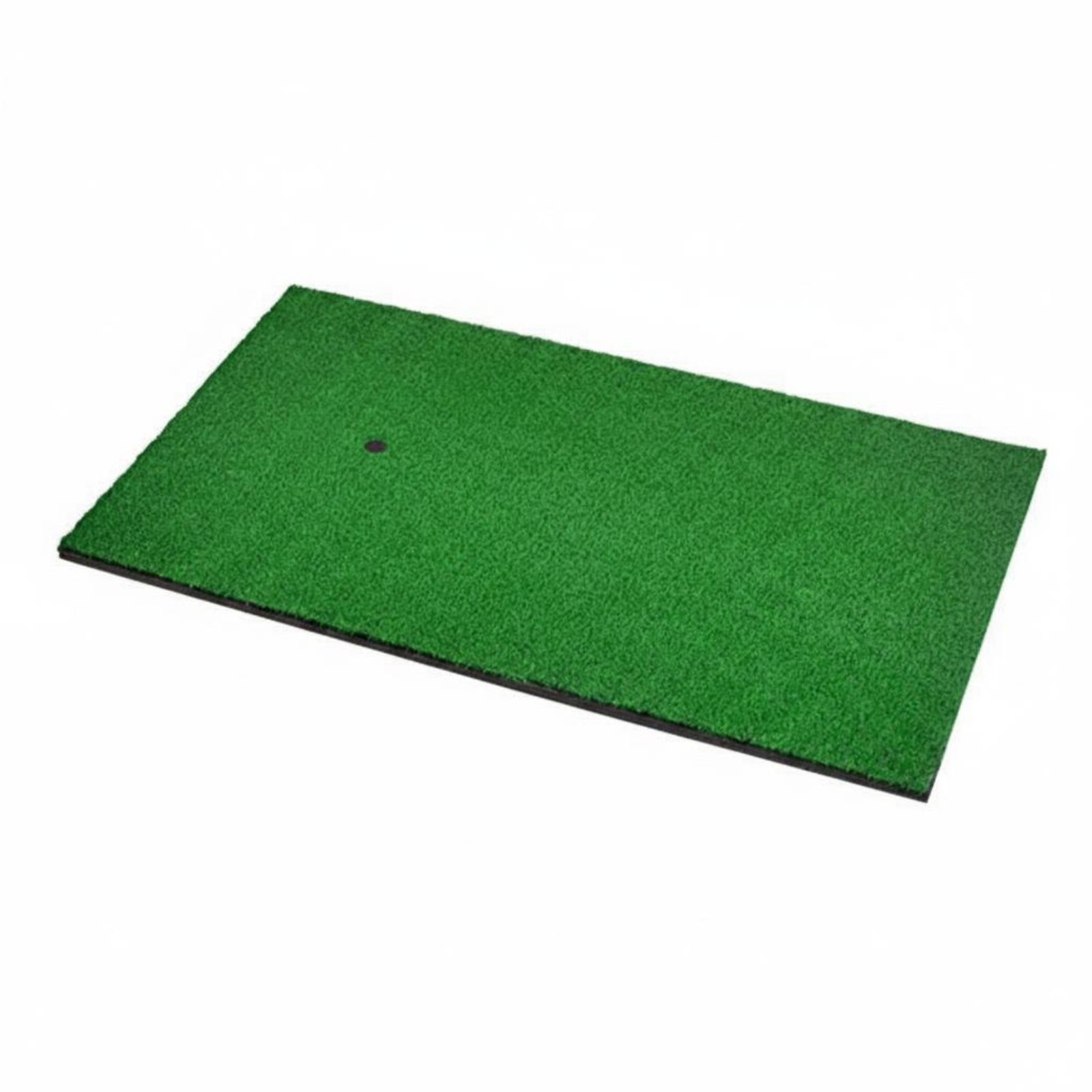
A compact mat such as Three-Color Golf Hitting Mat at 30 x 60 cm can fit a small corner and already supports driving, chipping, and iron work, so it makes sense when space is limited and you want an easy setup. Golf Hitting Mat Artificial Grass is also 30 x 60 cm and gives you a simple flat practice area with a target mark, which is useful if your main goal is repeatable alignment and centered strike practice indoors.
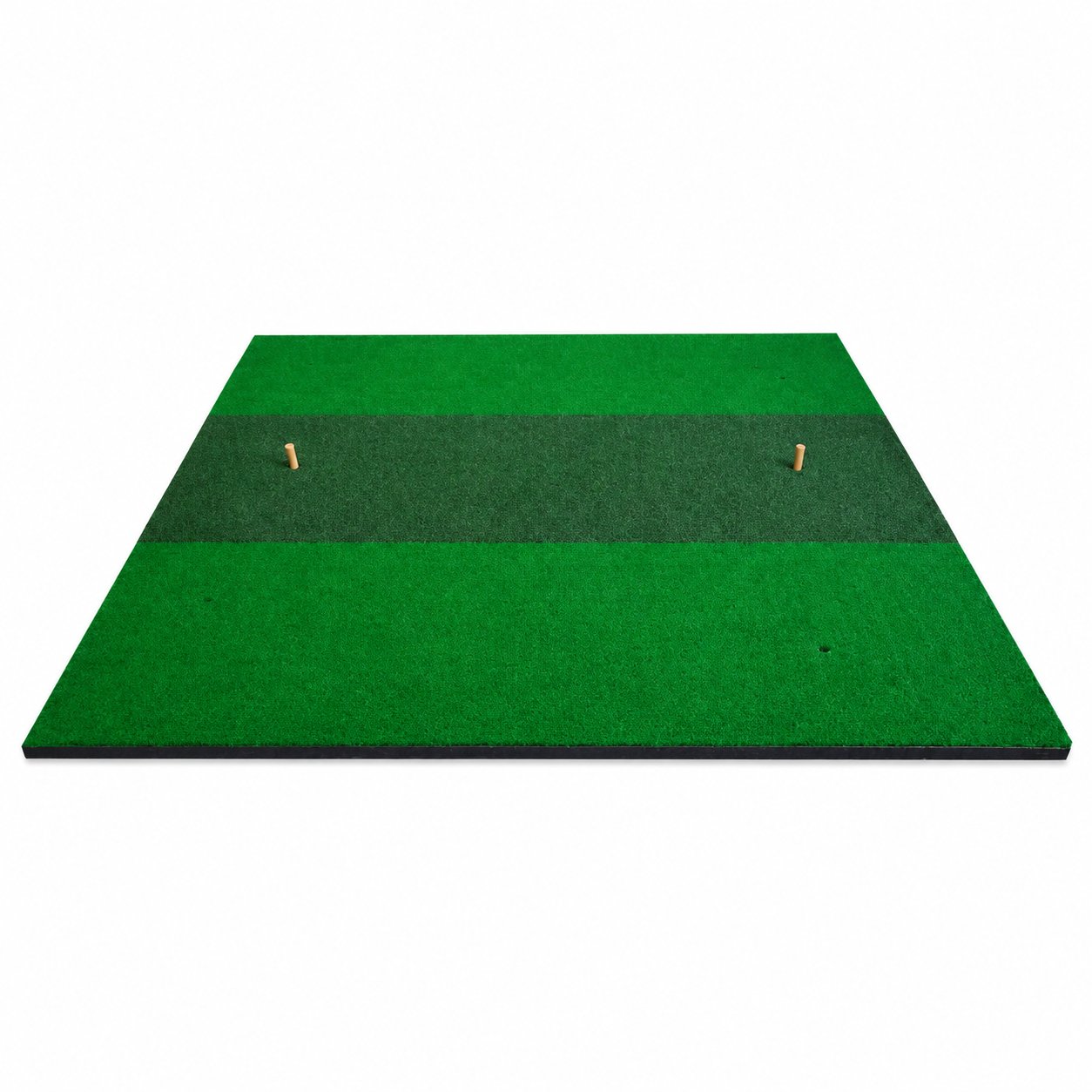
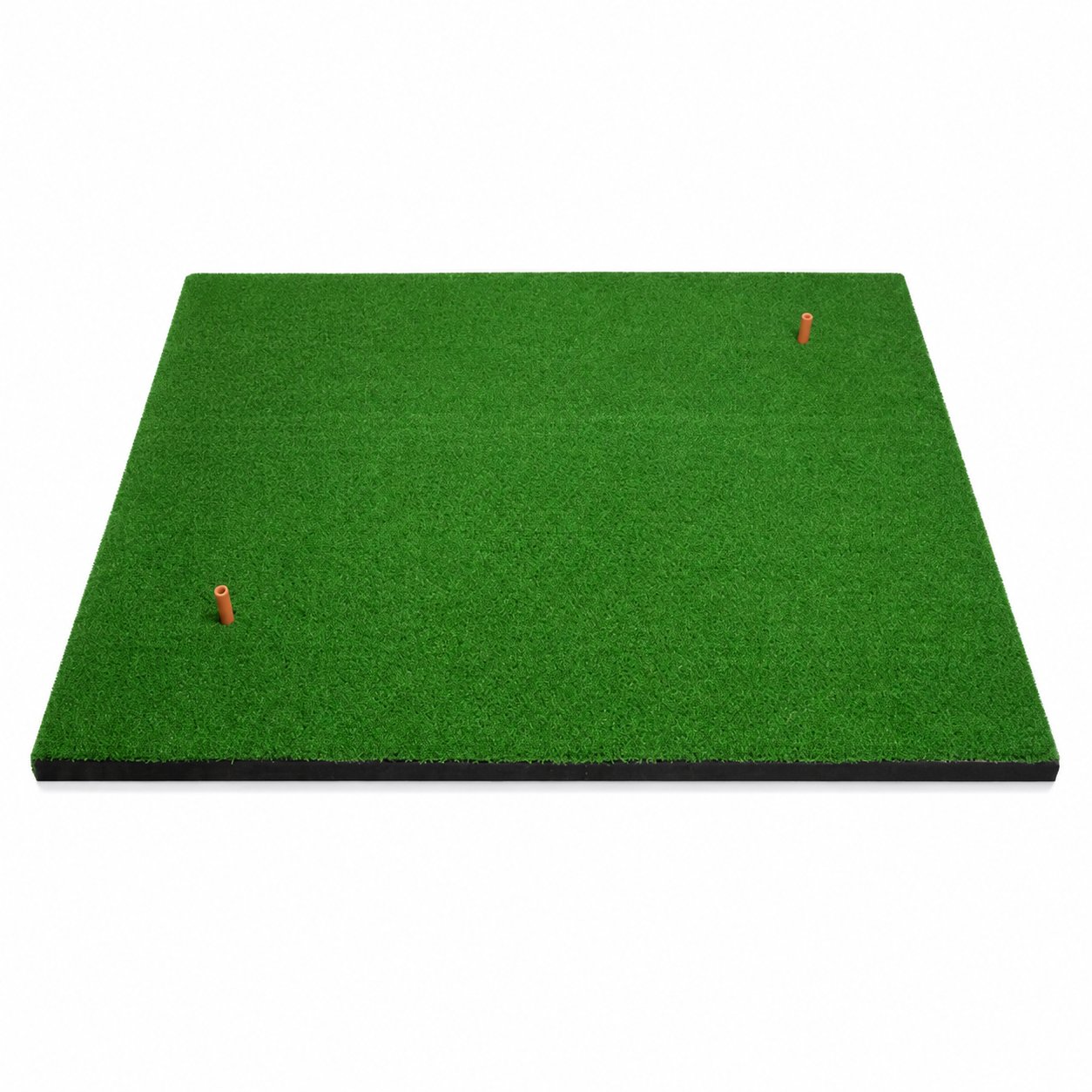
If you have more room and want a mat that lets you stand and swing more naturally, a larger format is easier to live with over time. Indoor Golf Hitting Mat is 5 x 4 ft and is described for driving, chipping, and putting, while Indoor Golf Hitting Mat at 1.2 x 1.2 m gives you a dedicated home hitting area with a non-slip base for indoor or outdoor use.
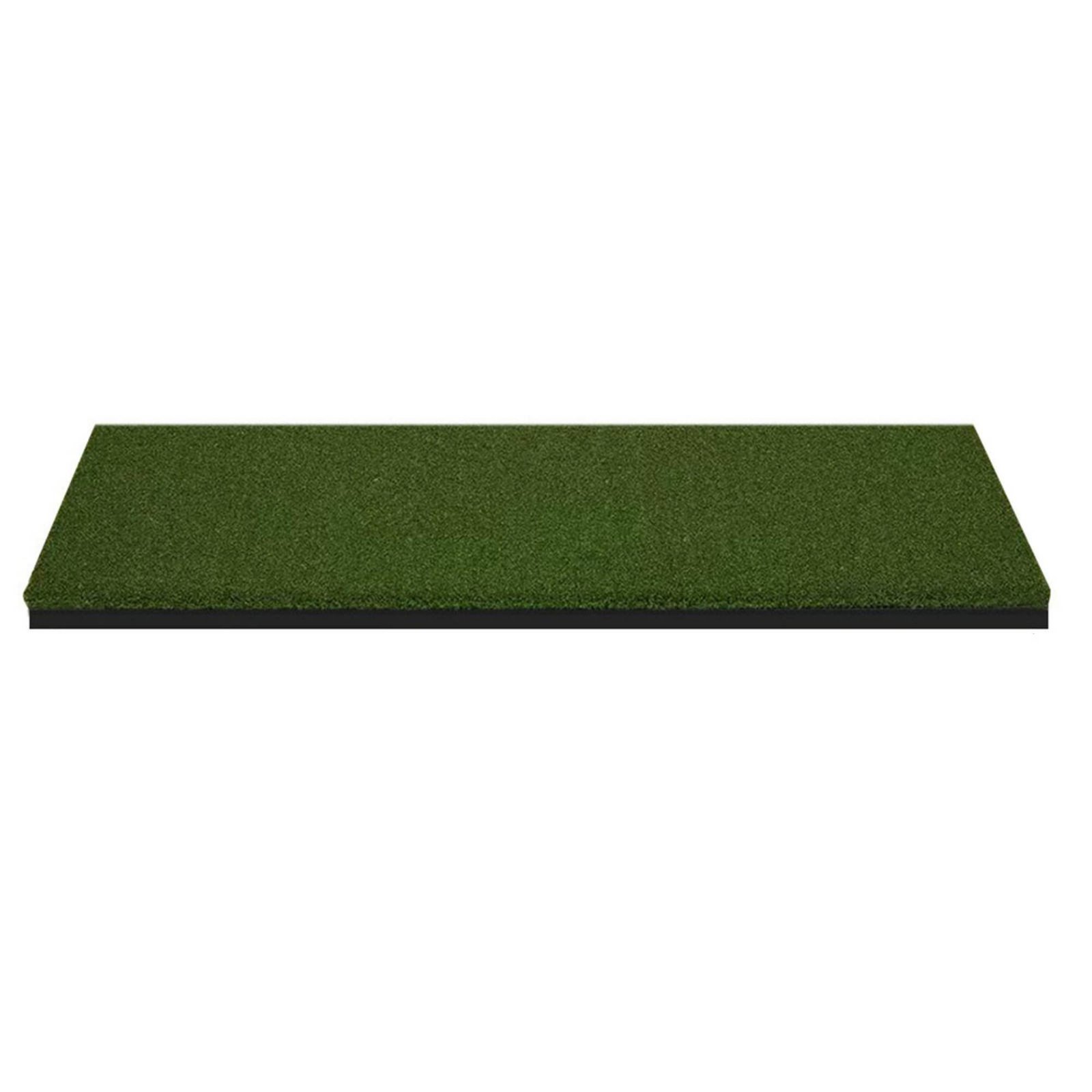
When your practice includes frequent driver work, make sure the mat is tee-friendly rather than assuming every turf mat handles tees the same way. Nylon Golf Hitting Mat at 50 x 150 cm is specifically described as supporting tee insertion, which matters if full swings off a tee are part of your normal routine.
What specs and features matter most
Surface design changes what kind of feedback you get. A plain, consistent turf surface is usually easier for working on setup, strike location, and repeating the same motion. A varied surface can be more helpful if you want to rehearse different lies at home instead of only hitting from one flat texture.
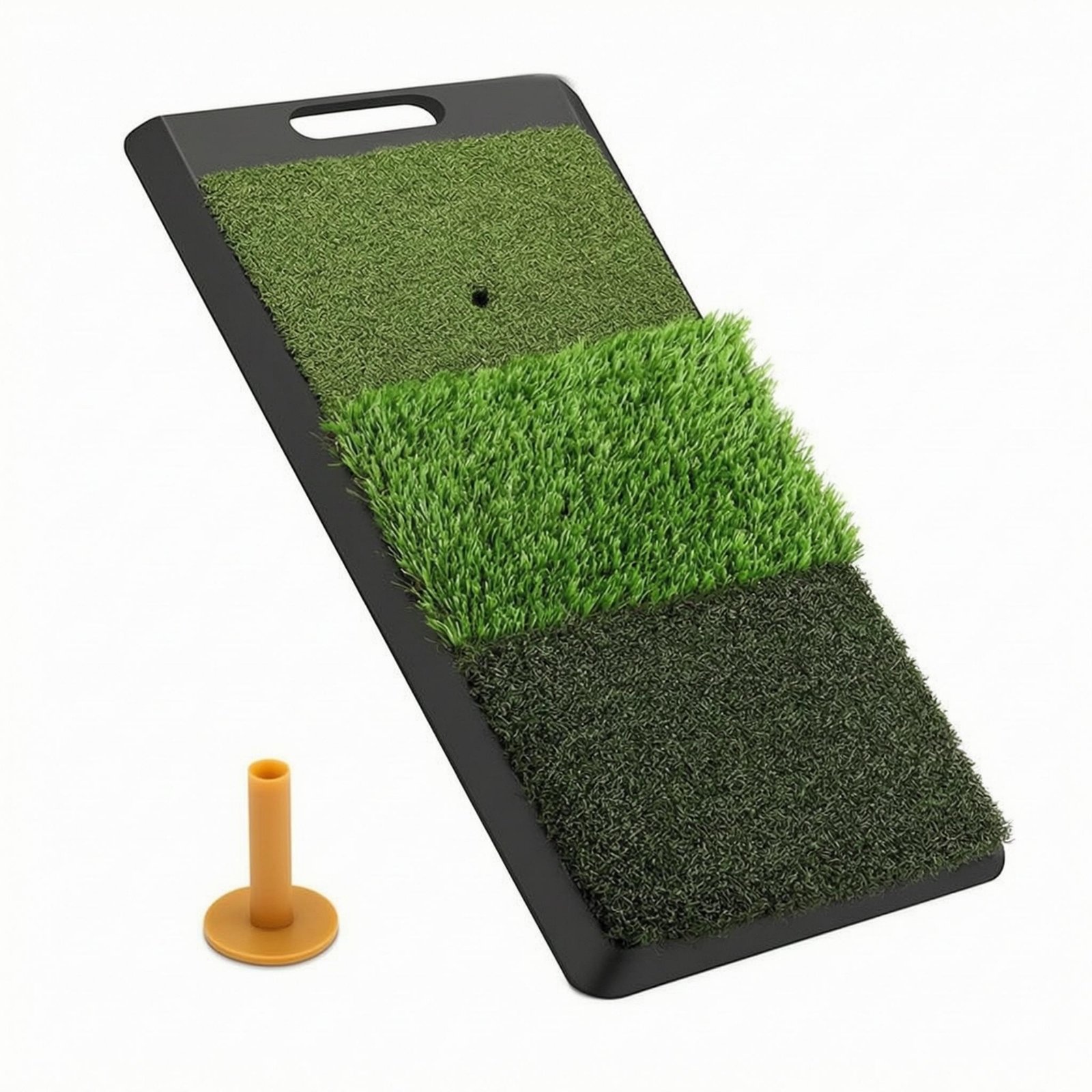
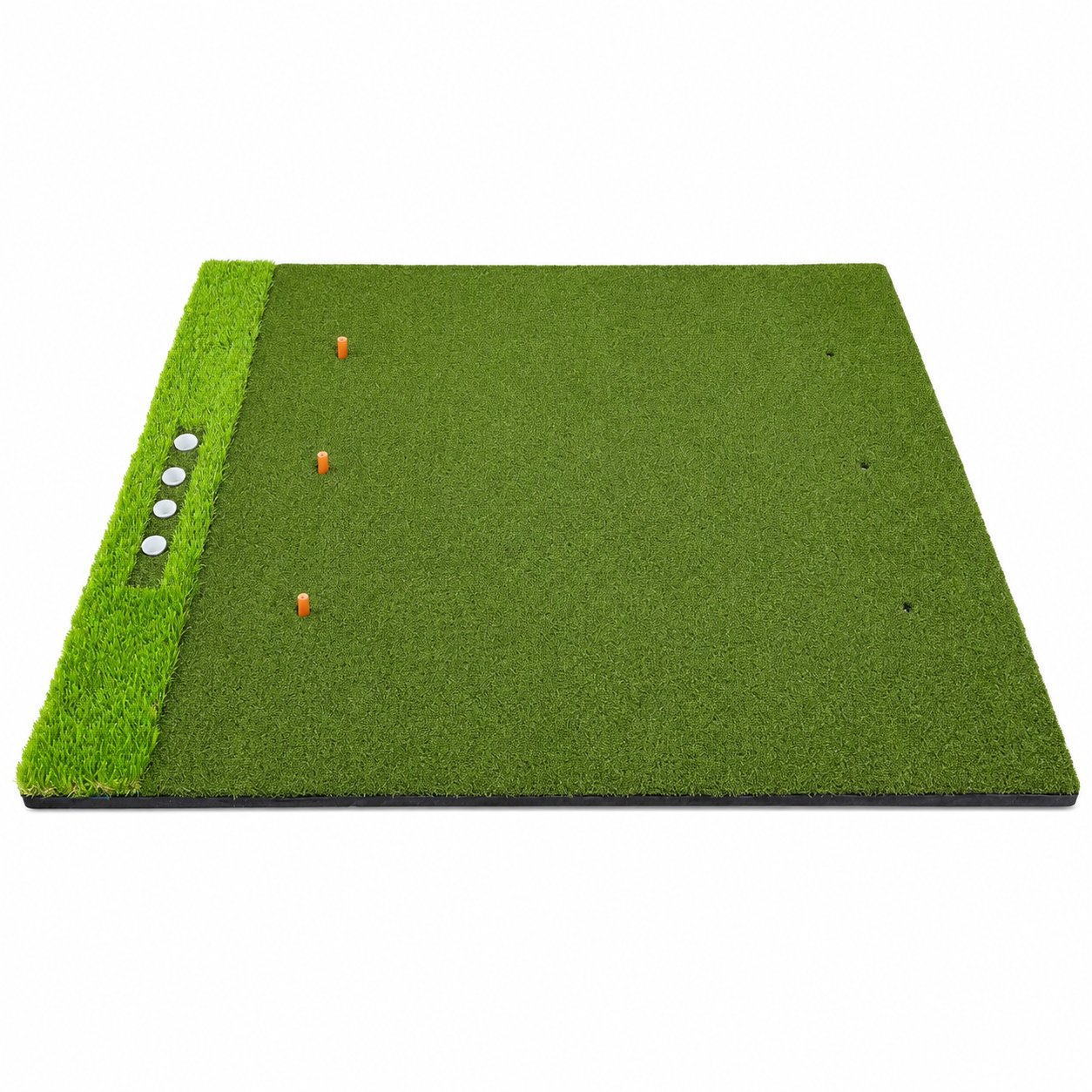
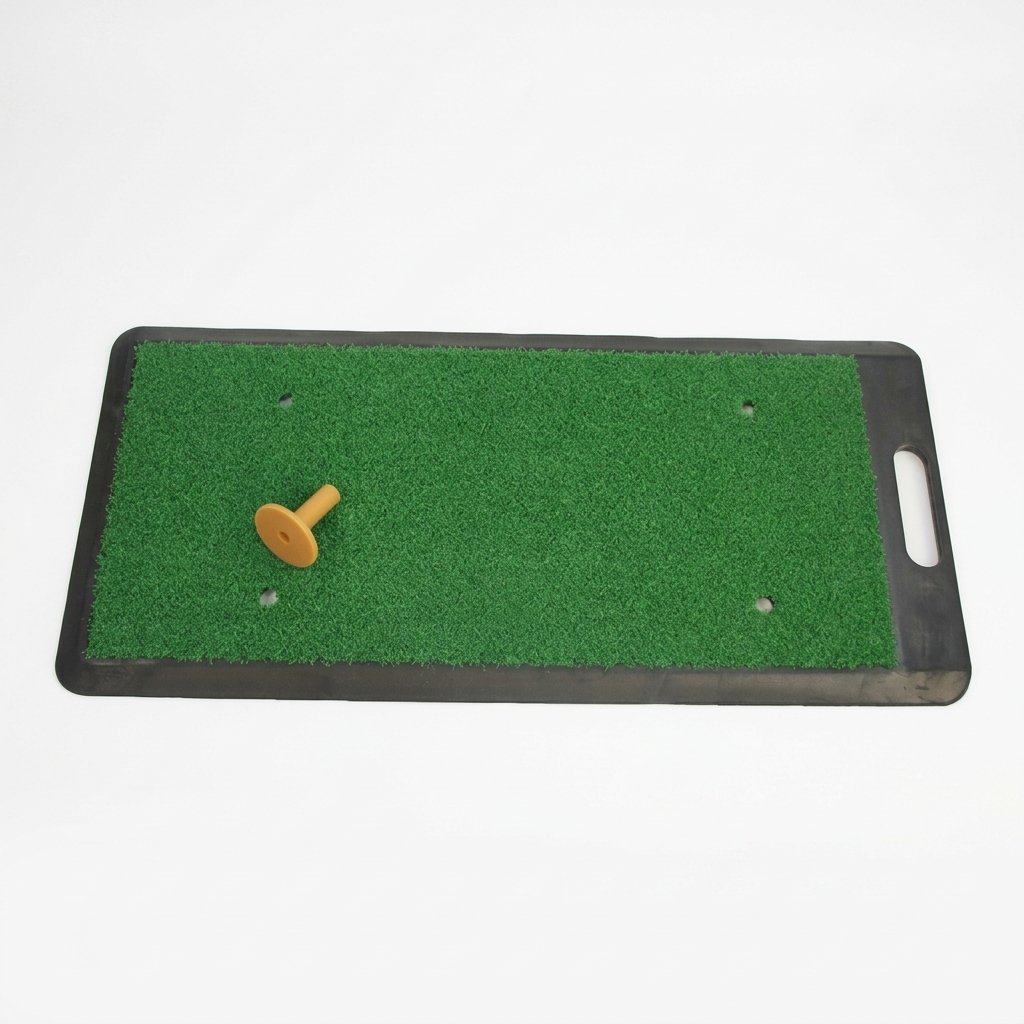
Golf Practice Mat includes three grass sections with 12 mm putting grass, 40 mm tall grass, and 35 mm tee grass, so it is well suited to buyers who want one compact mat that can mimic several basic practice conditions. Golf Hitting Mat with Tee Holder combines long grass and a putting green style section, and it also has a tee holder, which makes it a strong example of a home mat built for more than one type of shot.
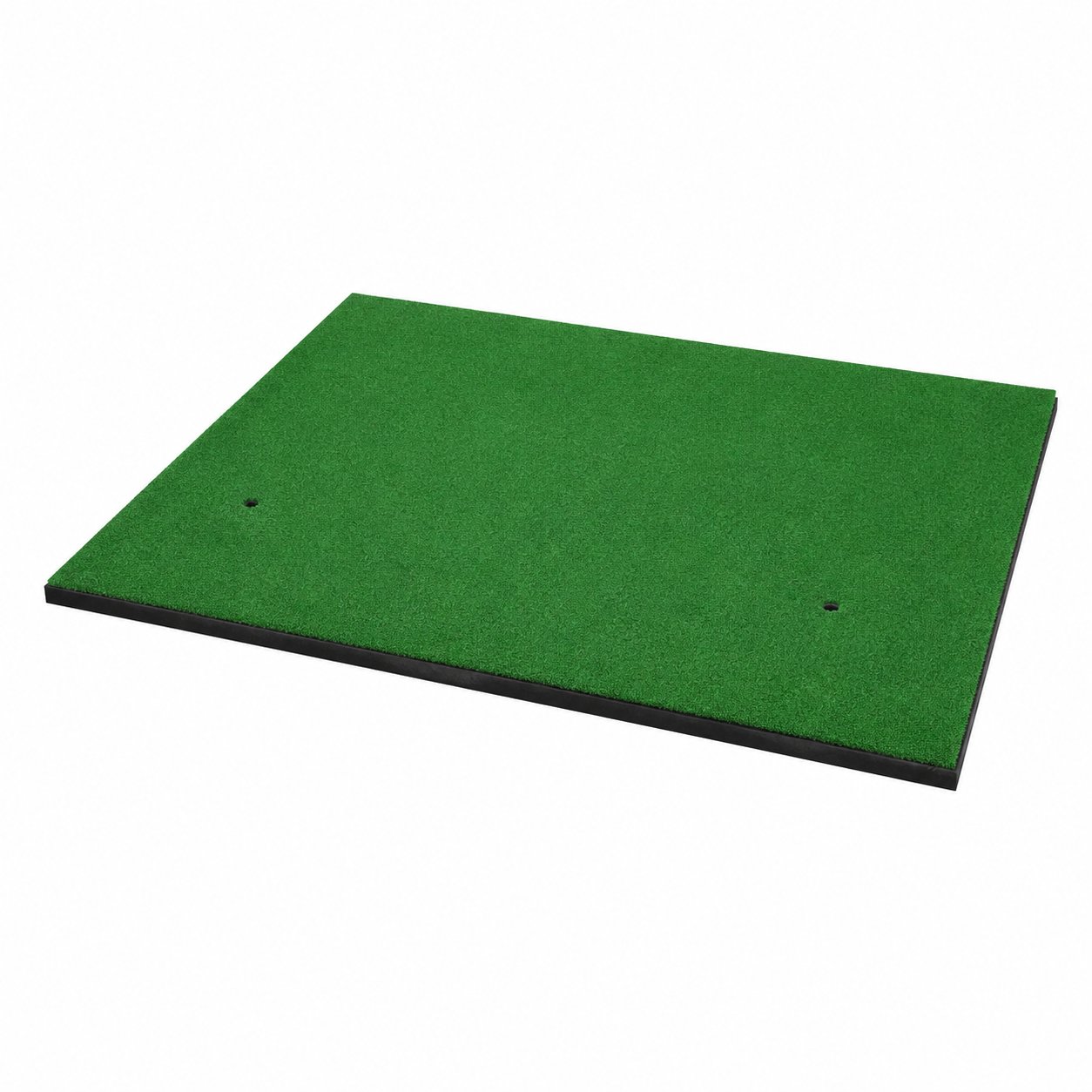
Base construction matters just as much as turf. A mat that shifts during the swing can make practice frustrating and can change your setup without you noticing. Look for a non-slip or shock-absorbing base when you expect frequent use, especially on smooth indoor floors. Indoor Golf Hitting Mat uses an EVA base described as non-slip, Portable Golf Practice Mat has an elastic rubber base with shock absorption, and Golf Practice Mat is described with a non-slip base and thickened surface for impact comfort.
Portability matters if the mat will be rolled up between sessions. Golf Practice Mat has a handle and beveled edges for easier moving and setup, while Golf Practice Mat includes a carry handle. If the mat will stay in one spot most of the time, portability matters less than having enough hitting area and a stable base.
How the pieces work together in a home setup
Think of a home practice area as a system rather than a single purchase. The hitting mat provides the strike surface, and the mat size, lie options, and tee support determine what shots you can practice comfortably. A basic flat mat covers most full-swing work, while a specialty surface adds a specific type of feedback.
For an all-purpose setup, a standard hitting mat such as Indoor Golf Hitting Mat or Indoor Golf Hitting Mat can be the main station for swing practice. If you want more lie variety without a very large footprint, Golf Practice Mat or Golf Hitting Mat with Tee Holder adds different turf sections so you can switch between cleaner fairway-style contact and heavier grass simulation.
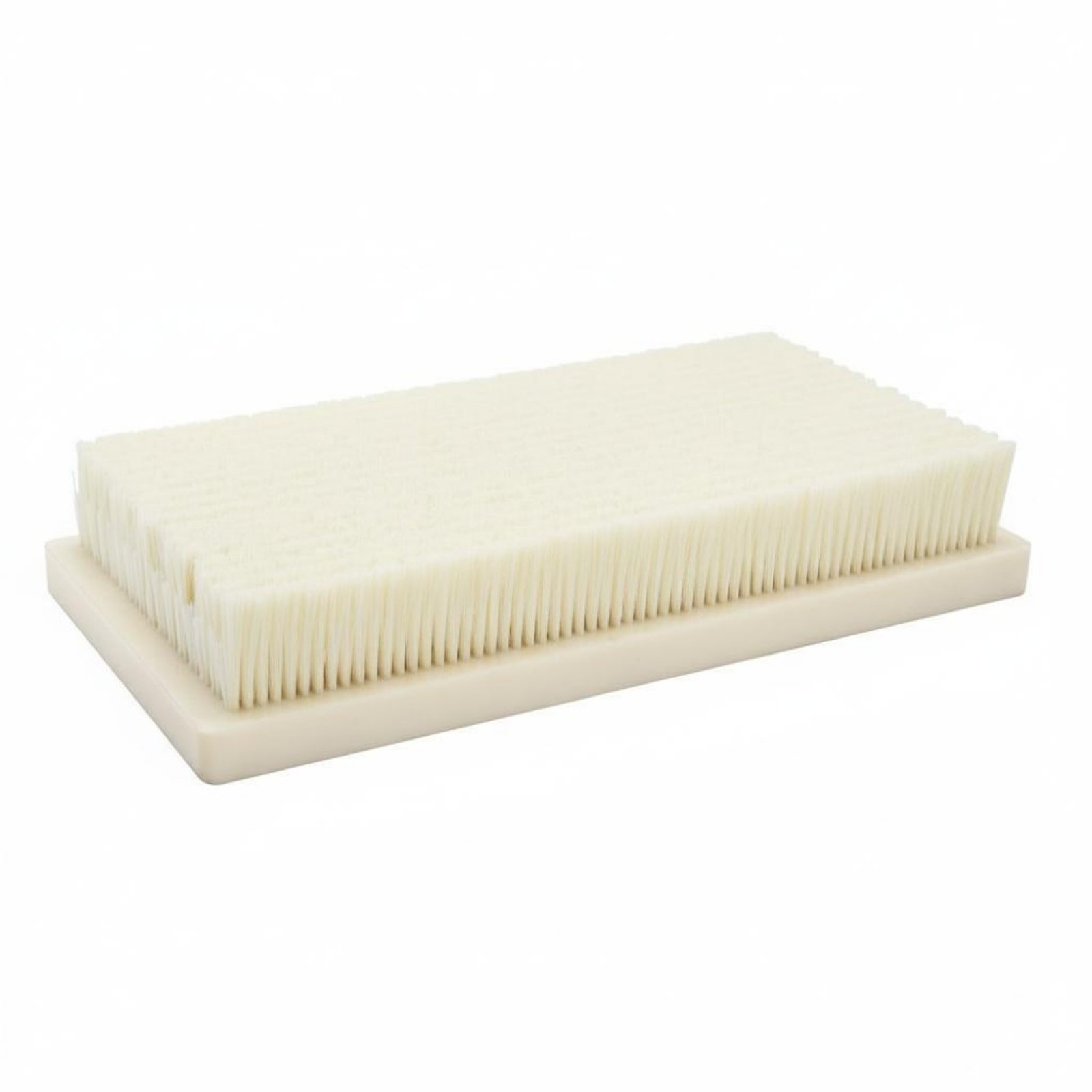
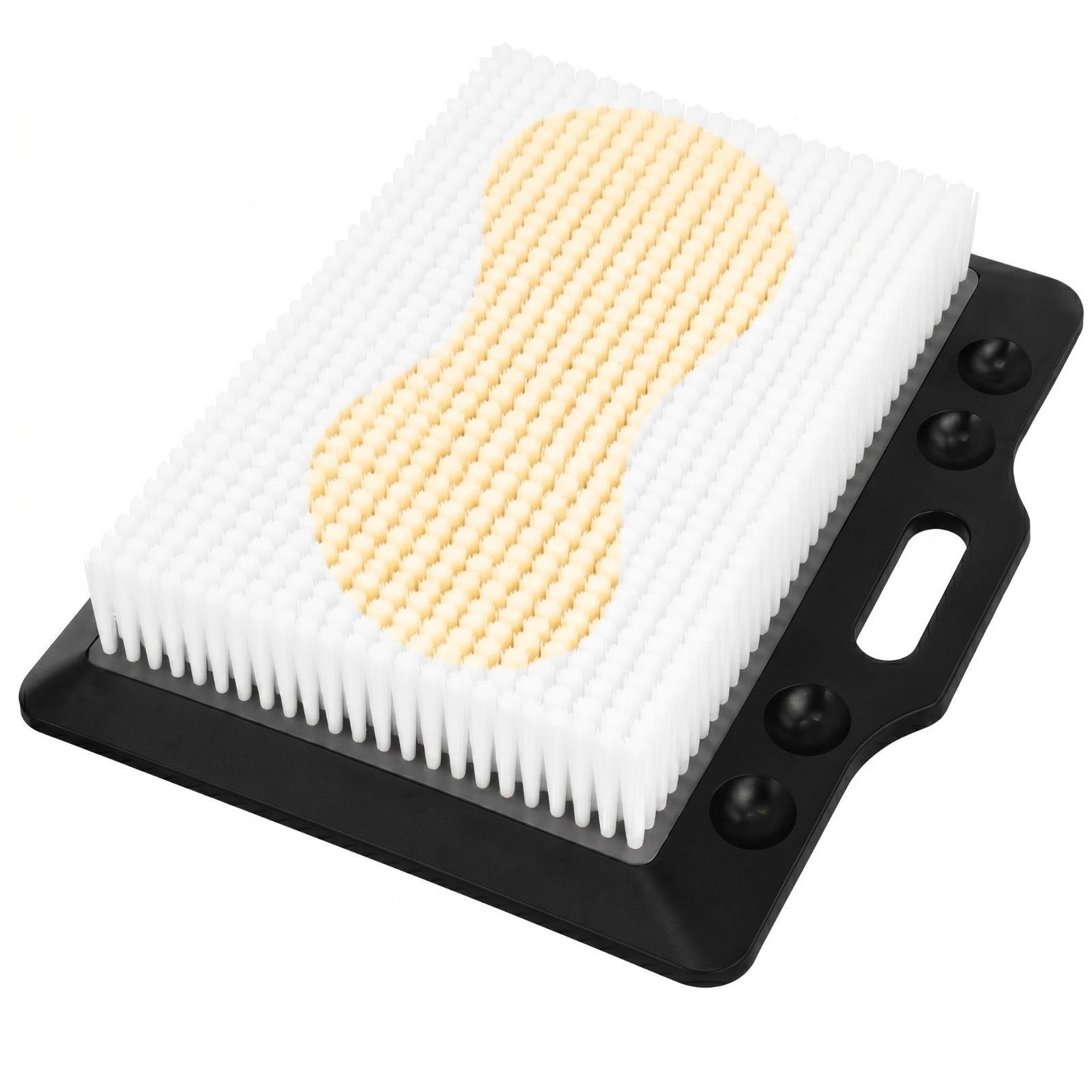
Short-game specialists may want a dedicated bunker trainer instead of trying to force a regular hitting mat to do everything. Golf Bunker Practice Mat has deep and shallow sections for bunker-style practice, and Raised Bristles Bunker Mat uses raised bristles to simulate sand-hazard interaction for chip and bunker training. These are not replacements for a normal hitting mat, but they pair well with one if bunker practice is part of your routine.
The main idea is to buy for your most common session first. If you usually take a few swings indoors after work, start with a stable general mat. If you already have that covered and want more realism around lies or hazards, add a specialty mat second.
Common mistakes to avoid
A common mistake is buying only by footprint and ignoring shot type. A very small mat can be convenient, but it may feel limiting if you expected comfortable full-swing practice with your stance and ball position on the same surface. On the other hand, a large mat can be unnecessary if your goal is just compact indoor contact drills.
Another mistake is assuming every artificial turf mat accepts real tees. If tee work matters, choose a model that clearly mentions tee support or a tee holder, such as Nylon Golf Hitting Mat or Golf Hitting Mat with Tee Holder, instead of guessing from the photos.
Buyers also sometimes confuse a specialty mat with an all-around hitting mat. Golf Bunker Practice Mat and Raised Bristles Bunker Mat are for bunker-style practice, not for replacing your main everyday swing mat. Likewise, if a listing does not clearly describe base material, shock absorption, or non-slip features, treat that as something to verify before buying rather than assuming it will stay planted on your floor.
Finally, do not overlook setup habits. If you need to move the mat often, a carry handle or roll-up design will matter in real use. If it will stay in a garage or backyard practice spot, stable construction and the right hitting surface should take priority over compact storage.
A typical kit
- Indoor Golf Hitting MatUse this as a general home practice mat when you want one larger surface for driving, chipping, and putting work.
- Indoor Golf Hitting MatChoose this for a stable all-around home setup that can work indoors or outdoors without adding specialty features you may not need yet.
- Nylon Golf Hitting MatPick this when tee insertion is important because your practice includes frequent driver or tee-shot work.
- Golf Practice MatAdd this if you want a compact mat with several turf feels for varied lies in a smaller practice area.
- Golf Hitting Mat with Tee HolderUse this for mixed home practice when you want both multiple grass sections and a dedicated tee holder.
- Golf Bunker Practice MatPair this with a standard hitting mat if bunker-shot rehearsal is a regular part of your short-game practice.
Questions people ask
What size golf hitting mat should I get for home use?
Choose size based on both your room and how complete you want your setup to feel. A compact option like Three-Color Golf Hitting Mat at 30 x 60 cm works for tight spaces and quick sessions, while a larger option like Indoor Golf Hitting Mat at 5 x 4 ft gives a more spacious hitting area for regular practice.
Do I need a mat that takes real tees?
Only if tee shots are part of your routine. If you practice driver or want flexible tee placement, look for tee support such as the tee-friendly design on Nylon Golf Hitting Mat or the tee holder on Golf Hitting Mat with Tee Holder rather than assuming a standard turf mat will do it.
How is a multi-surface mat different from a standard flat mat?
A multi-surface mat is made for practicing different lies or turf feels in one place, while a standard flat mat focuses on a single consistent strike area. Golf Practice Mat offers three grass sections for varied practice feels, while Golf Hitting Mat Artificial Grass is a simpler flat practice surface for repeating the same setup and strike.
What features help keep a hitting mat from sliding?
Look for a non-slip or shock-absorbing base in the product details. Examples include the EVA base on Indoor Golf Hitting Mat, the rubber base on Portable Golf Practice Mat, and the non-slip base on Golf Practice Mat, all of which are meant to improve stability during practice.
Should I buy a bunker mat instead of a normal hitting mat?
Usually no. A bunker trainer like Golf Bunker Practice Mat or Raised Bristles Bunker Mat is useful for short-game and hazard practice, but most golfers should start with a standard hitting mat first and add bunker practice only if that skill is a priority.
Shop the list
Everything mentioned above
Prices and delivery windows are live from our catalog.
Three-Color Golf Hitting Mat
Golf Hitting Mat Artificial Grass
Nylon Golf Hitting Mat
Indoor Golf Hitting Mat – Thickness 10mm EVA Ba
Indoor Golf Hitting Mat – 1.2 X 1.2
Golf Practice Mat – 30*65cm
Golf Hitting Mat with Tee Holder
Golf Bunker Practice Mat
Raised Bristles Bunker Mat
Golf Practice Mat – 2 Styles: Portable Beveled