Buying guide · Sewing & Crafts
Beginner tools needed for leather craft
Short answer
A beginner only needs a small set of tools that covers safe cutting, hole making, layout, edge cleanup, and a protected work surface. Start with simple hand tools you can control easily, then add specialty cutting or pressing tools later when you know the projects you want to repeat.
Start with the core tools
For a first setup, think in terms of jobs rather than collecting every tool at once. You need a surface that protects the bench, a way to mark straight and even lines, a tool to make holes, and something to refine edges so the work looks tidy.
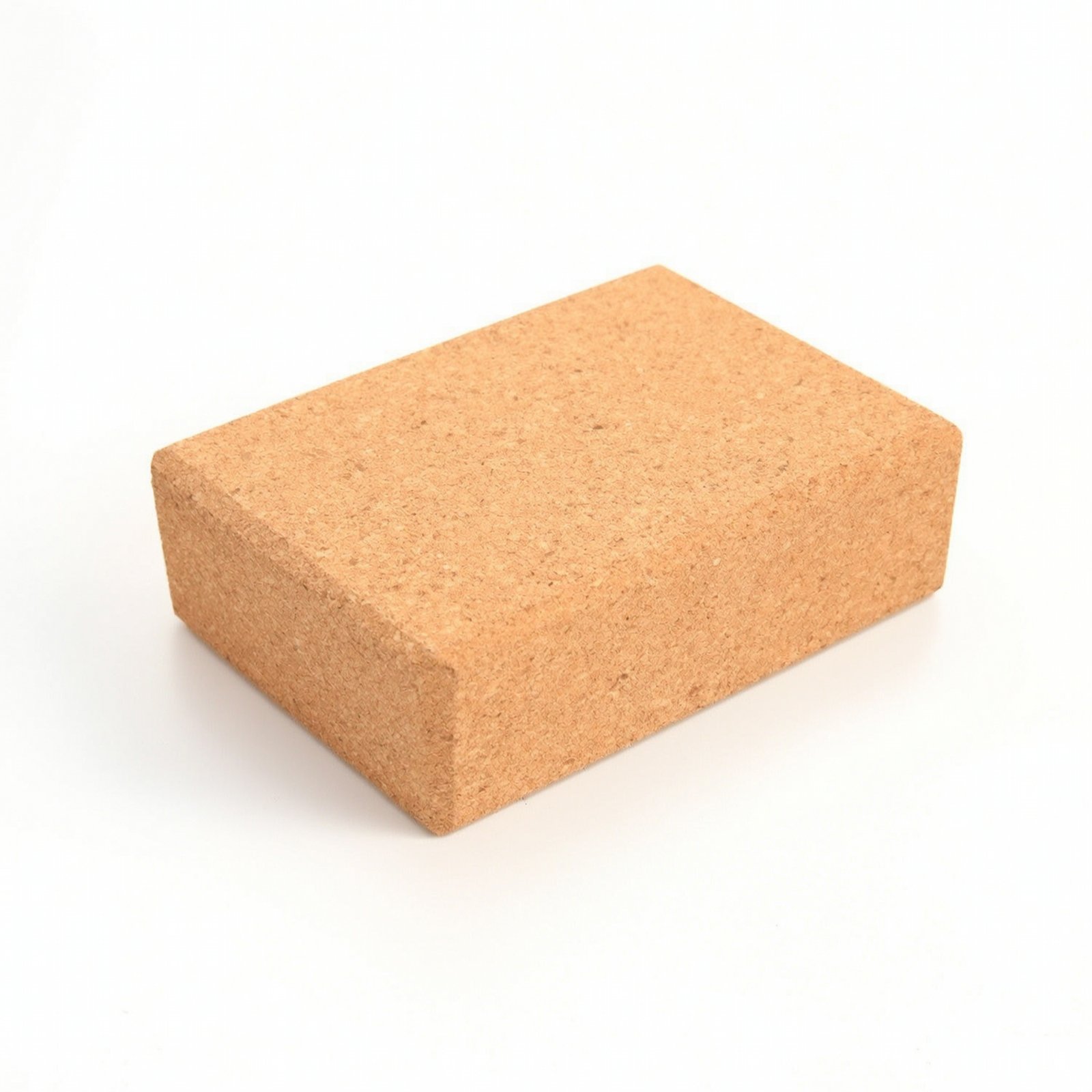
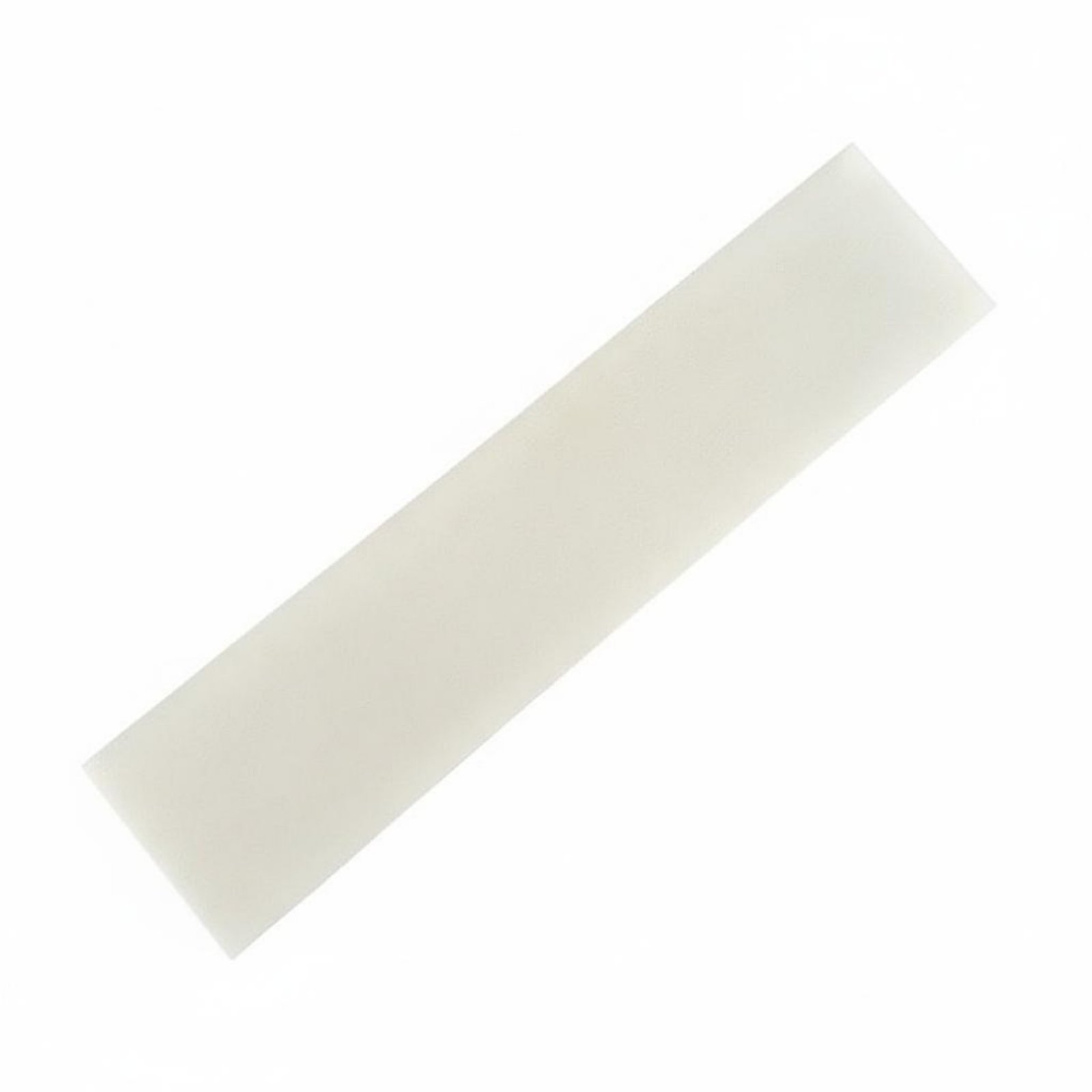
A backing surface such as Leather Punching Pad is useful because punching and edge work are much easier when the leather is supported and your table is protected. If you expect more striking, stamping, or setting work, Leather Strike Punching Board serves a similar protective role and is aimed at repeated impact tasks.
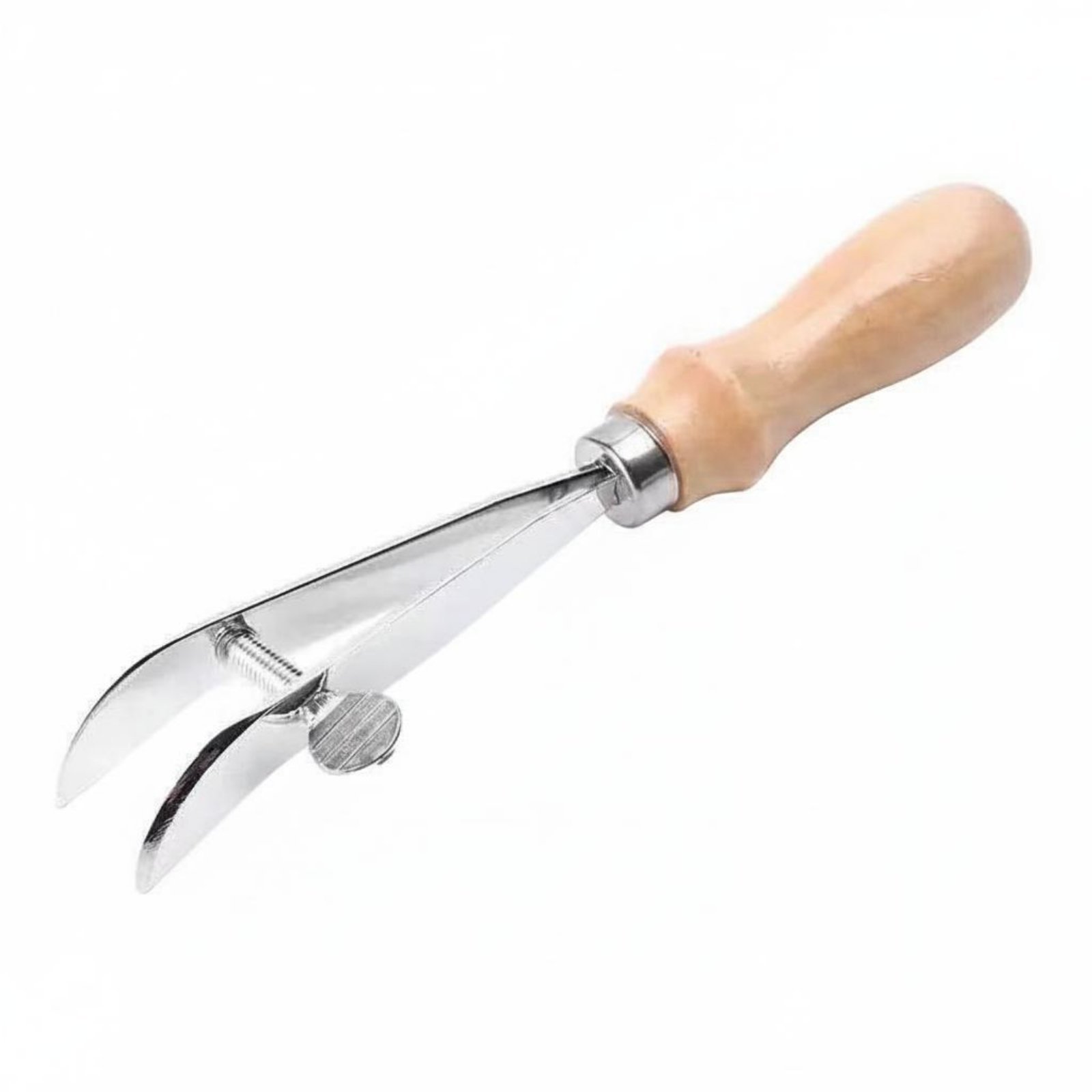
For layout, an edge guide is one of the most helpful beginner tools because it teaches consistency. Adjustable Leather Edge Marker lets you mark parallel lines for stitching or borders, and the adjustable setting from 1mm to 18mm is useful when you are learning how close a stitch line should sit to the edge.
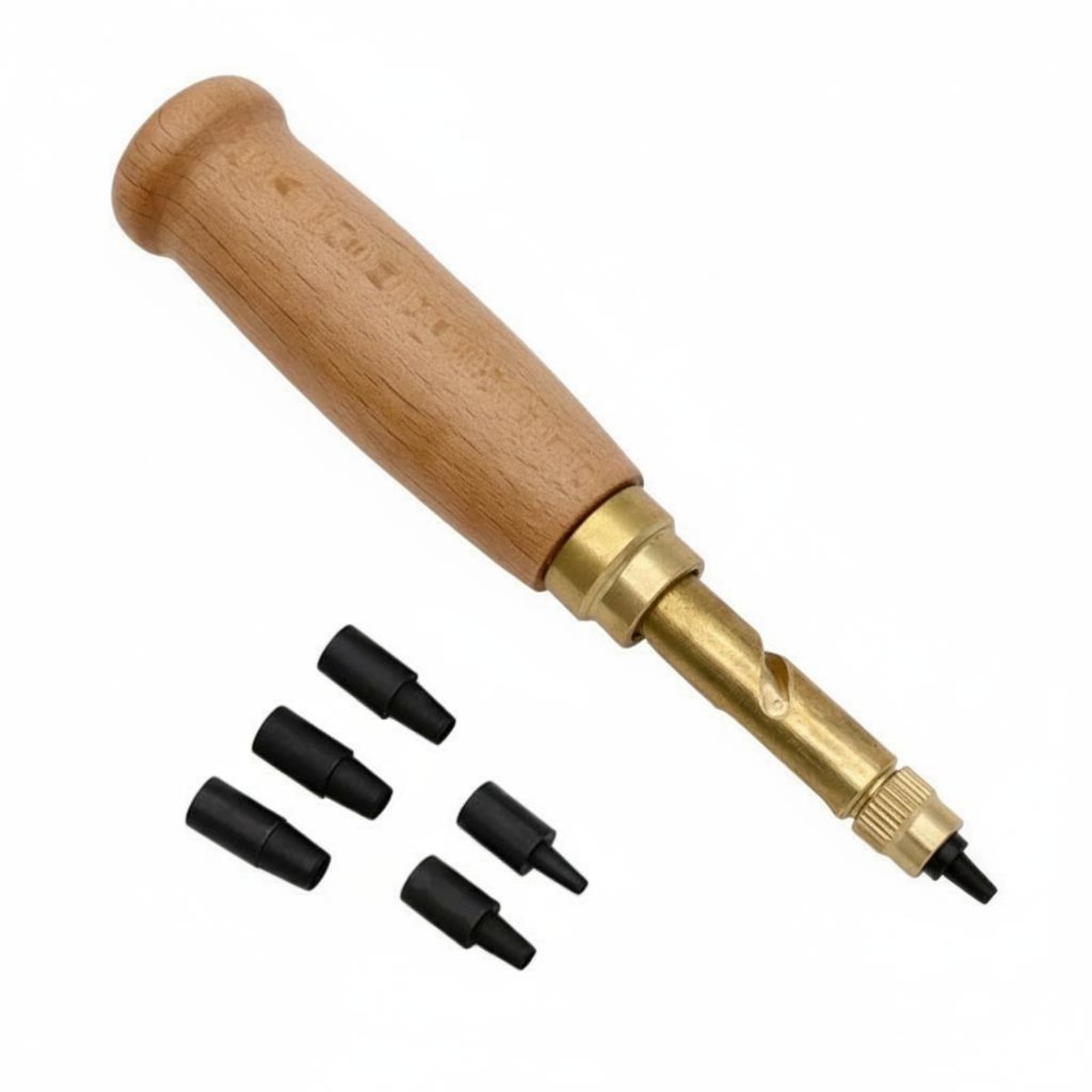
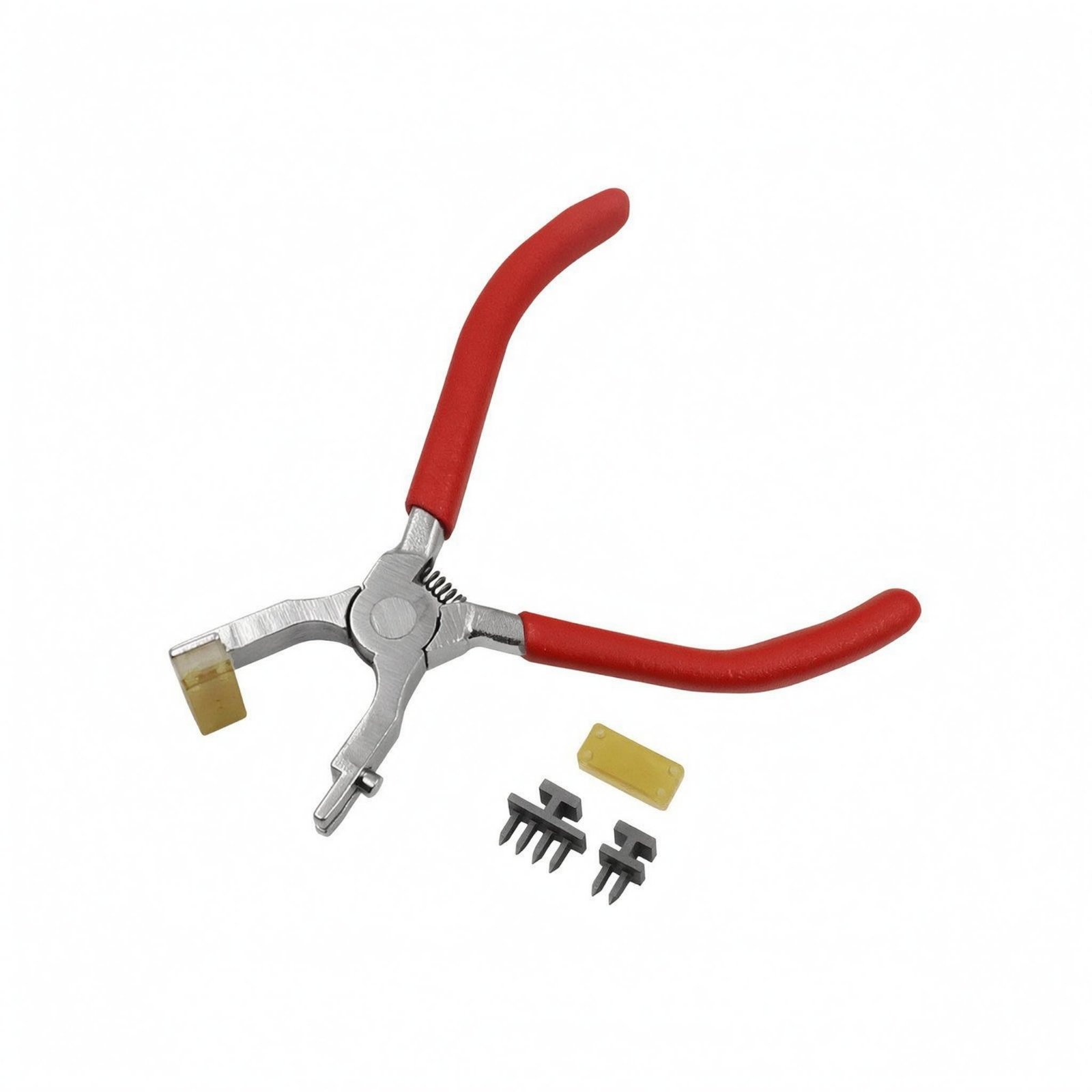
For holes, choose the style that matches how you want to work. Rotary Leather Punch Replaceable Heads is a practical general hole punch for belts, straps, and repair work, while Silent Leather Punch Pliers is better when you want diamond-shaped stitch holes and quieter pressing instead of striking; it includes 2-tooth and 4-tooth heads with 4 mm diamond punch points.
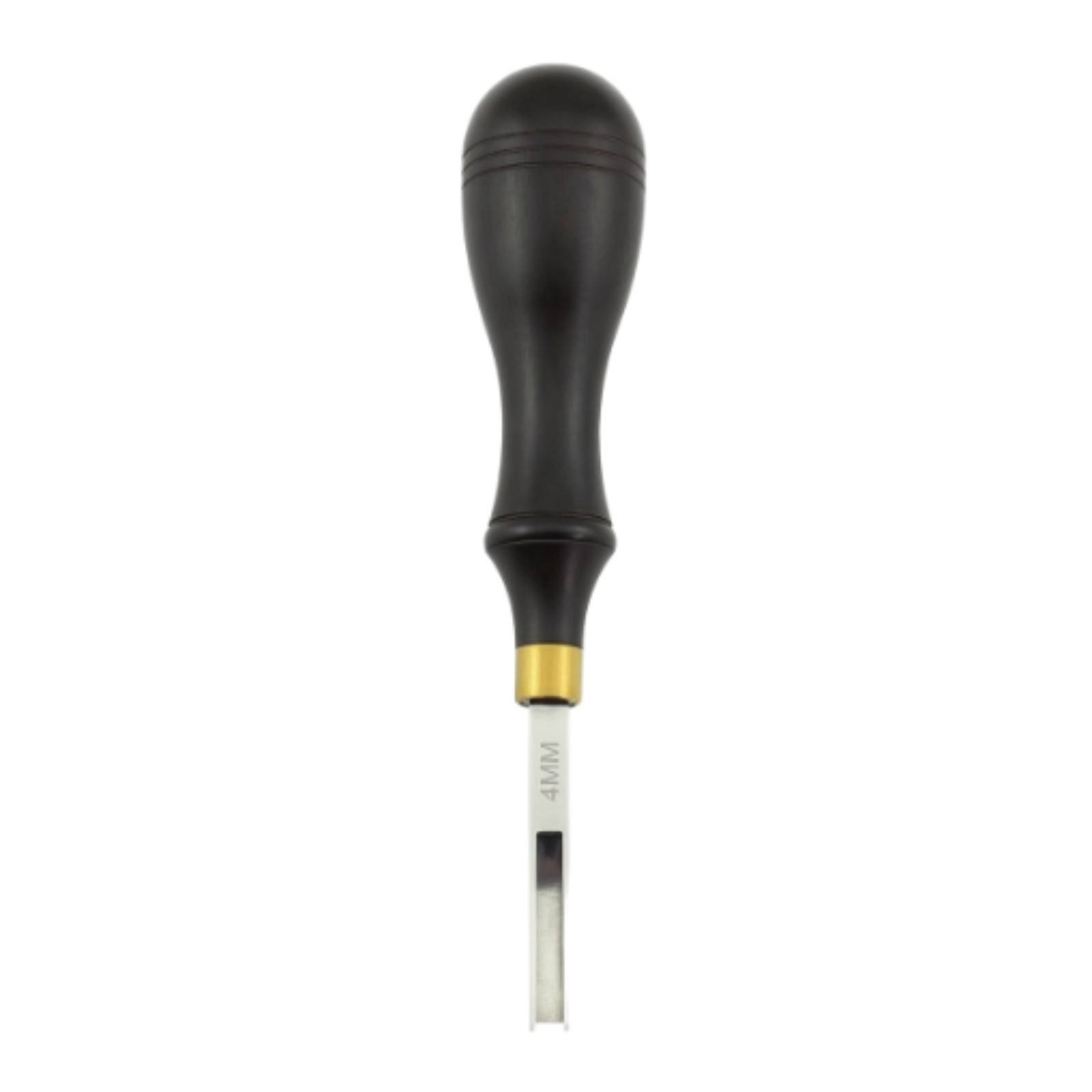
For edge cleanup, Leather Edge Beveler Ebony Wood helps remove the sharp corner from a cut edge so the piece feels smoother and is easier to finish neatly. That one step makes many beginner projects look more deliberate.
Choose tools by project type and control
The right beginner kit depends on what you plan to make first. Wallets, key holders, and small pouches call for marking, hole making, and edge work; belts and straps add a need for straight repeated cuts; thicker folded projects may later benefit from skiving.
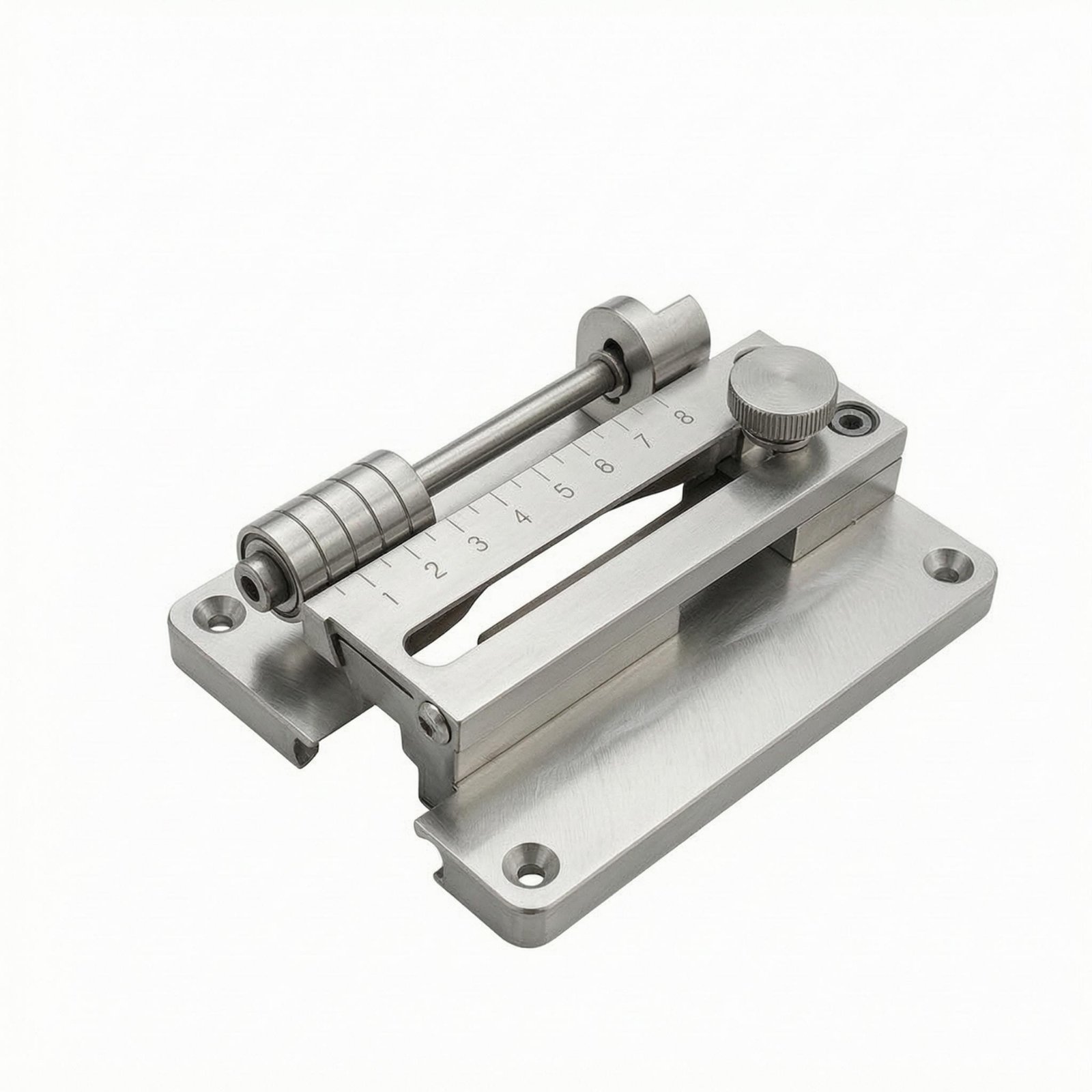
If you want to make straps or belts, Leather Cutting Tool with Scale is worth considering because it is meant to cut straight strips with a controlled motion instead of freehand wandering. The visible measurement scale helps you set width before cutting, which is more beginner-friendly than trying to guide long cuts by eye.
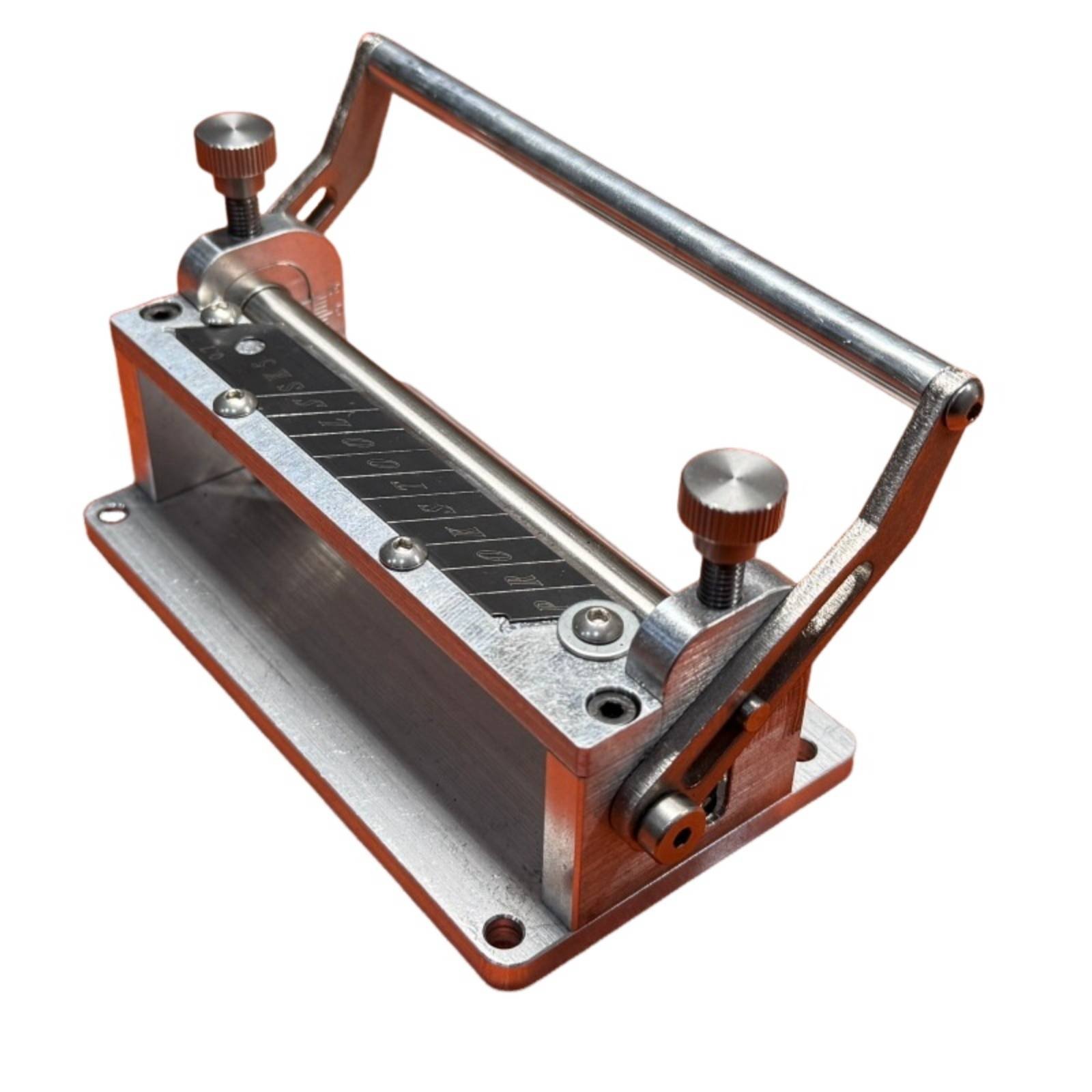
If your goal is cleaner folds, less bulk at overlaps, or smoother joins, Manual Leather Skiver becomes useful after you have learned the basics. A skiver is not the first tool most newcomers need, but adjustable pressure on Manual Leather Skiver helps control thinning more consistently than guessing with a general blade.
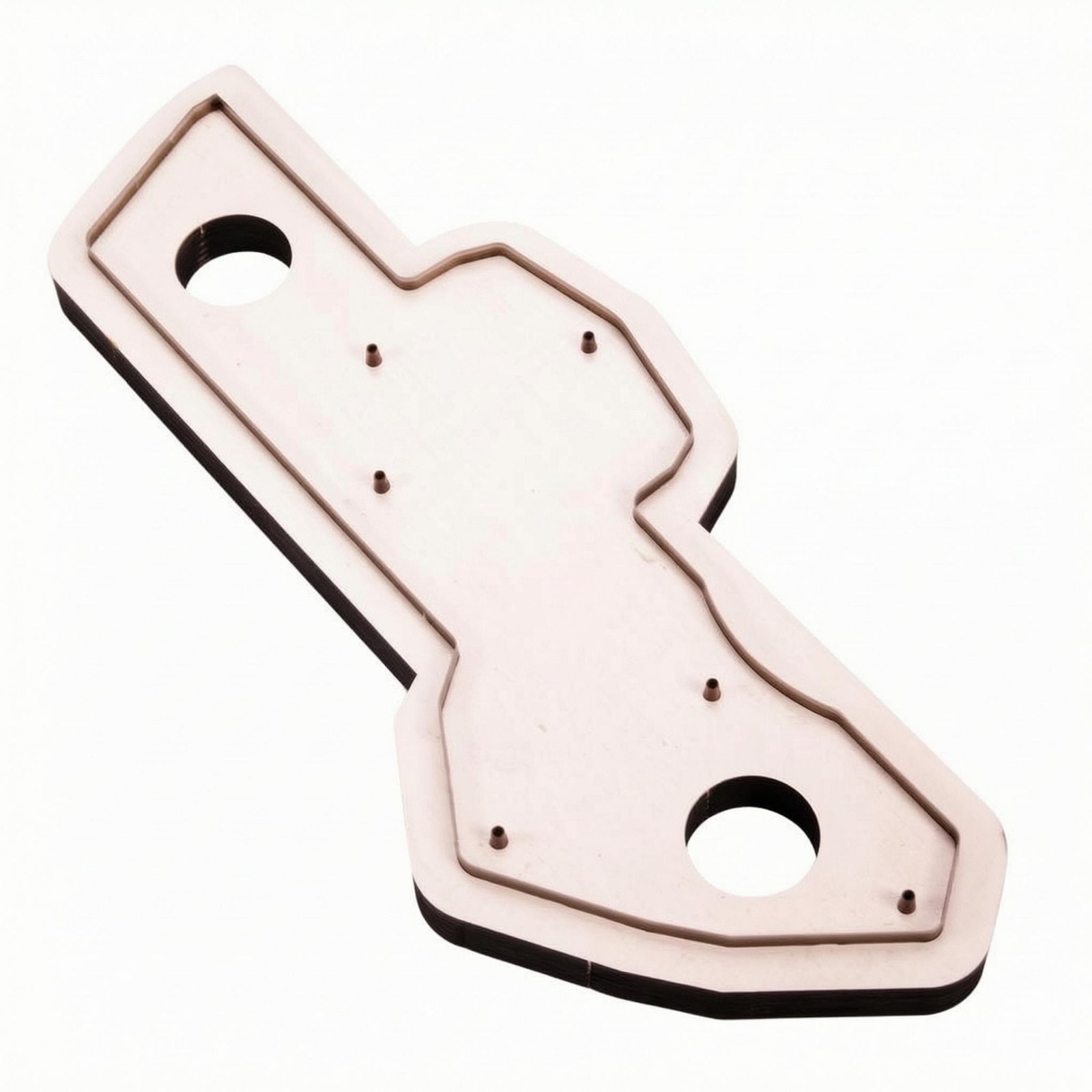
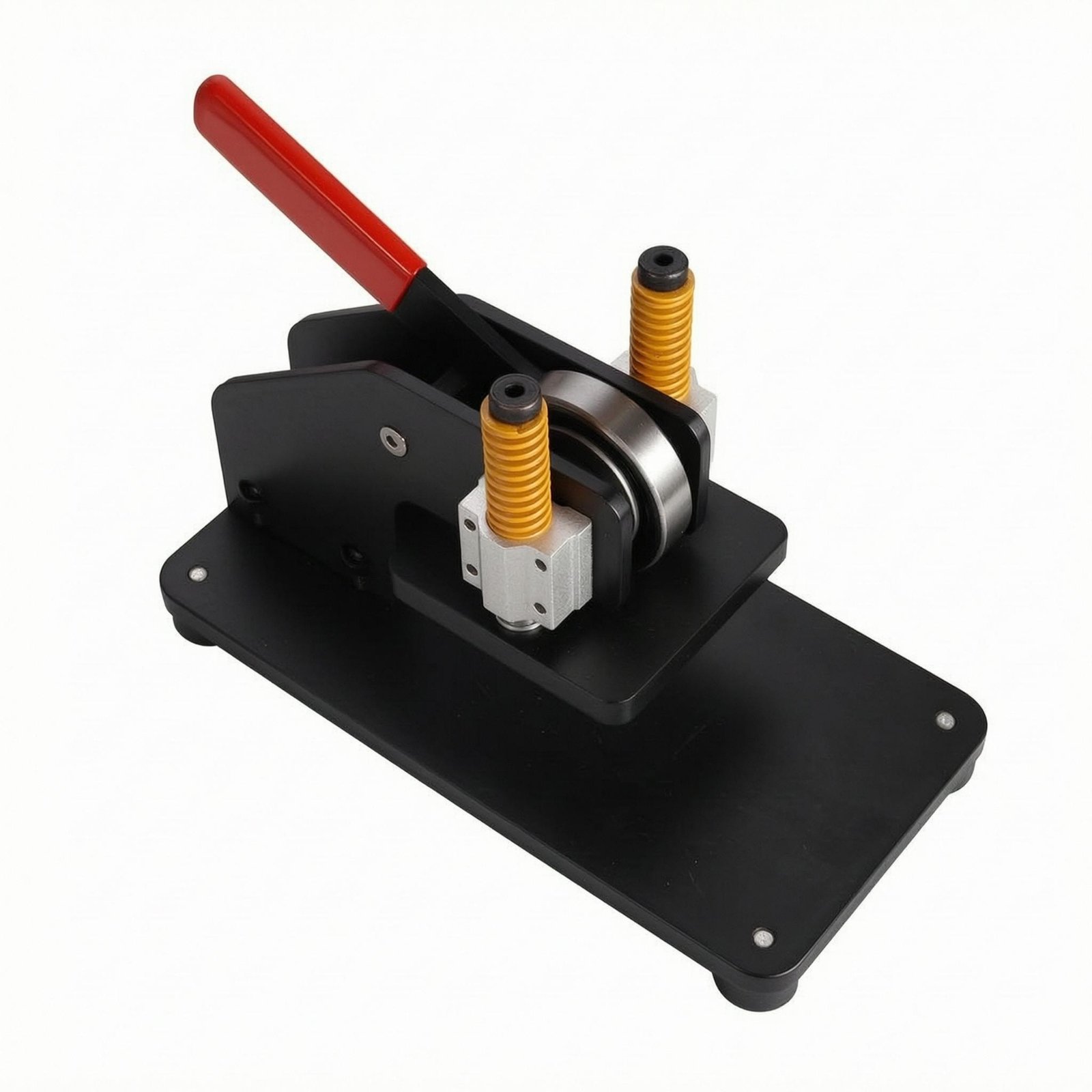
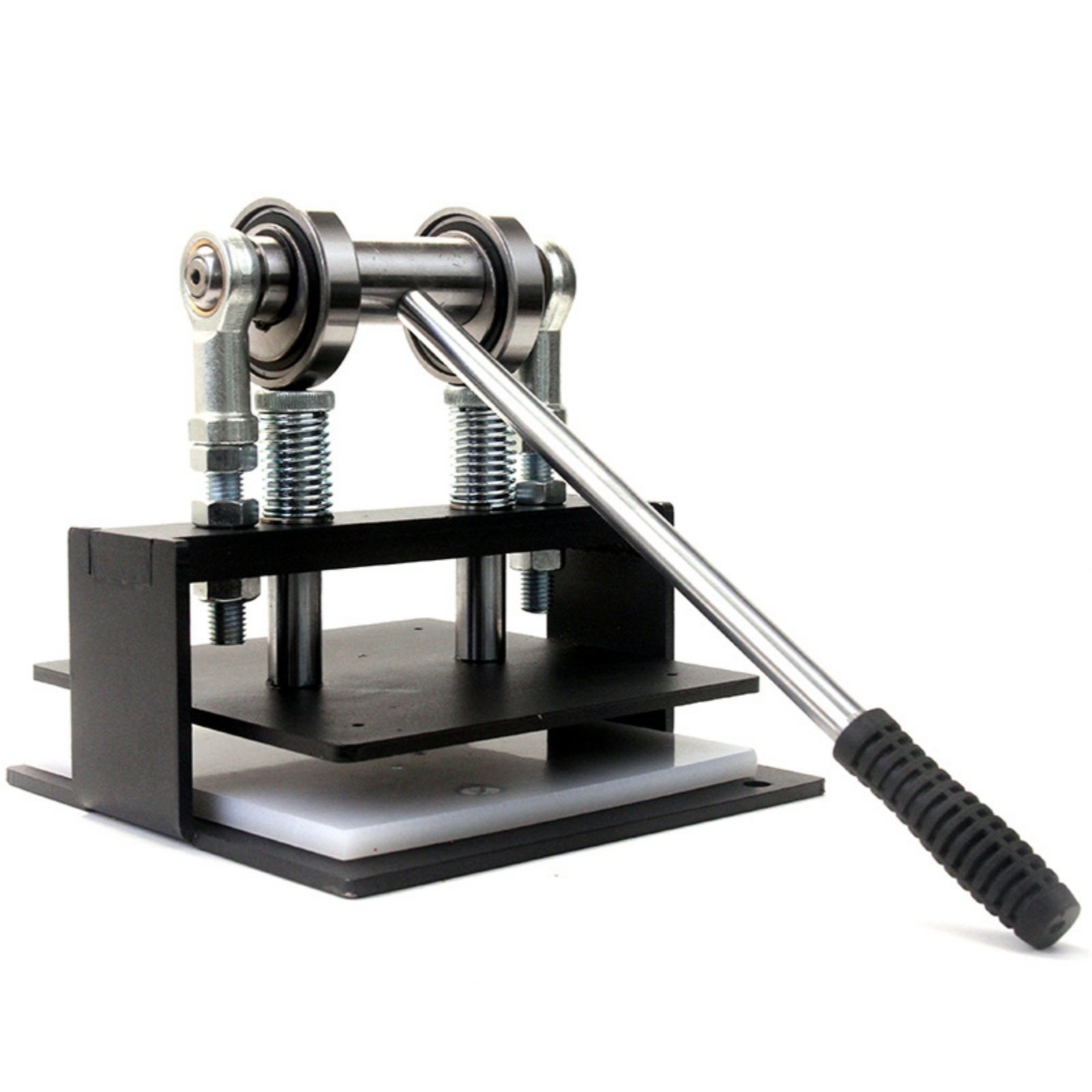
For repeated shaped pieces, a die or press can save time, but these are usually later purchases rather than true starter tools. Wooden Envelope Pouch Die is specific to a long pouch-style shape, and presses like Manual Die Cutter Carbon Steel or Pu Leather-Forming Press make more sense when you are cutting the same patterns again and again.
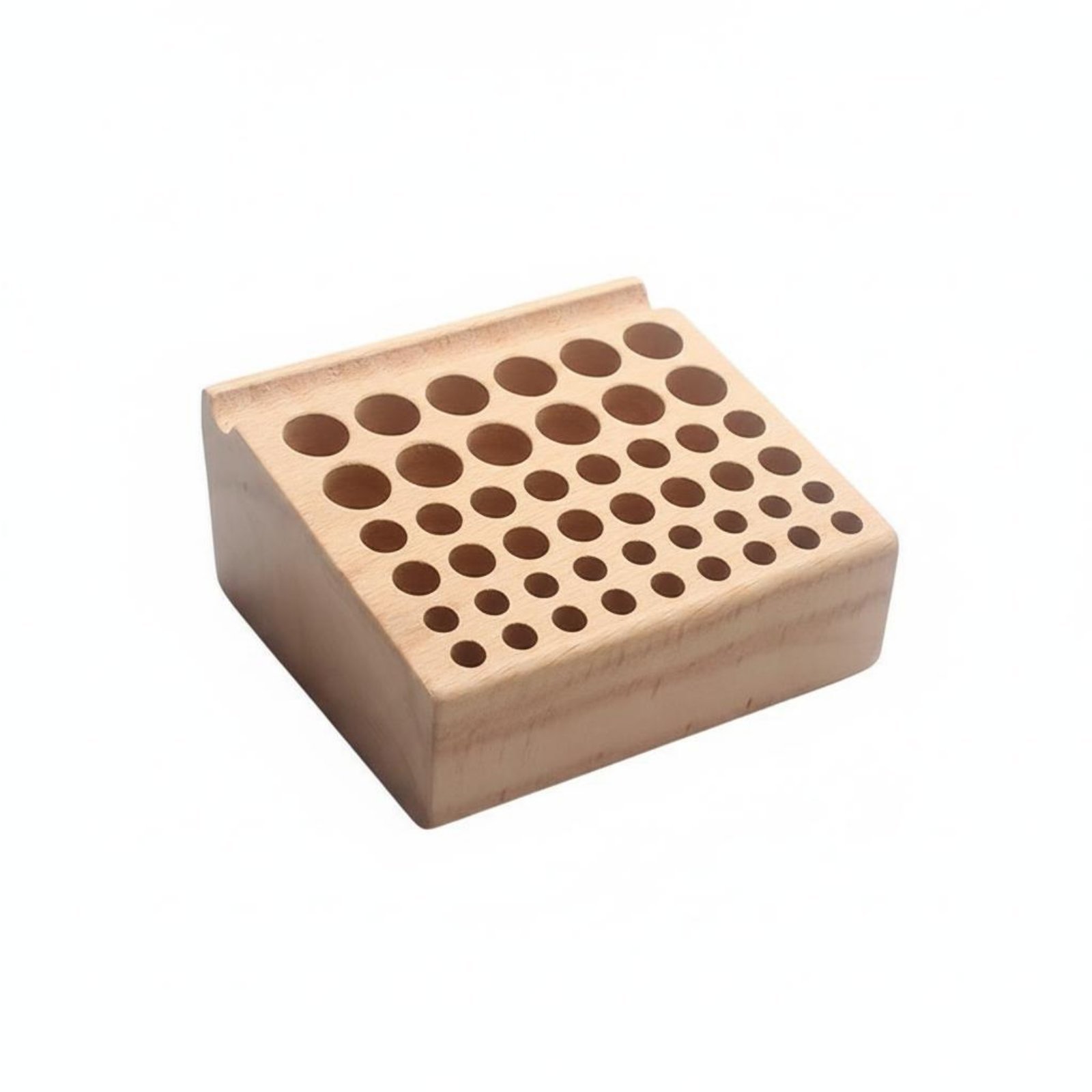
As your bench gets busier, organization matters too. Leatherworking Tool Rack Beech Wood does not make the leather itself, but keeping tools upright and visible reduces mistakes, damaged edges, and wasted time searching around the bench.
How the pieces work together in a simple workflow
A basic leather project follows a repeatable order. You mark the work, cut the parts, make the holes, clean the edges, then finish details.
A typical beginner flow could be: mark a stitch or border line with Adjustable Leather Edge Marker, cut any straight strap pieces with Leather Cutting Tool with Scale if your project needs them, then punch holes with Rotary Leather Punch Replaceable Heads or Silent Leather Punch Pliers while the leather rests on Leather Punching Pad or Leather Strike Punching Board. After that, use Leather Edge Beveler Ebony Wood to soften the edge corners before any final edge treatment.
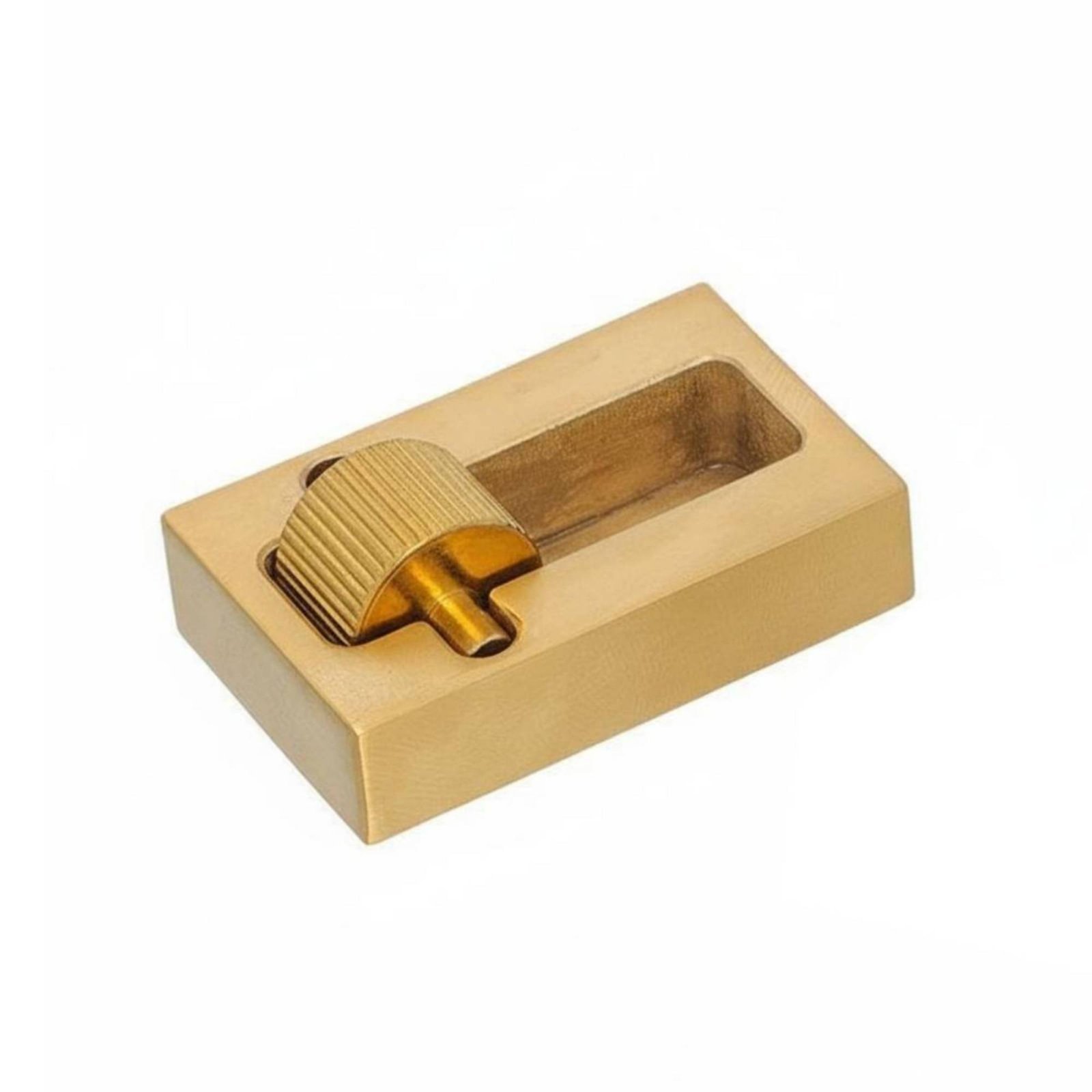
If you later move into painted or dyed edges, Leather Edge Oiler Box helps apply edge finish in a controlled way with its grooved roller. It is not essential for the very first practice pieces, but it fits naturally after beveling because a cleaner edge accepts finishing more evenly.
More advanced tools fit into the same sequence rather than replacing the basics. Manual Leather Skiver is used before assembly when a fold or overlap needs thinning, while Wooden Envelope Pouch Die, Manual Die Cutter Carbon Steel, and Pu Leather-Forming Press are for repeated cutting or pressing tasks once you know exactly what shape or die work you need.
Common beginner mistakes to avoid
The biggest mistake is buying specialized equipment before learning the basic hand steps. A beginner often gets more value from a good punching surface, a marker, a hole tool, and an edge tool than from a press or dedicated die.
Another common problem is choosing tools without matching them to the project. If you mainly want belt holes or repair work, Rotary Leather Punch Replaceable Heads is the straightforward choice; if you want stitch-style holes with less noise, Silent Leather Punch Pliers is the more appropriate fit. Picking the wrong hole tool can make the work feel harder than it should.
Do not skip surface protection. Punching directly on a hard bench can damage tools and leave rougher results, which is why Leather Punching Pad or Leather Strike Punching Board matters even though neither seems exciting.
It also helps to avoid overcommitting to fixed-shape equipment too early. Wooden Envelope Pouch Die is only useful if that pouch format is exactly what you want, and a press such as Manual Die Cutter Carbon Steel or Pu Leather-Forming Press is only worthwhile when you have a repeat process ready to support.
Finally, keep tools organized and easy to reach. A holder like Leatherworking Tool Rack Beech Wood can prevent edge tools and punches from knocking into each other, which helps preserve their working condition and keeps your workflow calmer.
A typical kit
- Leather Punching PadProvides a stable backing surface for punching, grinding, and edge work while helping protect your bench and tools.
- Adjustable Leather Edge MarkerMarks consistent parallel lines for stitching or borders so beginners can lay out cleaner work.
- Rotary Leather Punch Replaceable HeadsMakes clean holes for belts, straps, and general leather projects with interchangeable punch tips.
- Leather Edge Beveler Ebony WoodTrims the sharp corners off cut edges so pieces feel smoother and are easier to finish neatly.
- Leather Cutting Tool with ScaleCuts straight strips and straps with more control than freehand cutting when you start making belts or repeated widths.
- Leatherworking Tool Rack Beech WoodKeeps punches and edge tools upright and visible so your small work area stays organized.
Questions people ask
Do I need a press machine to start leather craft?
No. Most beginners can learn the important skills with simple hand tools, a protective work surface, and a basic hole-making tool. Presses like Manual Die Cutter Carbon Steel or Pu Leather-Forming Press are more useful when you repeat the same cuts or die work often.
What is more useful first, a rotary hole punch or a punching plier?
It depends on the kind of holes you need. Rotary Leather Punch Replaceable Heads is a good general choice for belts, straps, and repair work, while Silent Leather Punch Pliers is better when you want diamond-shaped stitch holes and quieter pressing action. Many beginners start with the one that matches their first project instead of buying both at once.
Is an edge beveler really necessary for beginner projects?
It is not mandatory for every first practice piece, but it does make a visible difference. Leather Edge Beveler Ebony Wood helps remove the hard corner from a cut edge, which makes simple projects look more finished and prepares the edge for later treatment.
When should I buy a skiver?
Buy one when your projects start needing thinner fold lines, cleaner overlaps, or less bulk at joints. Manual Leather Skiver is more of a next-step tool than a first-day necessity, because beginners usually get better value from marking, punching, and edge tools first.
Can I start with a cutting die for pouch making?
Only if you already know you want that exact repeated shape. Wooden Envelope Pouch Die is purpose-built for a long pouch-style outline, so it is practical for repeat production but less flexible for learning general leather craft skills.
Shop the list
Everything mentioned above
Prices and delivery windows are live from our catalog.
Leather Punching Pad
Leather Strike Punching Board
Adjustable Leather Edge Marker
Rotary Leather Punch Replaceable Heads
Silent Leather Punch Pliers
Leather Edge Beveler Ebony Wood
Leather Cutting Tool with Scale
Manual Leather Skiver
Wooden Envelope Pouch Die
Manual Die Cutter Carbon Steel
Pu Leather-Forming Press
Leatherworking Tool Rack Beech Wood