Buying guide · Boating & Diving
How to add track mounts and tie-down points to a kayak
Short answer
Add track mounts by using hardware that matches your kayak’s existing rail system, and add tie-down points by choosing either track eyelets for adjustable anchors or deck loops for fixed anchors. The cleanest setup is usually a mix of both, with track hardware for movable accessories and low-profile deck rigging for cords, bags, and transport straps.
Choose the right mounting style first
Start by deciding whether you need adjustable anchor points or fixed ones. Track-based parts are the right choice when your kayak already has rails and you want to move tie-down locations for crates, coolers, or accessory placement. Fixed deck loops fit jobs where you want permanent attachment points in known spots, such as around a tank well, near a hatch, or along the bow and stern deck lines.
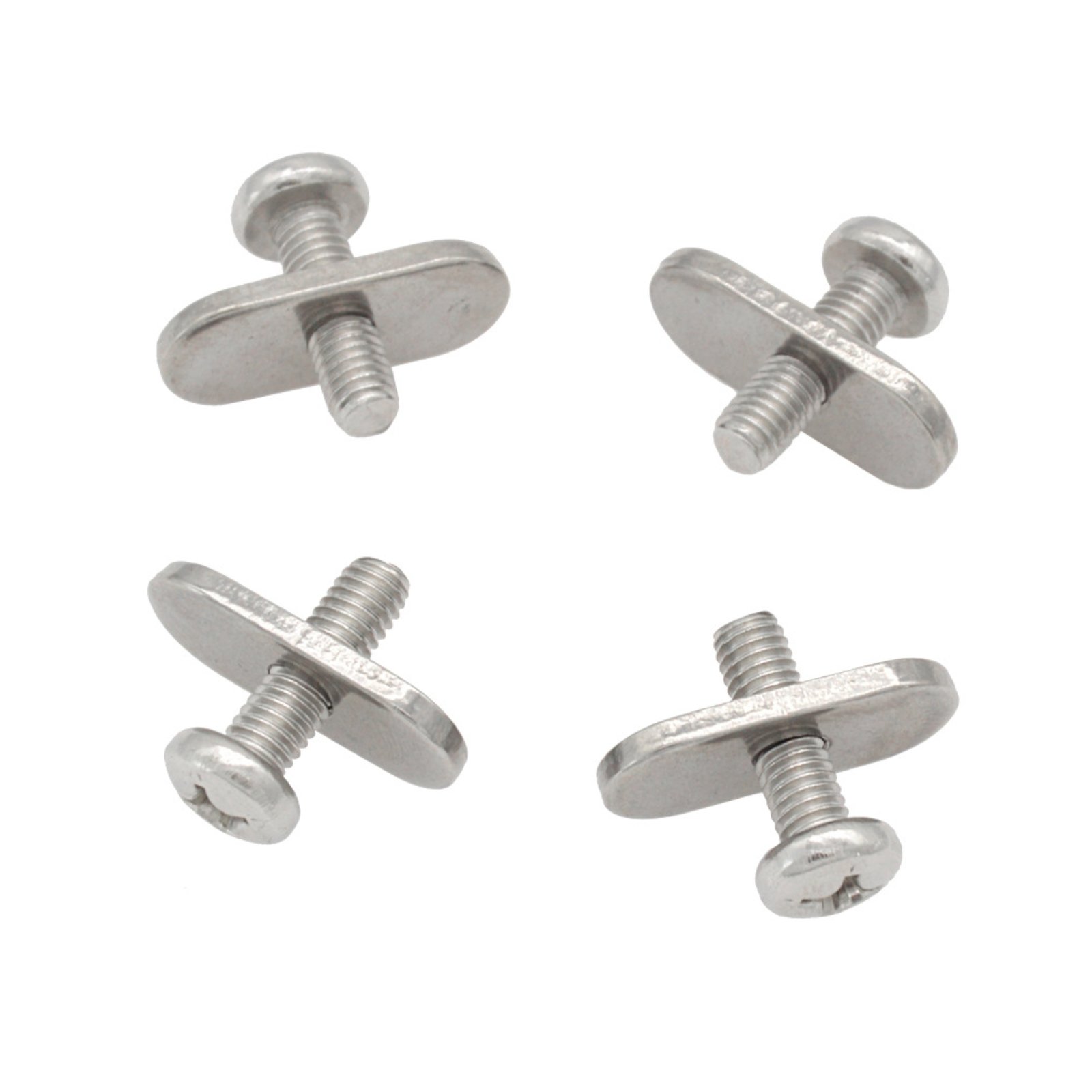
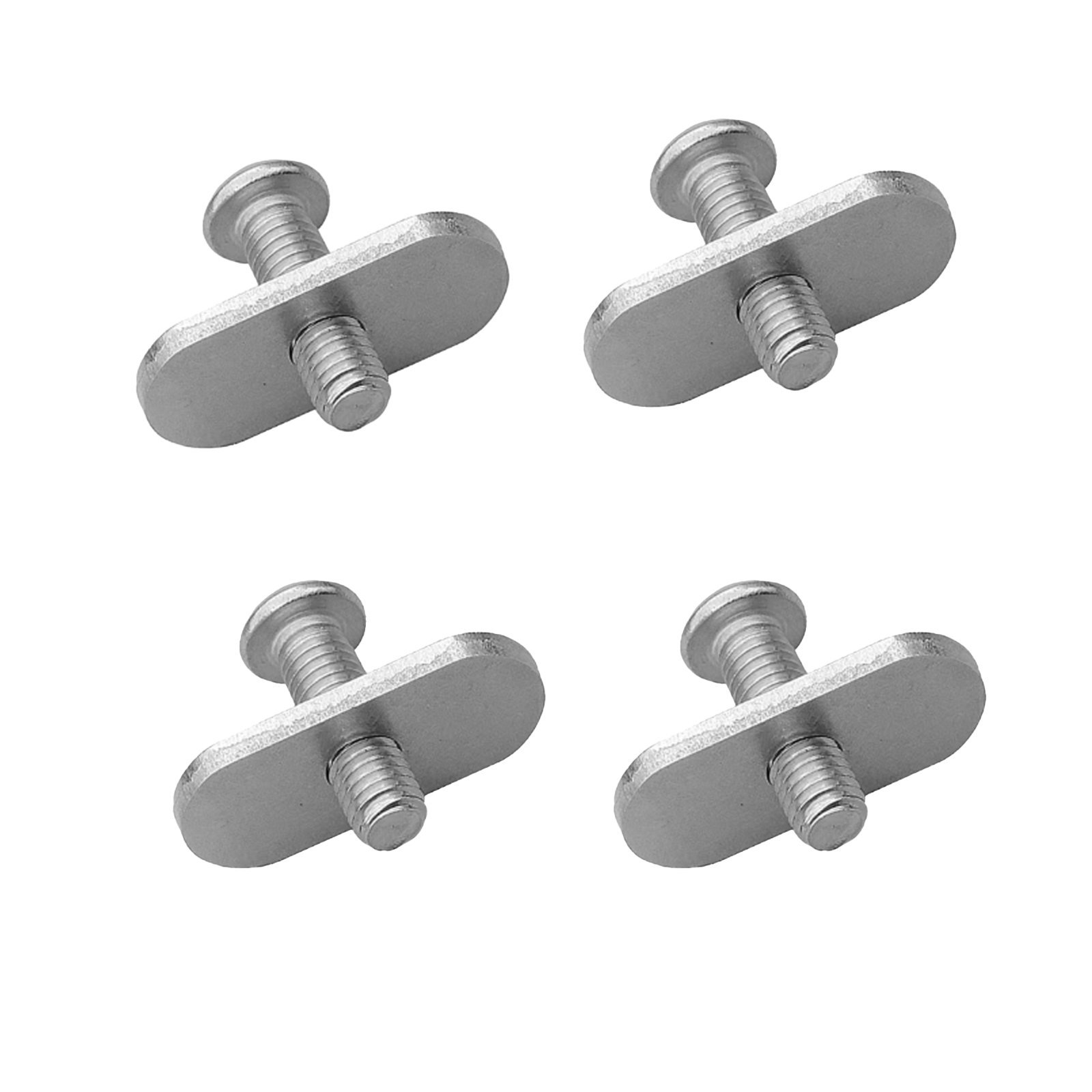
For an existing rail, a hardware set such as Kayak Track Hardware 304 Stainless Steel is meant to fasten accessories to a compatible track system. The listing gives a threaded rail-nut setup and notes Kayak Track Hardware 304 Stainless Steel includes 24 mm screws and nuts sized 29 x 13 x 3 mm, which is useful when you need to compare the slot and clearance on your track. If your rail uses a standard channel fastener, 4-Piece Stainless Steel Kayak Track Nuts is another track-nut option because it uses an M6 channel groove nut and is described for most standard kayak rail systems.
If you want a movable tie-down point on the rail instead of only a threaded mount, Kayak Track Tie Down Eyelet is the more direct fit. The listing says Kayak Track Tie Down Eyelet is designed for most factory-installed track systems and works with 1-inch and a5-inch flat strapping or standard bungee cords, so it suits jobs where you want to clip down cargo without drilling new holes.
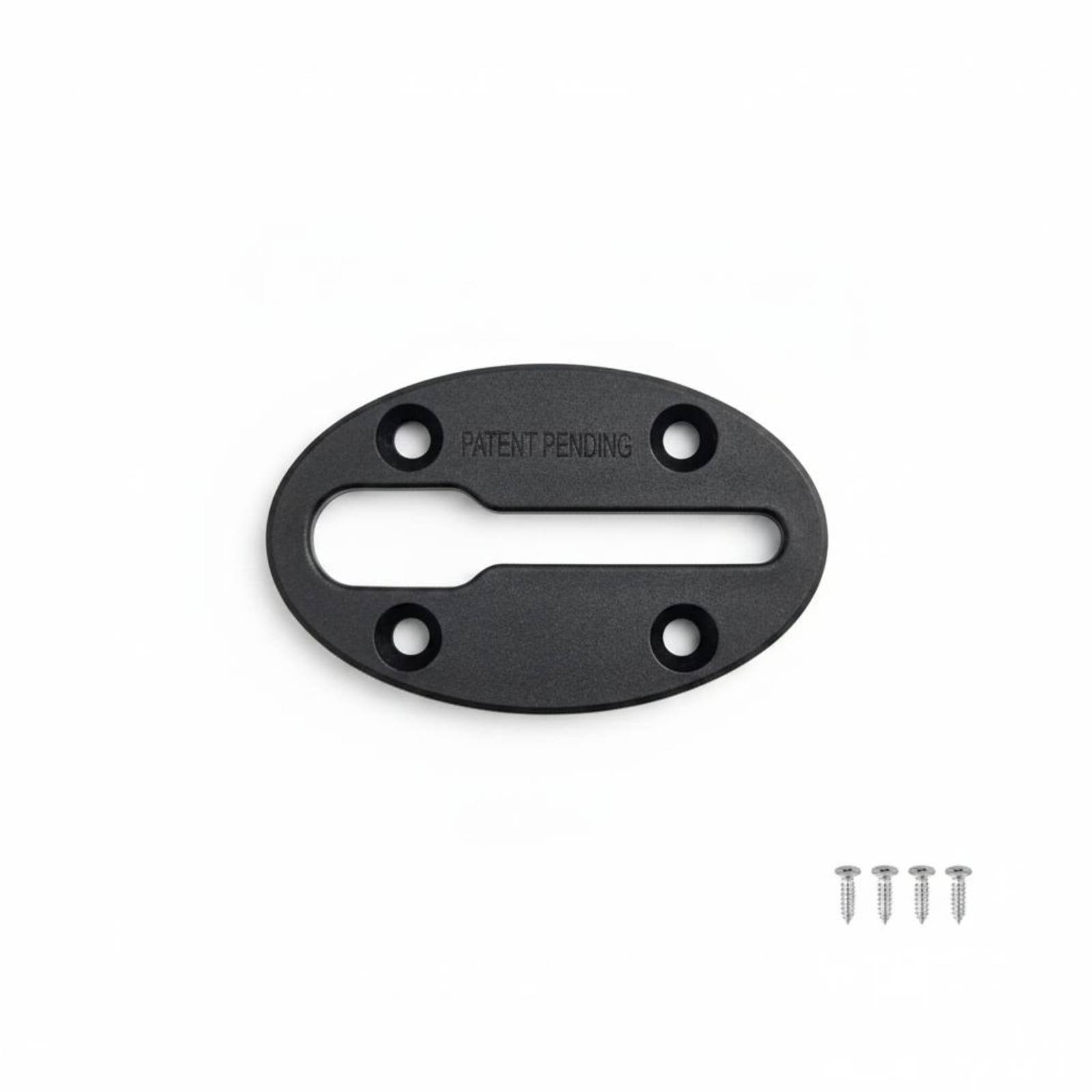
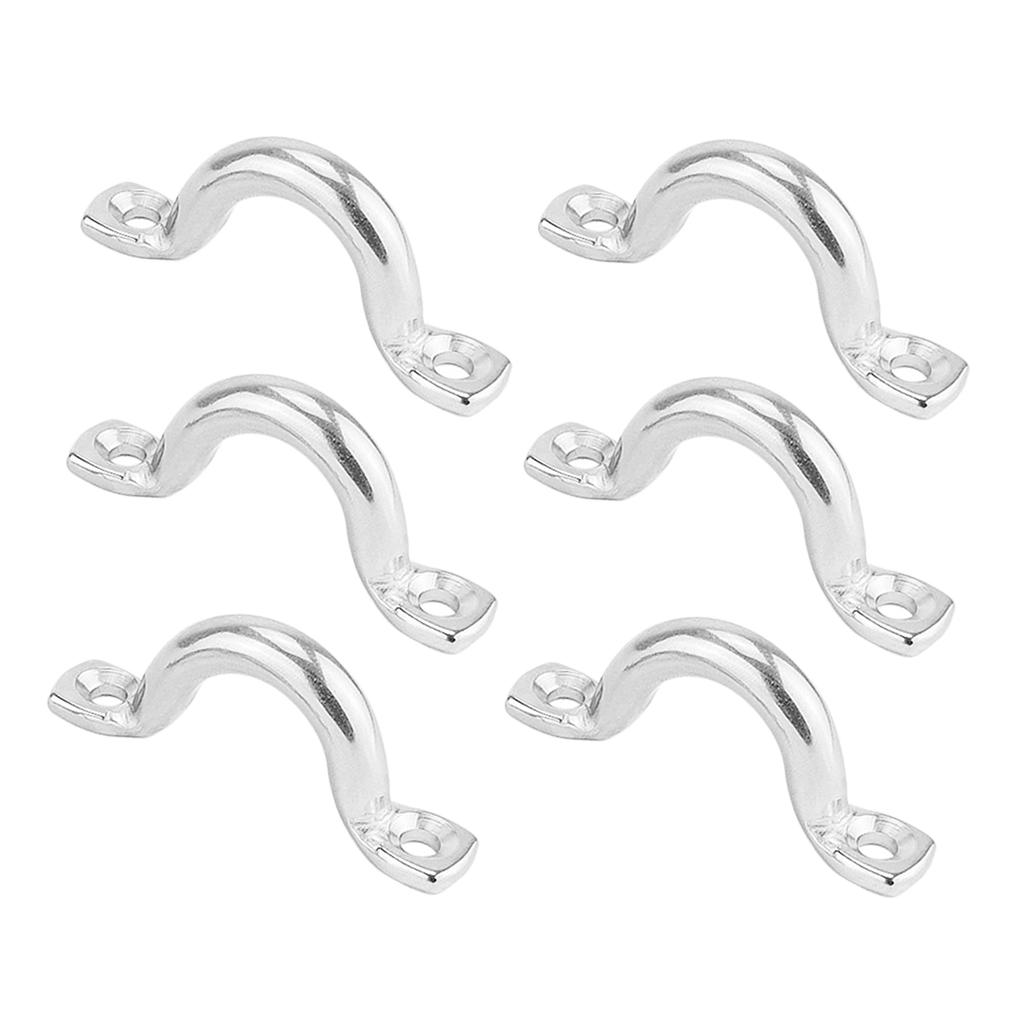
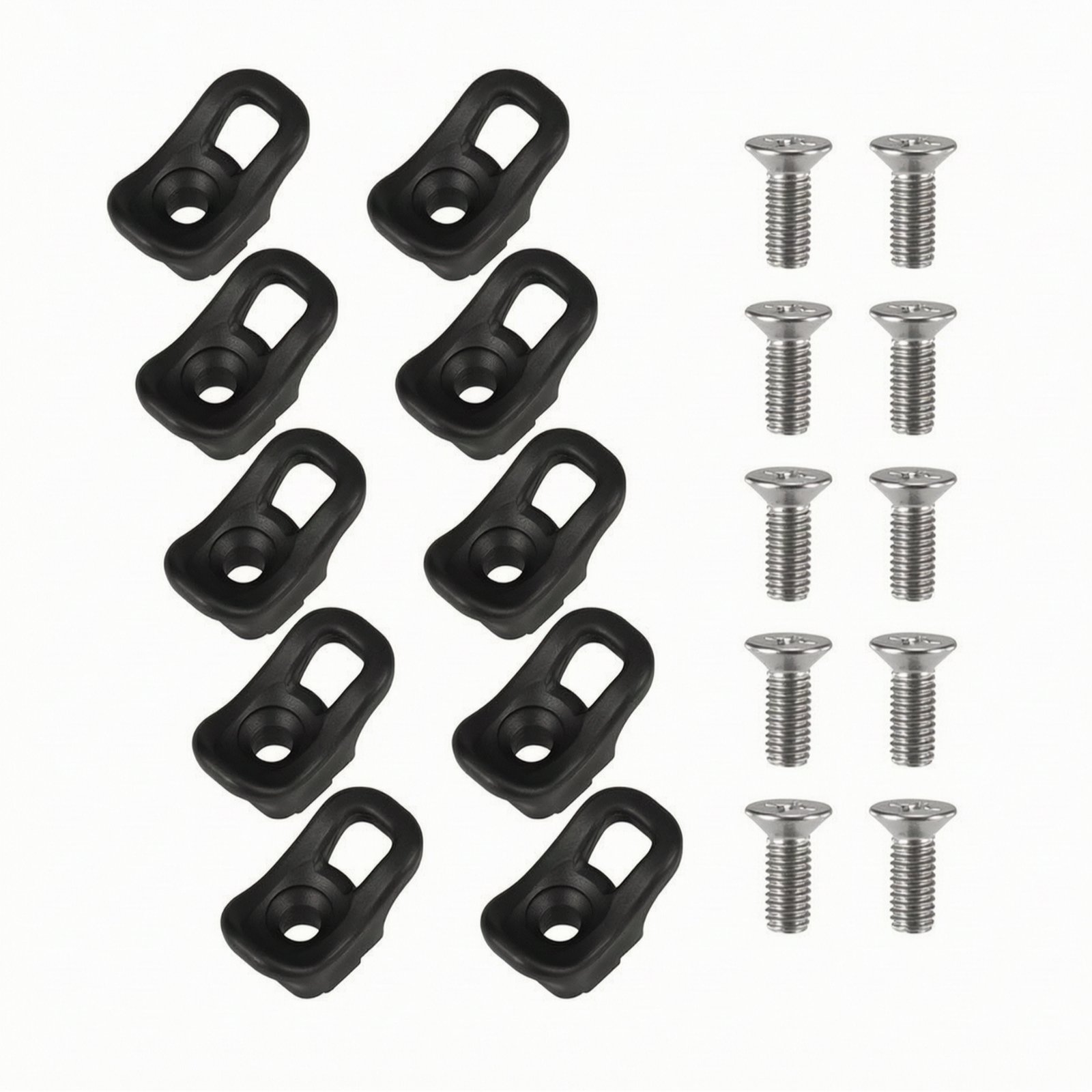
For permanent anchors on the deck, loop-style fittings are simple and versatile. Boat Pad Eye 5mm is a pad-eye style deck loop listed at 5 mm, while 10-Piece Kayak Tie-Down Loop is a molded loop with a mounting screw and a 6 mm circular mounting hole. Those details matter because the loop opening and mounting hole need to match your cord, strap, and fastener plan rather than just looking similar in a photo.
What to check before you drill or tighten anything
The main fit question is not whether a part is called kayak hardware, but whether it matches your hull or track layout. For track parts, confirm the rail profile, slot opening, and thread size in the product description and compare them with your kayak. For deck-mounted loops, check the hole size, the base shape, and whether you have access behind the mounting area for backing hardware or whether you need a rivet-based approach.
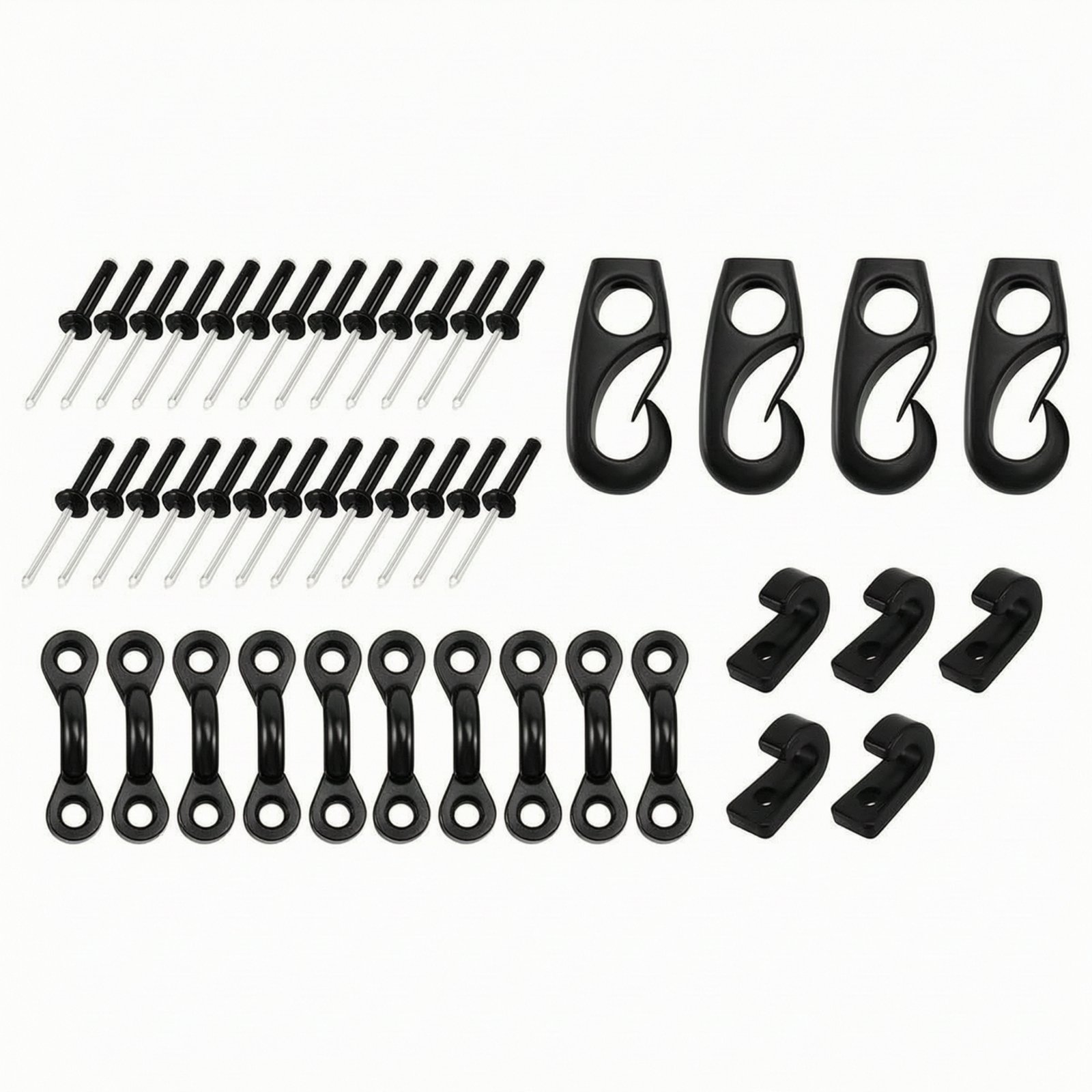
A full rigging set such as Kayak Deck Rigging Kit can help when you are building several tie-down points at once. The listing says Kayak Deck Rigging Kit includes rivets, washers, J-hooks, elastic rope hooks, and C-shaped buckles, which makes it useful when your goal is deck cord routing rather than mounting into a slide track.
Think about the loads each point will handle. A track eyelet like Kayak Track Tie Down Eyelet is handy for securing removable cargo and adjusting position, while a fixed loop such as Boat Pad Eye 5mm or 10-Piece Kayak Tie-Down Loop works well for repeat locations where the strap path never changes. If you want to mount a bag on top of the deck, you also need matching anchor points for its straps or hooks rather than just the bag itself.
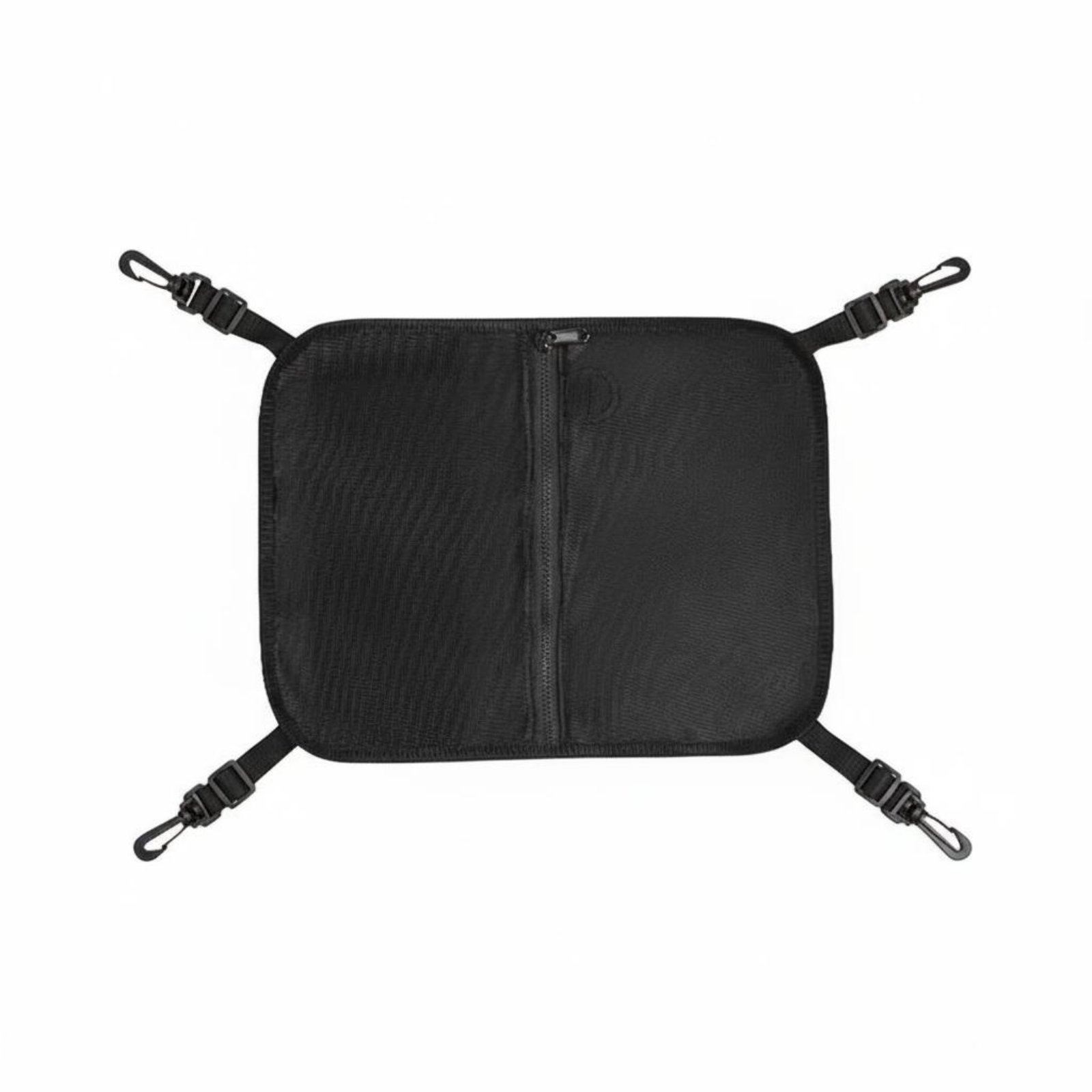
As an example, Paddleboard Mesh Storage Bag uses four adjustable straps with hooks that clip onto D-rings. If you are planning to use a deck bag like Paddleboard Mesh Storage Bag, make sure your kayak already has suitable anchors or add loop hardware in the right pattern so the bag can sit flat and drain properly.
How the pieces work together on a practical setup
A tidy kayak layout usually combines one movable system and one permanent system. The movable system is the rail: track nuts or rail hardware hold accessories wherever the rail allows. The permanent system is the deck: loops, hooks, and bungee anchors create dedicated tie-down points for items that live in the same place every trip.
A common approach is to use Kayak Track Hardware 304 Stainless Steel or 4-Piece Stainless Steel Kayak Track Nuts for rail-mounted accessory positions, then add Kayak Track Tie Down Eyelet where you want an adjustable anchor for straps or bungee. Around storage areas, fixed loops like Boat Pad Eye 5mm or 10-Piece Kayak Tie-Down Loop can guide deck lines, hold a paddle leash, or secure a crate with a consistent strap route.
If you are adding or refreshing deck cordage over a wider area, Kayak Deck Rigging Kit fills in the small but important pieces that make the system usable. Rivets, washers, hooks, and buckles help turn a few anchor points into an organized rigging pattern, so gear is restrained instead of merely attached.
The key is to place mounts where they support the shape of the load. Use pairs of tie-down points so straps pull evenly, keep the path clear of your paddle stroke and entry area, and avoid putting hardware where it interferes with hatches, seat adjustment, or carrying handles.
Common mistakes to avoid
The biggest mistake is mixing track hardware that does not actually match your rail. A part can look close and still bind, sit crooked, or fail to tighten correctly, so always compare thread type and rail shape with the listing before ordering. For example, 4-Piece Stainless Steel Kayak Track Nuts is specifically described as an M6 channel groove nut, so that thread size should match your plan.
Another common mistake is using only one anchor point where two are needed. One point may stop an item from lifting, but it will not keep it from twisting or sliding. Two or more points let you control direction and tension, especially for crates, dry bags, and deck bags.
Do not assume every deck accessory comes with the anchors you need. Paddleboard Mesh Storage Bag gives you a storage bag with hook straps, but it still depends on suitable attachment points on the kayak. Likewise, a fixed loop such as 10-Piece Kayak Tie-Down Loop is compact and useful, but you still need to plan the spacing and backing method for the deck material on your boat.
Finally, avoid overbuilding where a low-profile solution will do. Bulky hardware can catch lines, snag clothing, and get in the way during rescues or re-entry. Low, rounded fittings and a simple layout are usually easier to live with than adding too many separate pieces.
A typical kit
- Kayak Track Hardware 304 Stainless SteelUse this as the basic rail fastener set when you need to attach accessories or anchor hardware to a compatible track.
- Kayak Track Tie Down EyeletUse this as an adjustable tie-down point on an existing track for straps, bungee, or removable cargo.
- Boat Pad Eye 5mmUse these deck pad eyes as fixed tie-down loops where you want permanent rope or strap anchors.
- 10-Piece Kayak Tie-Down LoopUse these compact loops for clean, low-profile deck rigging and repeated strap routing.
- Kayak Deck Rigging KitUse this hardware kit to add the small rigging parts needed for bungee runs, hooks, and deck outfitting.
- Paddleboard Mesh Storage BagUse this only after you have suitable deck anchors in place if you want a mesh storage area on top of the deck.
Questions people ask
Should I use track mounts or drill fixed tie-down points into the deck?
Use track mounts when your kayak already has rails and you want flexibility to move the anchor point later. Use fixed deck loops when you know exactly where the tie-down belongs and want a simple, always-ready attachment point. Many kayaks work best with both systems together.
How do I know if track nuts will fit my kayak rail?
Check the rail profile and the thread size in the listing, then compare them with your kayak’s existing hardware. 4-Piece Stainless Steel Kayak Track Nuts is described with an M6 channel groove nut, and Kayak Track Hardware 304 Stainless Steel is intended for compatible track systems, so the rail opening and thread need to match your setup. If the listing does not confirm your rail style, do not assume compatibility.
What is the difference between a track eyelet and a deck loop?
A track eyelet is an anchor point that installs in a rail and can usually be repositioned along the track. A deck loop is a fixed anchor attached directly to the kayak deck, so it stays in one place and is often better for repeat rigging locations. Choose based on whether you value adjustability or permanence more.
Can I mount a deck bag with these parts?
Yes, but the bag and the anchor points are separate decisions. Paddleboard Mesh Storage Bag uses hook straps that clip onto suitable anchors, so you need existing D-rings or loop hardware placed in the right pattern. Make sure the bag will sit flat and not block access to hatches or your paddling area.
What parts do I need for a simple, clean setup?
For a kayak with rails, start with one track hardware set and one track eyelet so you can mount and secure gear without drilling more holes. Then add a few fixed loops for deck cords or transport straps where the anchor locations will not change. If you are rebuilding deck rigging more broadly, a mixed hardware kit helps finish the job with matching small parts.
Shop the list
Everything mentioned above
Prices and delivery windows are live from our catalog.
Kayak Track Hardware 304 Stainless Steel
4-Piece Stainless Steel Kayak Track Nuts
Kayak Track Tie Down Eyelet
Boat Pad Eye 5mm
10-Piece Kayak Tie-Down Loop
Kayak Deck Rigging Kit