Buying guide · Fishing & Camping
How to set up a tarp shelter for shade or rain at camp
Short answer
A simple, reliable tarp shelter starts with the right support poles and solid anchors, then a layout that lets water run off instead of pooling. Choose poles based on the headroom and portability you want, use stakes that match the ground, and pitch one side lower when rain is likely.
Start with the shelter shape and support
Before picking hardware, decide how you want the tarp to work at camp. For shade, a higher open side makes the space cooler and easier to walk under. For rain, a lower edge and a steeper slope help water shed and reduce flapping.
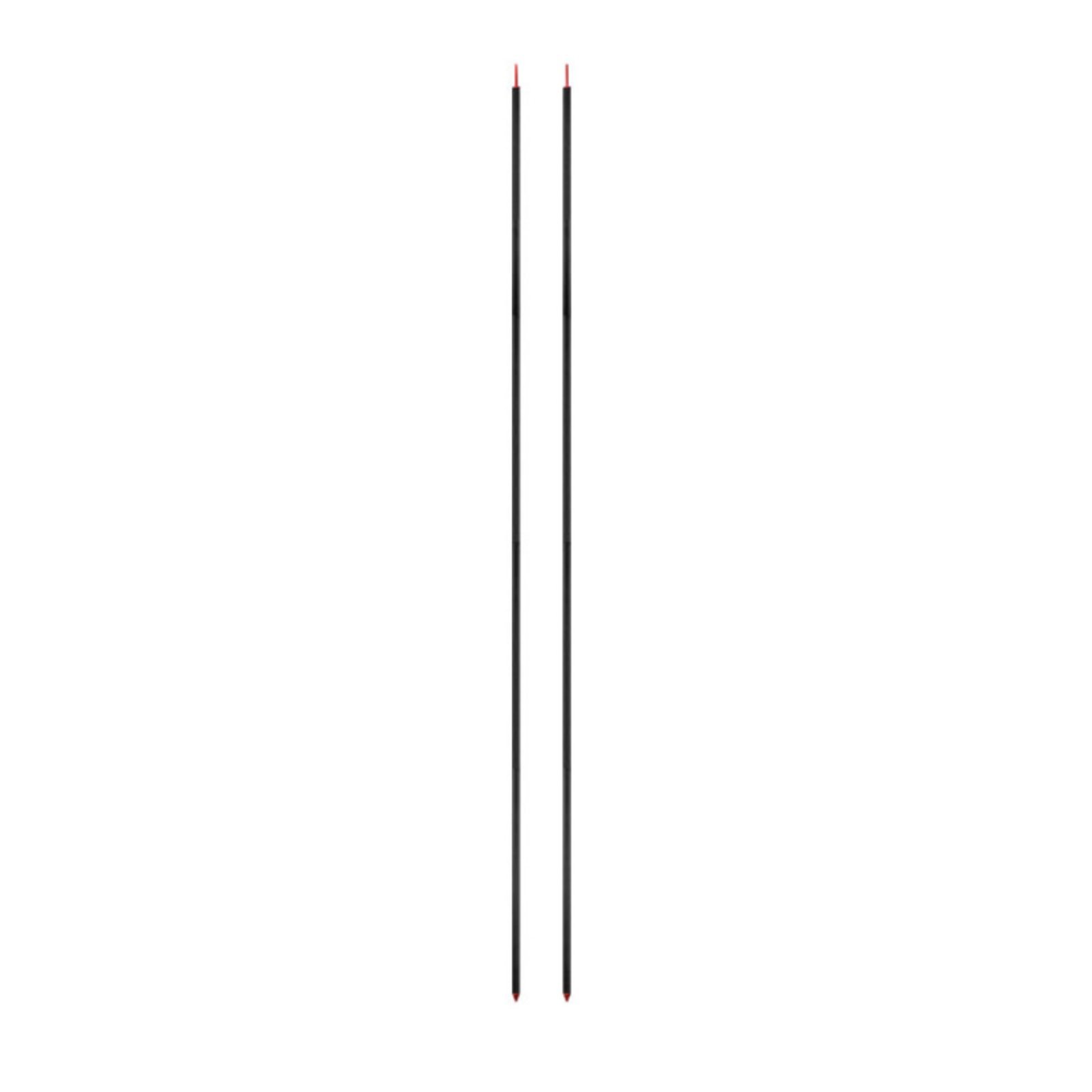
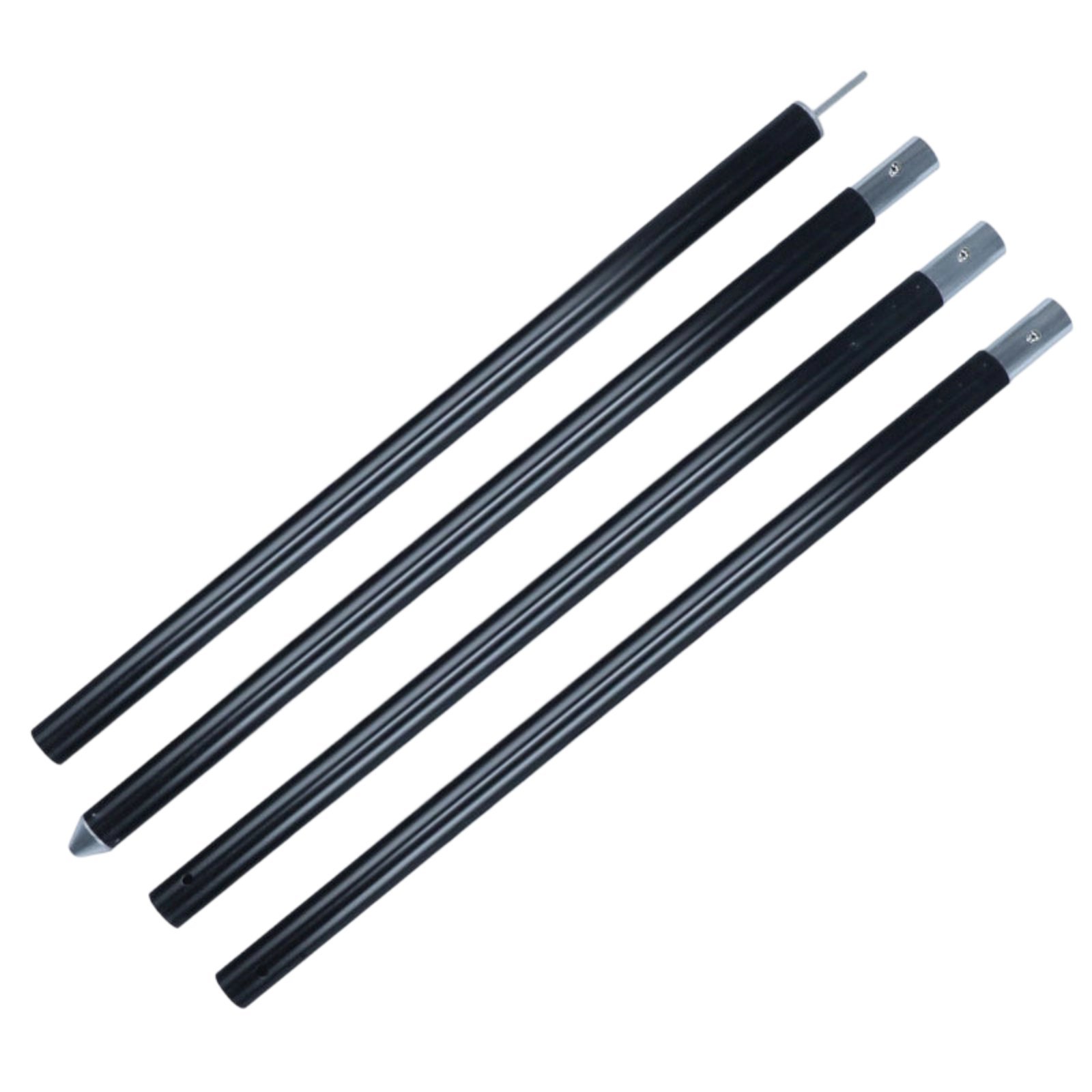
A tarp setup needs support points that are easy to place and easy to tension. Pole sets made for tarp and awning duty are the simplest way to create those high points. 2-Piece Foldable Aluminum Tarp Pole is useful when you want a lightweight, packable pair of poles with a metal tip for tarp grommets and a V-shaped bottom that grips soil or sand. If you want more headroom and the option to build a larger awning, 2-Piece Foldable Aluminum Canopy Poles gives you a sectional pair that can be used at different heights up to 2.4 meters.
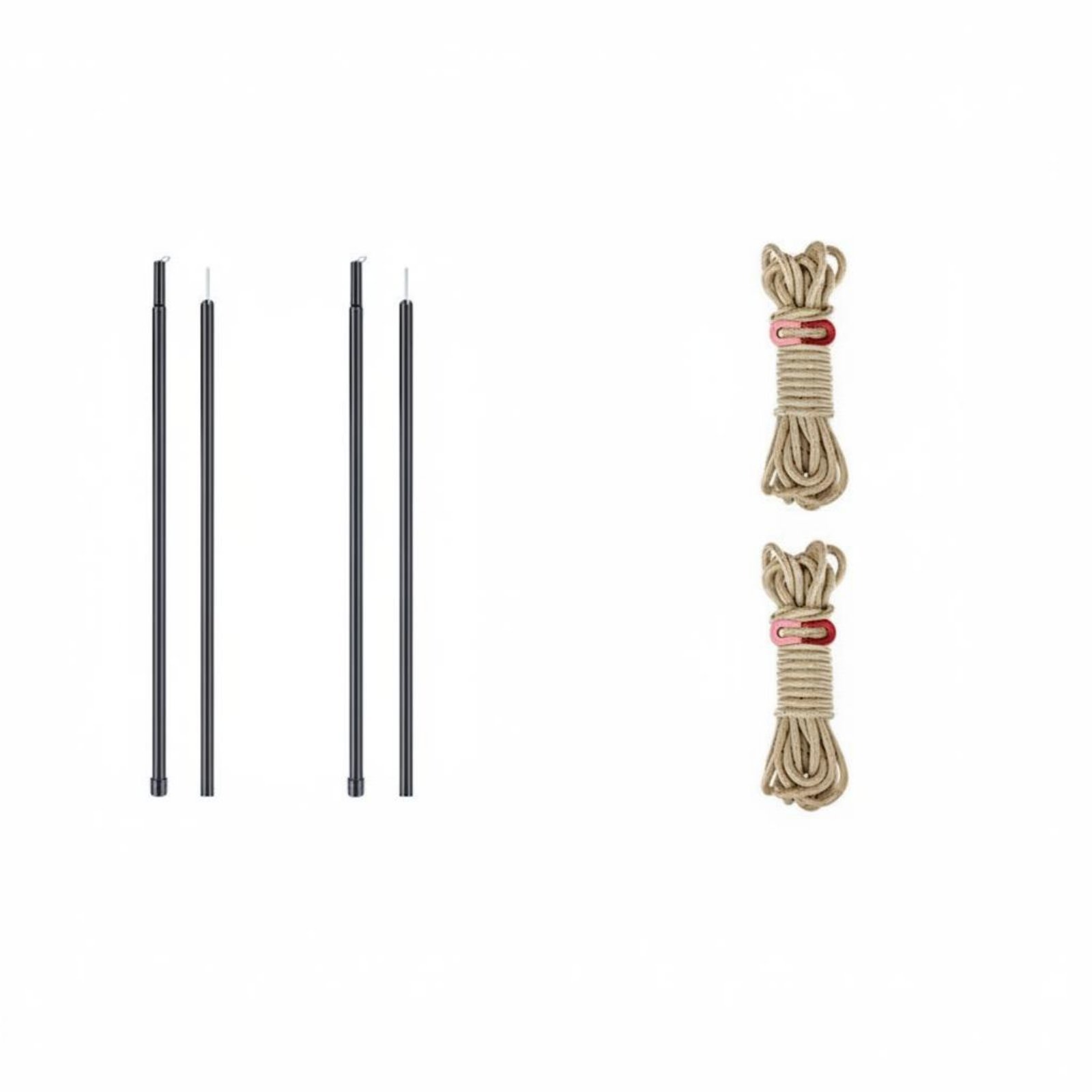
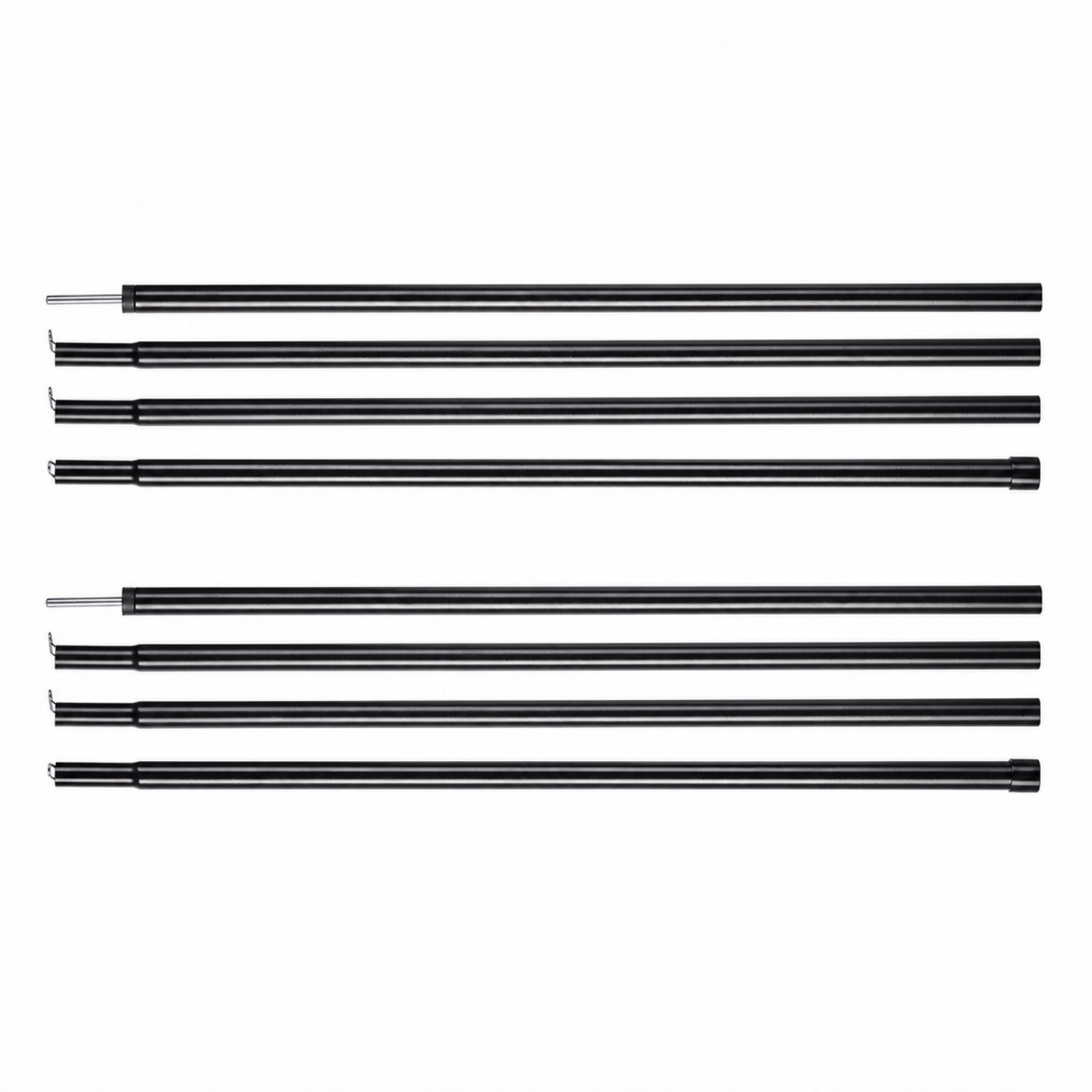
If you prefer a compact steel set for a basic vestibule-style shelter, 2-Piece Tent Vestibule Pole Set includes two poles and two ropes, and its sectional design makes setup straightforward. For a taller adjustable option, 2-Piece Adjustable Awning Support Pole extends up to 200 cm and collapses to 50 cm, which is handy when you want one setup for sitting shade and another for a lower rain pitch.
Think about where the high side should face. For shade, point the open side toward the view and away from the strongest afternoon sun if possible. For rain, point the lower side toward the wind so gusts do not drive rain under the tarp.
Choose anchors for the ground you actually camp on
Anchors matter as much as poles. A tarp can look fine at first and still loosen quickly if the stakes are wrong for the soil. In firm ground, a simple stake is often enough. In softer or disturbed ground, use larger or heavier anchors and space them so the load is shared.
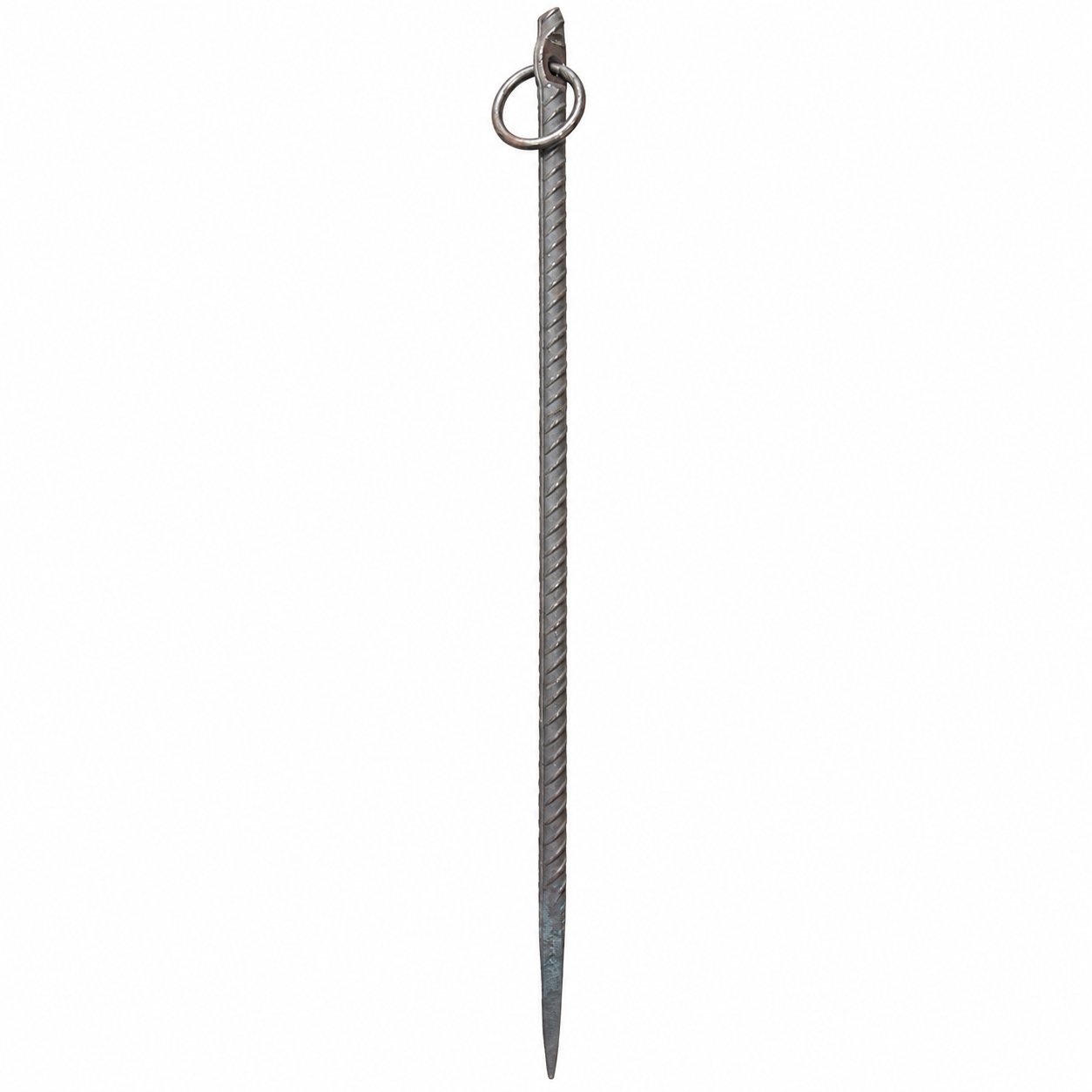
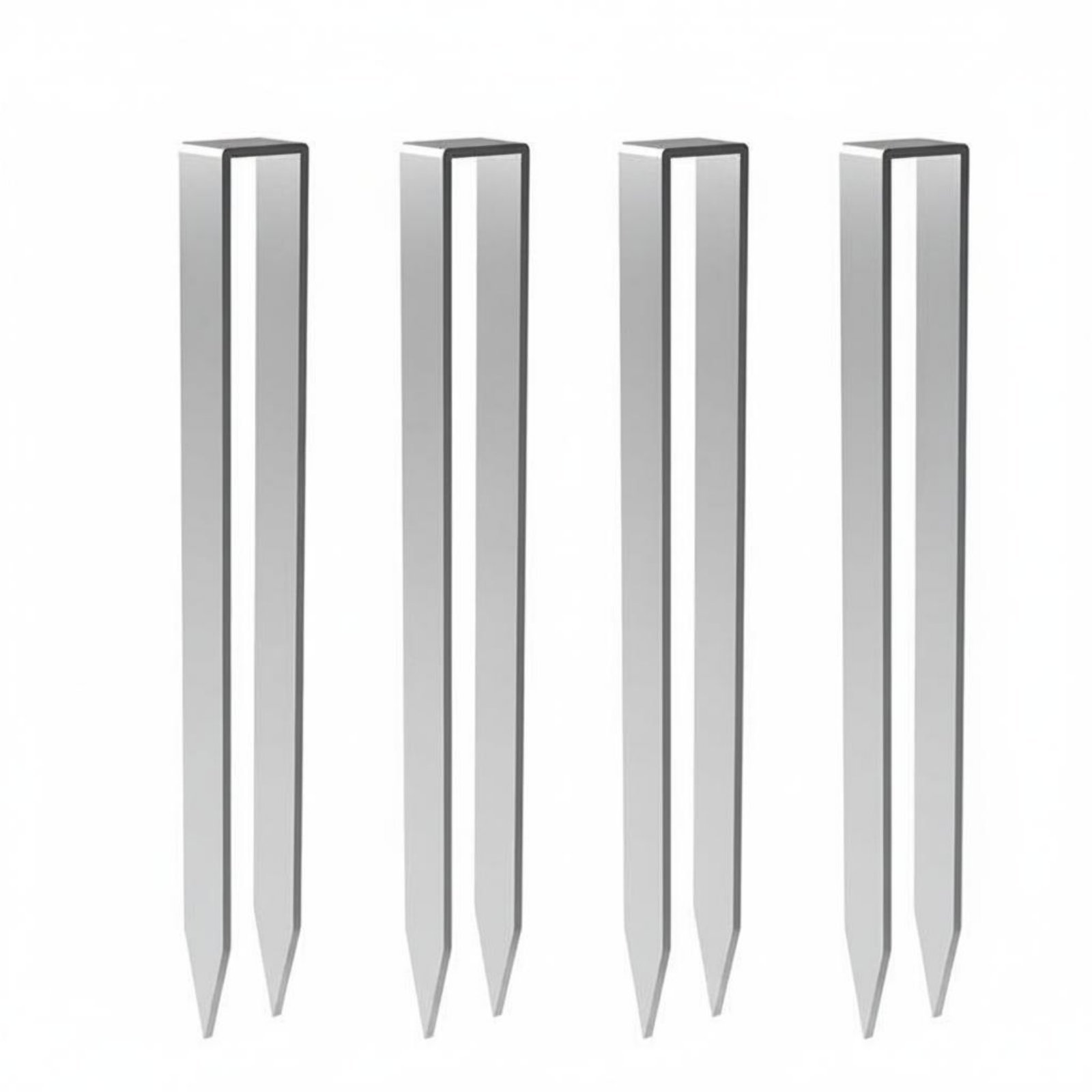
Ground Stake is a straightforward steel ground stake with a pointed tip and ring handle, so it suits general campsite use where you need a basic tie-down point. If you want a heavier anchoring option for larger loads, 4-Piece Garden Arch Anchor U-Shaped uses a U-shaped alloy steel design with pointed tips and is described for securing outdoor structures and camping gear in varied soil.
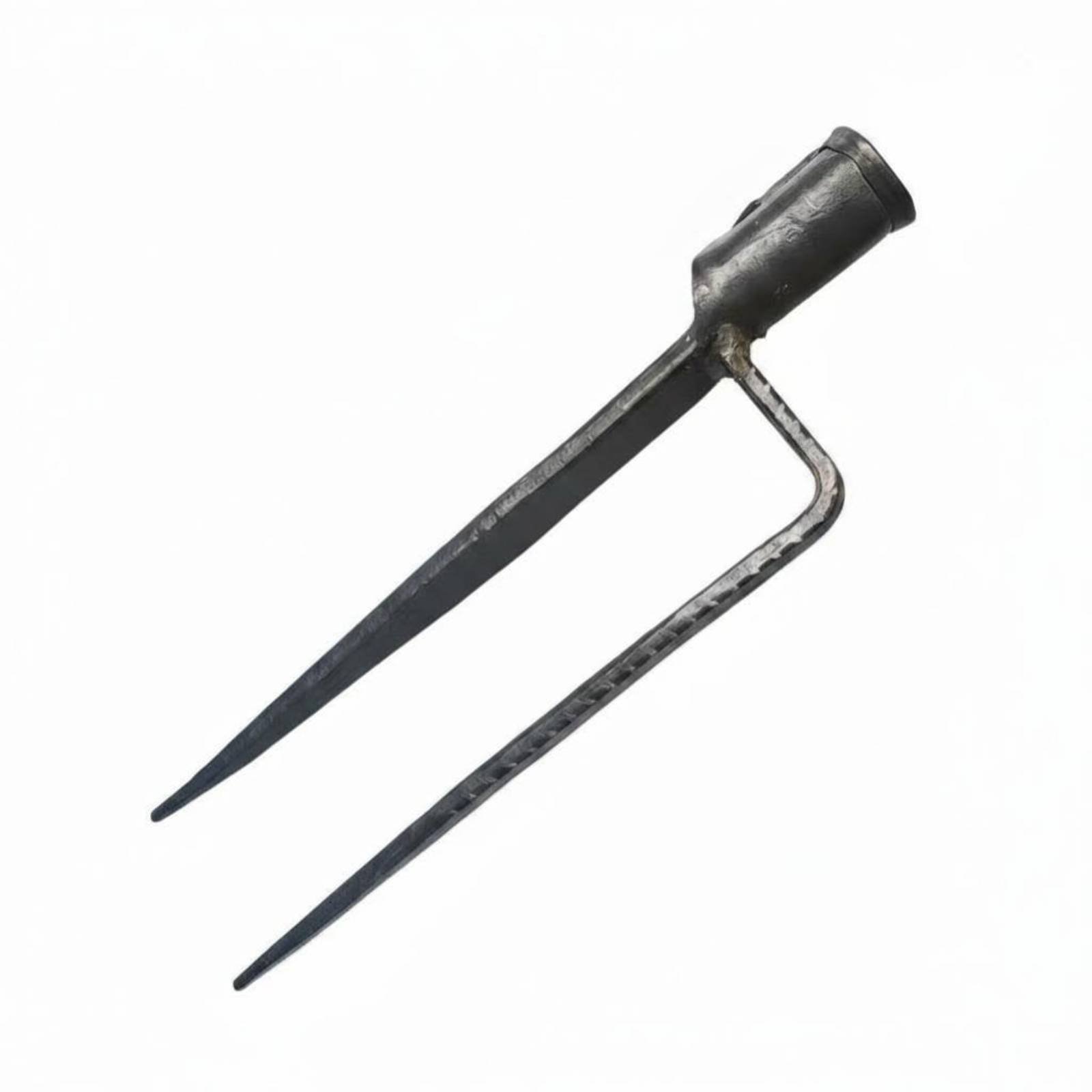
For camps on grass or loose soil where you need a broad, stable base point, Two-Legged Ground Anchor Stand is designed as a ground anchor stand for soft ground and has a two-legged form that helps resist tilting or rotation. It is not a normal tarp pole, but it can be useful when adapting an outdoor shade point around a vertical support that fits the holder style.
Common anchor mistakes are easy to avoid.
- Do not assume one stake style works equally well in every soil.
- Do not leave lines slack after the first tensioning; fabric settles.
- Do not place all the load on one corner when you can spread it across more tie-out points.
- Do not pitch the tarp flat when rain is possible, because water can collect and strain the anchors.
How the pieces work together in a stable pitch
The shelter works as a system: poles create height, the tarp spans between those high points and lower tie-outs, and anchors keep everything under tension. When one part is mismatched, the whole pitch becomes noisy, saggy, or unstable.
A very common camp layout is a lean-to. Put two poles on the high side, secure the tarp to the pole tips, and stake the opposite side lower to the ground. With a pair such as 2-Piece Foldable Aluminum Tarp Pole or 2-Piece Tent Vestibule Pole Set, this creates an open front for shade while still giving decent rain coverage if the back edge is low.
For a freestanding-feeling awning over a cooking or sitting area, taller sectional poles like 2-Piece Foldable Aluminum Canopy Poles can raise the front edge while the rear edge attaches lower and tighter. In stronger weather, shorten the poles or move one side down. Lower profiles usually hold shape more steadily than tall, flat ones.
Use ground anchors at the main corners first, then tension the ridgeline or high edge, then finish the side tie-outs. 4-Piece Garden Arch Anchor U-Shaped can help on the most loaded points if the tarp is large or the wind is shifting, while Ground Stake covers routine corner tie-downs. After the first setup, walk around the shelter and check that the tarp surface forms clean planes rather than loose pockets.
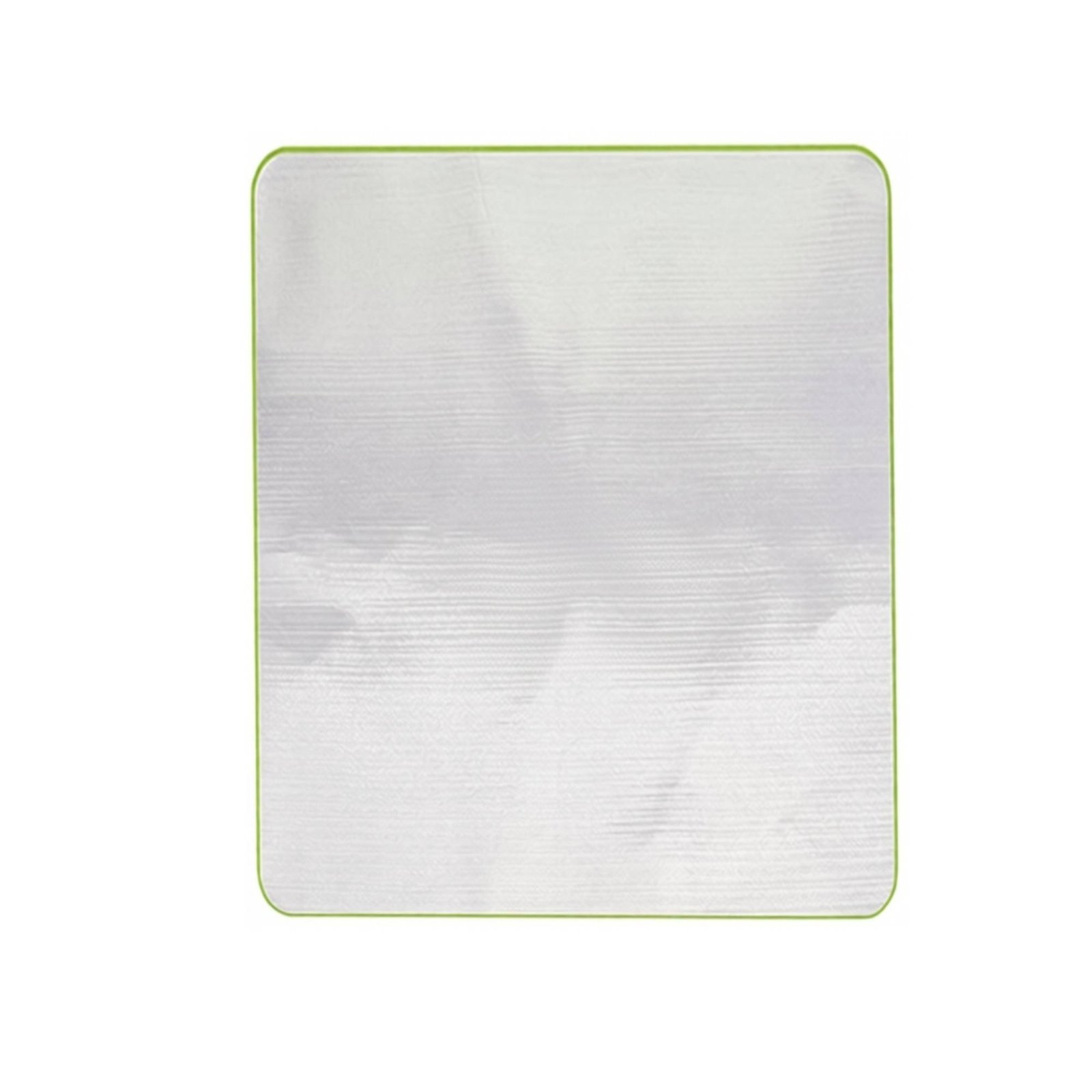
If you also want a clean, dry floor under the shelter, Aluminum Film Ground Mat can serve as a camp mat and moisture barrier at 1.5m*2m. That piece is not part of the support structure, but it completes the living space by keeping chairs, bags, or shoes off damp ground.
Mistakes to avoid and a simple setup routine
The most common buying mistake is focusing only on pole height. Height matters, but so do how the pole assembles, whether the tip suits your tarp attachment points, and whether the base is stable on your usual campsites. Another mistake is buying anchors that are too specialized for one surface and then expecting them to work everywhere.
Be careful about mixing very tall poles with minimal anchoring. A high, open shade pitch is comfortable in calm weather, but it puts more leverage on each tie-out. If weather looks uncertain, shorten adjustable poles like 2-Piece Adjustable Awning Support Pole and retension everything for a lower profile.
A practical routine is simple.
- Lay out the tarp where you want the shelter footprint.
- Set the windward side lower and stake that side first.
- Add the two support poles on the open side.
- Tension the high corners evenly.
- Finish side tie-outs and recheck all anchors after the fabric settles.
If portability matters most, favor foldable or sectional poles so the shelter is easy to pack and quick to repeat on the next trip. If your camps are usually car-based and you want more coverage, taller sectional options are easier to adapt to different tarp shapes than fixed supports.
A typical kit
- 2-Piece Foldable Aluminum Tarp PoleUse this pair as the main front support poles for a lightweight tarp awning or lean-to shelter.
- 2-Piece Foldable Aluminum Canopy PolesChoose this pair when you want more adjustable height and a larger shade footprint.
- Ground StakeUse these as general-purpose corner and side tie-out stakes in typical campsite soil.
- 4-Piece Garden Arch Anchor U-ShapedReserve these heavier anchors for the most loaded tie-out points or softer ground.
- Aluminum Film Ground MatPlace this under the shelter as a dry sitting or gear area to keep the camp space cleaner.
Questions people ask
What is the easiest tarp shape for a beginner to pitch?
A lean-to is usually the easiest because it needs only a high side and a low side with clear tension at the corners. A pair of poles such as 2-Piece Tent Vestibule Pole Set or 2-Piece Foldable Aluminum Tarp Pole keeps the layout simple and makes it easier to adjust for either shade or rain.
Should I pitch the tarp high for airflow or low for weather protection?
For calm, hot weather, a higher open side gives better airflow and more usable standing or sitting room. If rain or gusty wind is likely, lower the pitch and increase the slope; adjustable options like 2-Piece Adjustable Awning Support Pole make that change easier without rebuilding the whole shelter.
Do I need special anchors, or will basic stakes work?
Basic stakes can work well in firm ground, especially for lighter loads and smaller tarps. In softer soil or on the most stressed corners, stronger anchors like 4-Piece Garden Arch Anchor U-Shaped can hold tension better and reduce the chance of the shelter loosening over time.
How many poles do I need for a camp tarp shelter?
Two poles are enough for many common camp layouts, including a lean-to or front-awning style shelter. A set like 2-Piece Foldable Aluminum Canopy Poles gives you the two main high points, while the opposite side can be staked low to the ground.
What makes a tarp shelter fail in rain?
The usual problems are a pitch that is too flat, loose tie-outs, and anchors that do not match the soil. Keeping one side lower, retensioning after setup, and using dependable stakes such as Ground Stake on the main corners helps the tarp shed water instead of collecting it.
Shop the list
Everything mentioned above
Prices and delivery windows are live from our catalog.
2-Piece Foldable Aluminum Tarp Pole
2-Piece Foldable Aluminum Canopy Poles
2-Piece Tent Vestibule Pole Set
2-Piece Adjustable Awning Support Pole
Ground Stake
4-Piece Garden Arch Anchor U-Shaped
Two-Legged Ground Anchor Stand